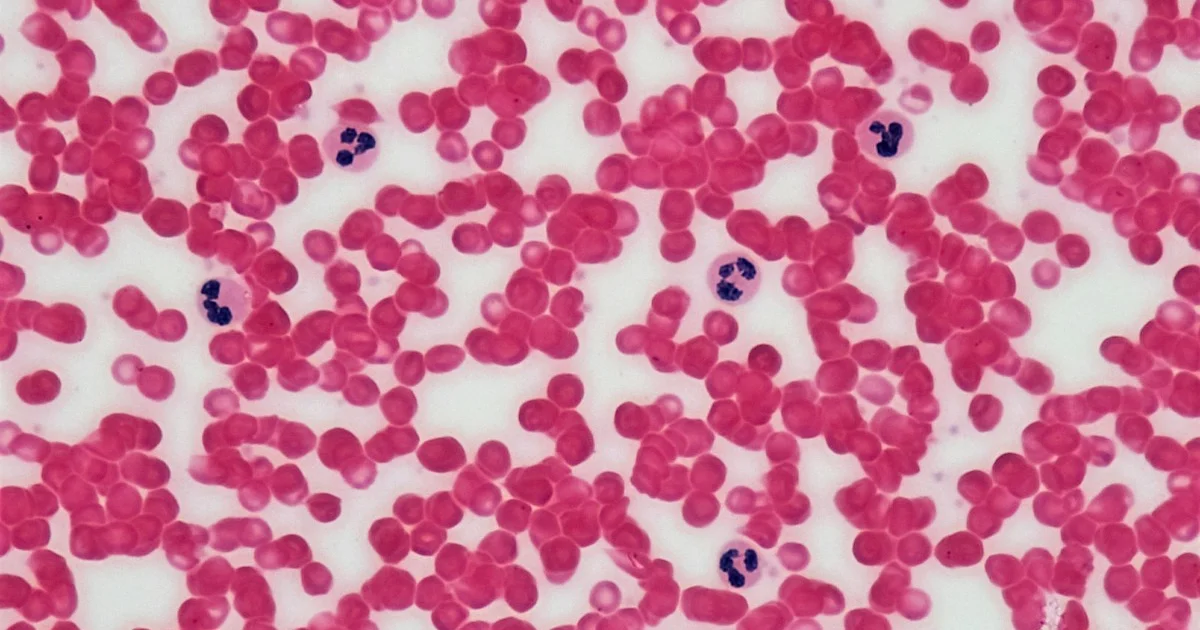
White blood cells in semen become clinically significant at 1.0 million peroxidase-positive cells per milliliter or more, the threshold the World Health Organization kept in the sixth edition of its semen examination manual (WHO, 2021). Round cells, which many laboratories report instead, are a looser measure: they lump leukocytes together with immature sperm precursors, and WHO publishes no reference limit for them.
Every number below comes from that WHO manual, from PubMed-indexed studies linked by PMID, and from ASRM practice guidance. The ProIVF Medical Editorial Team compiled them and our Medical Advisory Board reviewed the clinical claims. ProIVF is a clinic directory with a commercial relationship to the centers it lists, so treat this as patient education rather than a diagnosis: a single lab value means nothing without your other semen numbers and symptoms.
What Counts as a High White Blood Cell Count in Semen?
One million peroxidase-positive cells per milliliter (1.0 × 10⁶/mL) is the line, and the finding is called leukocytospermia. Below it, most laboratories stop reporting.
The manual states its own reasoning:
“…retains the consensus value of 1.0 × 10⁶ peroxidase-positive cells per ml as a threshold value for clinical significance… values greater than or equal to 1.0 × 10⁶ peroxidase-positive cells per ml are considered abnormal.”
— WHO laboratory manual for the examination and processing of human semen, sixth edition, 2021
That is a significance threshold, not a fertility verdict: WHO says elsewhere in the same manual that its limits “do not represent a limit between fertile and infertile men”, because they separate the lowest 5% of a childbearing population from the rest.
Below the line there is still a gray zone: men between 0.1 and 1.0 × 10⁶/mL, technically normal, already showed higher oxidative damage than men with no measurable leukocytes (PMID 25527074).
| What your report lists | What it actually counts | WHO reference value | How to read it |
|---|---|---|---|
| Peroxidase-positive leukocytes | Neutrophils and their precursors only | ≥1.0 × 10⁶/mL is abnormal | The only seminal leukocyte measure with an agreed threshold |
| Round cells | Leukocytes plus immature germ cells | No reference limit published | A screening flag, not a diagnosis |
| Immature germ cells | Sperm precursors shed from the testis | Cut-off withdrawn in 2021 | Old reports may show “>6 × 10⁶/mL”; that cut-off is obsolete |
| CD45-positive cells | All white blood cells, including lymphocytes | No agreed reference values | Research tool; ask what the lab does with it |
| ”Leukocytes, many/rare” | Unstained visual estimate | Not standardized | Ask for the peroxidase number instead |
Are Round Cells the Same Thing as White Blood Cells?
Round cells include white blood cells, but are usually mostly immature germ cells. At the magnification a routine analysis uses, leukocytes and immature germ cells look alike, so laboratories count them together as “round cells” (WHO, 2021).
The mismatch is large: of 410 samples, 9.02% showed more than 1 million round cells per mL, and within that subset only 29.7% had true leukocytospermia (PMID 10802915). A round-cell flag is therefore a reason to request a leukocyte-specific count, not evidence of infection.
The older round-cell “limit” you may find online is not current guidance: the fourth edition of the WHO manual suggested that more than 6 million immature germ cells per mL was abnormal, and the sixth edition withdrew it for lack of evidence and publishes no replacement. In the study most often quoted for a round-cell number, values stayed under 5 × 10⁶/mL in every one of 118 samples from fertile, infertile and varicocele men, an observation about a population rather than a diagnostic cut-off (PMID 11111860).
Round cells still carry information: immature germ cells rise when the testis is under stress, and one research group called them “a transient indicator of spermatogenic insult” rather than proof of infection (PMID 26982590).
How Does the Lab Count Them, and Why Do Two Labs Disagree?
The standard method is the Endtz peroxidase stain, which detects only one family of white blood cells. Neutrophils and their precursors carry the enzyme the stain targets; lymphocytes, macrophages and neutrophils that have already released their contents do not (PMID 10972527).
Two labs can report different numbers for the same sample, even competent ones:
- The peroxidase stain and a leukocyte elastase method correlated at r = 0.224 on the same samples, a correlation that was not statistically significant (PMID 12942588).
- Round-cell counts show wide sampling error even when the same sample is split and counted twice (PMID 20111090).
- The peroxidase count does track oxidative stress in semen (P < 0.001), which is why it remains useful despite the method gaps (PMID 7545483).
The abstinence window moves the number too: WHO asks for 2–7 days, and longer intervals carry more cells of every kind. Reading your other rows in the right order matters more than any single line, as our guide to reading a semen analysis explains.
What Causes White Blood Cells in Semen?
Inflammation of the male reproductive tract is the documented driver; infection explains only part of it, and a meaningful share of cases never gets a cause attached.
Prostatitis and epididymitis
Prostatitis and epididymitis both raise the seminal leukocyte count. A study of 9,345 men found leukocytospermia in 11.4% of them, with prostatitis associated with 1.37 times the adjusted odds (95% CI 1.14–1.66) and epididymitis with 1.88 times the adjusted odds (1.10–3.21) (PMID 42656344).
Both come with symptoms worth reporting: pelvic or perineal pain, painful ejaculation, urinary burning, frequent urination.
Varicocele
Men with a varicocele had 2.3 ± 2.1 × 10⁶ leukocytes per mL against 1.1 ± 0.1 × 10⁶ in controls, a difference the authors reported as highly significant (P = 0.0001) (PMID 15624391). This matters because the varicocele link runs through heat and oxidative stress, not bacteria, which is one reason antibiotics do not fix every high count.
The sexually transmitted infection assumption
Testing for STIs is reasonable when there are symptoms or exposure risk, but STI is not the default explanation. In one comparison, 52.3% of men with leukocytospermia had a sexually transmitted infection detected against 39.3% of men with normal counts, a difference that did not reach significance (P = 0.07) (PMID 34154600).
The cases with no cause found
Some men with raised counts have no infection, no varicocele and no symptoms, and their repeat sample comes back normal, the best reason to insist on a second analysis before accepting a treatment plan (why one abnormal result is not a diagnosis).
How Common Is Leukocytospermia?
Leukocytospermia is common enough to be unremarkable, and it shows up in men of proven fertility.
| Population studied | Size | Leukocytospermia found | Source |
|---|---|---|---|
| Men attending infertility care | 17,142 | 4.7% | PMID 18980764 |
| Men attending an andrology clinic | 9,345 | 11.4% | PMID 42656344 |
| Male partners in an IVF/ICSI/PGT-A program | 5,425 | 33.9% | PMID 38642270 |
| Fertile men, infertile men, varicocele men | 118 samples | 22% overall; 32% of infertile, 16% of fertile, 8% with varicocele | PMID 11111860 |
| Sperm donors required to be of proven fertility | 155 donors | 6.5% at or above 1.0 × 10⁶/mL | PMID 21982729 |
Read the last row twice: 6.5% of men who had already fathered children exceeded the WHO threshold, so a high count proves neither infection nor sterility.
That spread reflects who gets tested and how. Of the 807 leukocytospermic samples in the 17,142-series, only 12.7% grew significant bacterial colonies on culture (PMID 18980764).
Do White Blood Cells Damage Sperm?
White blood cells do damage sperm, mainly through oxidative stress, and the damage shows up in sperm DNA and motility more reliably than in count alone.
In the 0.1–1.0 × 10⁶/mL band, DNA fragmentation index averaged 26.47 ± 19.64 against 19.89 ± 17.31 in men without measurable leukocytes, and reactive oxygen species measured 1,839.65 against 1,101.09 RLU/s (PMID 25527074).
In 1,710 men in infertility care, sperm concentration differed significantly once leukocytes passed 5 × 10⁵/mL and morphology once they passed 2 × 10⁶/mL. The share of samples below the threshold IVF programs treat as clinically meaningful (fewer than 10 million motile sperm per ejaculate) doubled at 2 × 10⁶/mL (PMID 8893692).
Pooled across 28 studies, higher leukocyte concentrations were associated with small reductions in sperm concentration (standardized mean difference −0.14, 95% CI −0.28 to −0.01) and progressive motility (−0.18, −0.29 to −0.06), but those associations disappeared when men with a clinical infection were excluded (PMID 31250986).
Two caveats: across 172 men the correlation between leukocyte count and sperm DNA fragmentation was only R = 0.22 (PMID 34388964), and oxidative damage is a pathway shared with smoking, heat and varicocele. If motility came back low, our low sperm motility guide puts leukocytes in proportion, and what normal semen looks like covers the visible signs that make infection worth chasing.
Does It Change IVF or ICSI Results?
Leukocytospermia did not change live birth rates in the largest modern dataset. Among 5,425 male partners in IVF, ICSI and PGT-A cycles, rates were 62.3% with leukocytospermia against 63.0% without (P = 0.625).
| Outcome measured | With leukocytospermia | Without | P value |
|---|---|---|---|
| Live birth rate | 62.3% | 63.0% | 0.625 |
| Clinical pregnancy rate | 73.3% | 74.9% | not significant |
| Normal fertilization (2PN) | 85.7% | 85.8% | not significant |
| Embryo aneuploidy rate | 25.7% | 24.4% | 0.053 |
| Adjusted odds of live birth | 0.878 (95% CI 0.680–1.138) | — | crosses 1.0 |
Source: PMID 38642270; a smaller prospective study of 133 couples found no difference in ART outcomes either (PMID 35233797).
Counter-evidence comes from donor insemination, where outcomes are measured per cycle rather than per embryo transfer. Pregnancy rates were normal, but early pregnancy loss rose with high leukocytospermia and, curiously, with round cells present rather than neutrophil counts (PMID 21982729). A separate analysis linked round cells at or above 2 × 10⁶/mL to miscarriage (P = 0.05) and found chromosomal abnormalities in 4.3% of round cells against 2.3% of controls (PMID 26982590).
A planned IVF or ICSI cycle is not worth postponing over this leukocyte line alone, while recurrent early loss with no female cause found is a reasonable thread to pull with your endocrinologist.
Should You Take Antibiotics for a High Leukocyte Count?
Antibiotics for a high leukocyte count help only when an infection is actually diagnosed. Blanket treatment of leukocytospermia is supported by one retrospective study and contradicted by guideline bodies.
The study usually cited: men treated with doxycycline cleared leukocytospermia at 56% against 25% in untreated men, and achieved natural pregnancy at 47% against 20% (OR 3.7, 95% CI 1.1–11.7, P = 0.04). The design was retrospective and its controls came from historic samples, which is why the confidence interval spans nearly an order of magnitude (PMID 22137697).
The guideline position, as summarized in a 2019 review of male accessory gland infection (PMID 30644236): European Association of Urology guidance states there is no evidence that antibiotic therapy increases the probability of conception, and AUA/ASRM guidance does not require quantifying seminal leukocytes at all. That is a second-hand account of two guideline documents; ask which version your center follows.
For idiopathic leukocytospermia, an anti-inflammatory approach was tested and found safe but not proven effective (PMID 30328572).
What is worth doing instead:
- Confirm the number first: one peroxidase-stained repeat analysis, same lab, 2–7 days abstinence.
- Get cultured if symptomatic: semen and urine culture, plus STI testing when there is pain, burning or discharge.
- Treat what is found, including the full course a diagnosed prostatitis requires.
- Reduce oxidative load in parallel: smoking, occupational heat and untreated varicocele are modifiable or assessable.
- Retest after a sperm cycle, which is the next section.
When Should You Repeat the Test?
Repeat the semen analysis two to three months after any change, because that is how long sperm take to be made. Spermatogenesis runs 64–72 days plus epididymal transit (PMID 38101934); the classic measurement has been challenged as possibly “in error by approximately 6 days” (PMID 18497337).
A sample taken two weeks after antibiotics tells you nothing about that treatment’s effect. Ask for the repeat at three months, covering the parameters that were abnormal rather than a bare count. The reading order is in our semen analysis guide; the wider male workup, including when ICSI is recommended regardless of leukocytes, is in our male infertility and IVF guide.
What Does This Look Like in a Real Workup?
The two accounts below are composite scenarios built from patterns in the studies cited above, not real ProIVF patients. Names, ages and amounts are illustrative and no identifying detail appears here.
Owen, 35, Chicago — a round-cell flag that was not an infection. His first analysis listed round cells at 6.2 × 10⁶/mL and a clinician mentioned infection. He paid $285 out of pocket for a repeat analysis at a andrology laboratory that ran the peroxidase stain, and $1,150 for a urology workup including urine and semen culture. Both came back clean, and the leukocyte count was 0.3 × 10⁶/mL. “I had already accepted that I was infertile because of an infection I did not have,” he said. The couple moved on to IUI while the questions were still open, and the count never became the story.
Marcus, 38, Los Angeles — a real infection, and a three-month wait. His report showed leukocytes at 1.8 × 10⁶/mL with pelvic pain after ejaculation. Culture grew a bacterium, a course of antibiotics followed, and the retest at three months came back at 0.4 × 10⁶/mL. His partner’s age put them into IVF anyway: one retrieval and ICSI cycle cost $18,400 before medication discounts, which they paid from savings plus a clinic financing plan. “The leukocytes were treatable. The part we could not treat was her age,” Marcus said. “We wasted two months looking for a male cause before we booked the IVF consult.”
Marcus’s cycle price sits inside the $15,000–$30,000 US band in our US cost guide.
Five Things to Ask Before You Accept the Result
These five questions decide whether a leukocyte number is worth acting on.
- Ask which method produced the number: peroxidase stain, elastase, CD45, or an unstained visual estimate.
- Ask for the result in cells per milliliter, not “rare/scant/many”, checked against the 1.0 × 10⁶/mL threshold.
- Ask whether round cells were separated from leukocytes, and if not, request a peroxidase count.
- Ask what the abstinence interval was and whether the sample liquefied within 60 minutes; both move cell counts.
- Ask what the treatment target is: a culture result, a symptom score, or only a number on a page.
Vague answers say more about the laboratory than about you. Centers in the hospital directory publish their andrology reporting format, and you can send us your report to check whether a lab quantifies leukocytes.
FAQ
Q: Is white blood cells in semen the same as an infection?
White blood cells in semen are not the same as an infection: in one comparison 52.3% of men with leukocytospermia carried a sexually transmitted infection against 39.3% of men with normal counts, a difference that was not significant (P = 0.07).
Varicocele, non-infectious prostatitis and sample handling all raise the count as well.
Q: What number of white blood cells in semen is abnormal?
White blood cells in semen are abnormal at 1.0 × 10⁶ peroxidase-positive cells per milliliter or more, the WHO sixth-edition (2021) threshold. Statistical effects on sperm concentration appear from 5 × 10⁵/mL upward in large series.
Q: What do round cells in my semen report mean?
Round cells in a semen report are a mixture, not a white blood cell count: they combine leukocytes with immature germ cells, and of 410 samples the 9.02% above 1 million round cells per mL included only 29.7% with true leukocytospermia. WHO publishes no round-cell reference limit.
Q: Can I still do IVF or ICSI with leukocytospermia?
IVF and ICSI proceed with leukocytospermia on the current evidence. Across 5,425 IVF, ICSI and PGT-A cycles, live birth rates were 62.3% versus 63.0% (P = 0.625), with adjusted odds of 0.878 and a confidence interval crossing 1.0.
Most programs move ahead and treat a confirmed infection in parallel.
Q: How long does it take to lower white blood cells in semen?
Lowering white blood cells in semen takes 2–3 months after an infection is treated successfully, because sperm production runs 64–72 days plus epididymal transit. Retesting sooner measures the sample, not the treatment.
Q: Do antibiotics fix leukocytospermia and improve pregnancy rates?
Antibiotics for leukocytospermia are not proven to improve pregnancy rates without a diagnosed infection.
One retrospective study reported clearance in 56% versus 25% and natural pregnancy in 47% versus 20% (OR 3.7, 95% CI 1.1–11.7, P = 0.04), using historic controls. EAU guidance, as summarized in a 2019 review, states there is no evidence that antibiotics increase the probability of conception without a diagnosed infection.
Q: Should my partner be treated too?
Partner treatment for leukocytospermia is not automatic: no published trial shows that treating a partner raises conception rates, so the decision should follow culture results and symptoms in each person rather than a blanket prescription for the pair.
For scale: in the 9,345-man study, 11.4% of men had leukocytospermia at all (PMID 42656344), so most couples have nothing to treat twice.
The Bottom Line
A white blood cell count of 1.0 × 10⁶/mL or more is the only seminal leukocyte threshold WHO endorses, and a round-cell flag is not the same finding. Leukocytospermia is genuinely associated with oxidative damage to sperm, but the largest ART dataset shows no live birth penalty (62.3% versus 63.0%), and 6.5% of men with proven fertility carry the finding anyway.
The useful sequence is: confirm the number with a peroxidase-stained repeat, look for prostatitis or varicocele before assuming infection, treat only what culture or symptoms support, and retest at three months rather than two weeks. A high count alongside low motility or raised DNA fragmentation, not the leukocyte row alone, is what should shape your next step.
Want to compare clinics that report semen analysis in full? Browse the hospital directory for centers we have verified, or send us your report and we will flag which questions to bring to your appointment.
Privacy note: The patient accounts in this article are composite illustrative scenarios drawn from published research patterns. They are not real ProIVF users, and no identifying details are included.
Medical and financial disclaimer: ProIVF publishes directory and educational information, not medical advice. Semen analysis interpretation depends on your full report, symptoms and partner factors. Discuss any treatment — especially antibiotics — with a licensed urologist or reproductive specialist. Prices quoted are illustrative list prices and vary by clinic, city and insurance.
About this article: Written by the ProIVF Medical Editorial Team from the WHO sixth-edition laboratory manual (2021), PubMed-indexed primary studies cited by PMID throughout, and ASRM practice guidance. Reviewed by the ProIVF Medical Advisory Board. ProIVF is a commercial fertility-clinic directory; some centers referenced here are listed on the site. See our editorial and sourcing standards.
Last updated: 2026-10-21