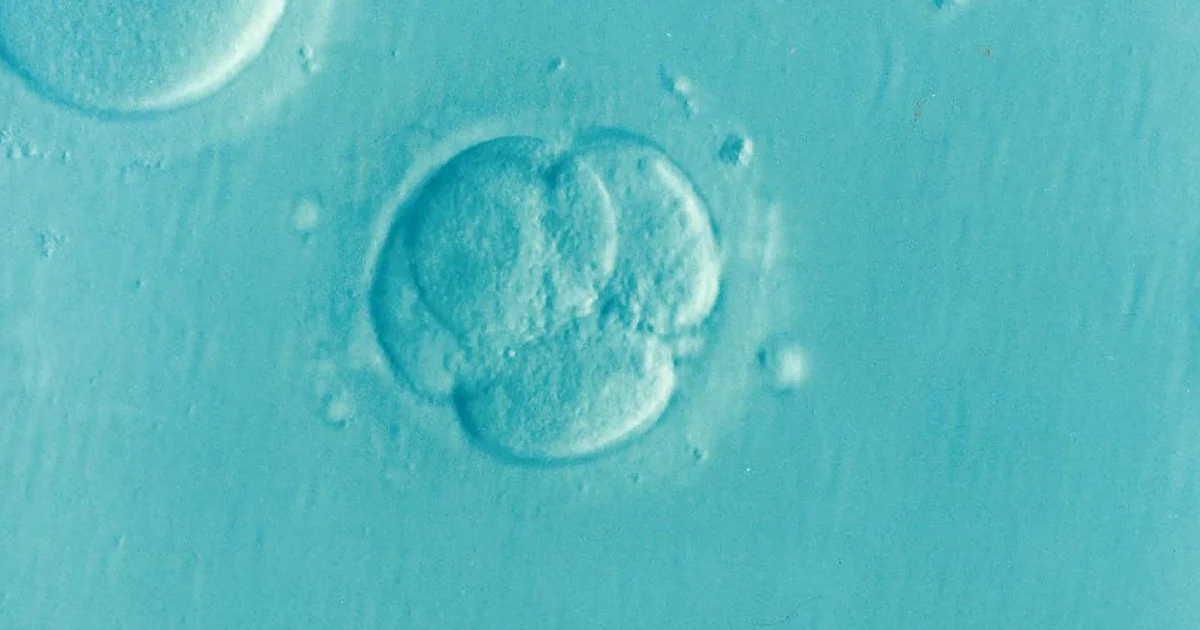
ZyMoT is a single-use microfluidic chip that selects sperm for ICSI by letting the strongest swimmers cross an 8-micrometer membrane alone — no centrifuge, no chemicals. A 2025 meta-analysis of 39 studies found microfluidic selection cuts sperm DNA fragmentation by about 10 points versus conventional preparation, and a Barcelona study showed a 46% cut in double-stranded DNA fragmentation.
“Our first two cycles ended with no blastocysts at all. My count and motility were ‘normal’ on every standard test — a DNA fragmentation test found the real problem.”
That is David, 41, from Chicago, whose ZyMoT third cycle produced a daughter in March 2025.
An estimated 30-50% of male infertility cases involve elevated sperm DNA fragmentation, which standard semen analysis does not detect. ZyMoT (formerly FertileChip) selects sperm by swimming rather than centrifugation, a step that can itself damage DNA.
How Does ZyMoT Work?
ZyMoT selects sperm by swimming instead of spinning. Conventional density gradient centrifugation (DGC) spins semen at 300g for 20 minutes, generating reactive oxygen species (ROS) that damage sperm DNA.
The device is a disposable microfluidic chip the size of a microscope slide, with two wells separated by an 8-micrometer microporous membrane:
- Input well: Raw or washed semen
- Output well: Contains clean culture medium
- The membrane: Only strong progressive swimmers cross these microscopic channels
The chip incubates at 37°C for about 30 minutes; the embryologist then collects selected sperm from the output well for ICSI.
Why this matters: Centrifugation, mixing and pipetting in conventional preparation generate ROS that fragment sperm DNA; ZyMoT removes those stressors. A sperm that reaches the output well has proven progressive motility, likely normal morphology, and DNA intact enough to power the swim.
What Does the Clinical Evidence Show?
Meta-Analysis — Gisbert Iranzo et al., 2025
Biology 2025 pooled 39 studies comparing microfluidic chips with swim-up or density gradient centrifugation, across outcomes from sperm quality to live birth:
| Outcome | Effect with microfluidics | 95% CI | Significant? |
|---|---|---|---|
| Sperm DNA fragmentation | -9.98 mean difference | -13.19 to -6.76 | Yes |
| Progressive motility | +14.50 | 7.84 to 21.71 | Yes |
| Fertilization per oocyte | OR 1.22 | 1.01 to 1.46 | Yes |
| Clinical pregnancy per transfer | OR 1.73 | 1.22 to 2.45 | Yes |
| Live birth, first cycle | OR 1.59 | 1.12 to 2.24 | Yes |
| Embryo euploidy | OR 1.34 | 0.88 to 2.04 | No |
| Miscarriage per cycle | OR 0.84 | 0.54 to 1.31 | No |
| Live birth, first embryo transfer | OR 1.60 | 0.80 to 3.22 | No |
| Live birth, per concluded cycle | OR 1.03 | 0.53 to 2.00 | No |
Source: Gisbert Iranzo A, et al. Biology 2025;14(7):792 — PubMed 40723352.
The last four rows are the honest part of this evidence: a live birth benefit appears per first cycle but not per first embryo transfer or per concluded cycle, and euploidy did not improve. The authors write that microfluidics may help “particularly for patients with elevated sperm DNA fragmentation,” but routine adoption “cannot be justified yet in terms of cost-effectiveness.”
An earlier review points the other way: Ferreira Aderaldo and colleagues pooled 13 studies (1,646 embryo transfers, 868 clinical pregnancies) in PLoS One (2023) and found only “marginal positive outcomes … without statistical significance in any of the analyses.” Two reviews, two verdicts — which is why most labs reserve the chip for indicated cases.
Double-Stranded DNA Fragmentation — Pujol et al., 2022
In a blinded split-sample pilot of 9 patients with double-stranded DNA fragmentation (dsSDF) at or above 60%, measured by neutral Comet assay:
- ZyMoT reduced dsSDF by 46% — from 65.0% down to 34.9% (p<0.001)
- Conventional swim-up showed no improvement — dsSDF stayed at 65%
In the follow-up clinical cohort of 163 consecutive ICSI cycles (all with dsSDF ≥60%):
- Fertilization rate: 75.4%
- Biochemical pregnancy, first transfer: 53.2%
- Clinical pregnancy, first transfer: 37.8%
- Live birth, first transfer: 28.8%
- Cumulative live birth rate across up to 3 transfers: 42%
Source: Pujol A, García-Peiró A, Ribas-Maynou J, et al. Zygote 2022;30(2):200-205 — PubMed 34313213.
No other selection method matches this 46% dsSDF reduction — the strongest reason to consider ZyMoT when high DNA fragmentation is confirmed.
Clinical Validation — Adolfsson et al., 2025
A Swedish laboratory split 25 semen samples between ZyMoT and DGC, then compared three years of standard IVF key performance indicators:
- Progressively motile fraction after selection: 97.2% ± 3.1% vs 83.0% ± 14.1%, p<0.01
- Progressive sperm recovered: DGC delivered roughly double (24.3 ± 24.5 vs 12.5 ± 14.9 million, p<0.01) — fewer sperm, but cleaner
- Sibling-oocyte comparison, 11 cycles and 158 oocytes: fertilization 77.4% vs 77.6%, p=0.98; usable embryo rate 47.9% vs 51.9%, p=0.69
- Standard IVF with no centrifugation step: fertilization fell from the lab’s 66.4% baseline to 59.4%; total fertilization failure doubled from 6.5% to 12.8% of retrievals
- After adding the manufacturer’s 5-minute centrifugation and media change: fertilization 70.0%, total fertilization failure back to 6.8%, usable embryo rate 40.7%
Source: Adolfsson E, Ingberg J, Igersten E, Bohlin T. JBRA Assist Reprod 2025;29(2):244-250 — PubMed 39723883.
The lesson is procedural: this clinic could not run ZyMoT for conventional IVF until it added a centrifugation step, and even then its usable-embryo rate stayed below the DGC baseline.
Foundational Study — Quinn et al., 2018
This UCSF study set the baseline claim: across 70 split semen samples from infertile men, the chip produced a median DNA fragmentation index of 0% versus 6% after DGC with swim-up (p=0.0029).
In the worst-quartile samples, where fragmentation started at 31-40%, the median fell to 0% with the chip versus 15% after density gradient centrifugation, p=0.02. Source: Quinn MM, Jalalian L, Ribeiro S, et al. Hum Reprod 2018;33(8):1388-1393 — PubMed 30007319.
Ongoing Trials
- NCT06384794 (IVI Valencia): ZyMoT’s effect on embryo euploidy, posted April 2024
- NCT07240779 (PICSI vs ZyMot, 300 patients): head-to-head selection trial, not yet recruiting as of November 2025
How Does ZyMoT Compare with PICSI, MACS and IMSI?
This comparison draws on two Cochrane reviews, the 2,772-couple HABSelect trial and ESHRE guidance:
| Method | Mechanism | Key Finding | HFEA |
|---|---|---|---|
| ZyMoT (microfluidic) | Self-selection through 8µm membrane | 46% dsSDF reduction; DFI -9.98 vs conventional; live birth benefit inconsistent | Not yet rated |
| PICSI (HA binding) | Hyaluronic acid binding | HABSelect RCT (2,772 couples): no live birth difference (27.4% vs 25.2%); lower miscarriage (4.3% vs 7.0%) | Black |
| MACS (magnetic) | Magnetic beads remove apoptotic sperm | Cochrane 2019 MACS comparison (413 women): clinical pregnancy RR 1.05, 0.84–1.31, very low quality | Grey |
| IMSI (6000–10000x) | High-magnification vacuole screening | Cochrane 2020 (13 studies, 2,775 couples): no live birth benefit (RR 1.11, 0.89–1.39) | Grey |
| Conventional DGC/swim-up | Centrifugation-based density separation | Decades-long standard; generates ROS damage | — |
What this table tells you: ZyMoT is the only method here that actively reduces DNA fragmentation during selection. PICSI, MACS and IMSI were rated unfavourably by the HFEA or showed no live birth benefit; ZyMoT is newer and not yet rated, but its 46% dsSDF reduction and -9.98 fragmentation drop across 39 studies give it the strongest mechanistic rationale of any ICSI add-on.
“An add-on earns its place in our lab when it fixes a measured problem — for microfluidic selection, that measured problem is DNA fragmentation, and the assay has to come before the chip, not after it.” — Reproductive medicine specialist, ProIVF Medical Advisory Board, on sperm selection add-ons, 2025
Who Should Consider ZyMoT — and Who Should Not?
Based on current evidence, these groups are most likely to benefit:
Strong Candidates
| Situation | Why ZyMoT Helps |
|---|---|
| High sperm DNA fragmentation (DFI ≥30%) | 46% dsSDF reduction — strongest evidence of any selection method |
| dsSDF ≥60% on neutral Comet | The cohort selected on this criterion reported 42% cumulative live birth after up to 3 transfers |
| Recurrent implantation failure (unexplained) | Removes sperm DNA damage as a hidden variable |
| Male factor infertility (oligo-astheno-teratozoospermia) | Selects the most progressive swimmers — see our male infertility IVF guide |
| Female partner aged 40+ | Oocyte DNA-repair capacity declines with age, so less-damaged sperm matters more |
| Recurrent pregnancy loss with suspected male factor | Reduces DNA damage linked to arrest after implantation |
Not Suitable For
- Severe oligozoospermia (fewer than 1 million progressively motile sperm/mL)
- Testicular sperm from TESE/micro-TESE — they do not swim
- Samples with extremely poor motility (under 5% progressive)
- Patients planning conventional IVF rather than ICSI (fewer total sperm recovered)
Self-Assessment Checklist
Before your appointment — each “yes” strengthens the case:
- □ Had a sperm DNA fragmentation (DFI) test? If not, start there (about $150–$300).
- □ Is your DFI ≥30%?
- □ 2+ cycles with fewer blastocysts than expected?
- □ 2+ failed transfers of good-quality embryos?
- □ 2+ unexplained miscarriages?
- □ Low motility (<32% progressive) or poor morphology (<4% normal forms)? Scoring: 0-2 boxes → ZyMoT probably adds little. 3-4 → discuss it. 5-6 → it deserves serious consideration.
How Much Does ZyMoT Cost, and Who Offers It?
ZyMoT adds approximately $200–$500 per ICSI cycle — among the cheapest add-ons (PICSI $200–$400, MACS $300–$600, IMSI $400–$800, PGT-A $3,000–$5,000, ERA $750–$1,000).
Few insurance plans cover it as elective, and some clinics refund the fee if the day’s sample is unsuitable. ZyMoT holds FDA clearance and CE marking; find clinics through the ProIVF clinic directory.
Clinics Offering ZyMoT
| Region | Clinics |
|---|---|
| United Kingdom | Care Fertility, Manchester Fertility, Bourn Hall, IVF Matters (London), The Priory Hospital |
| United States | Main Line Fertility (Philadelphia) — among the first FDA-cleared adopters |
| Spain | IVF-Life / IVF Spain |
| Poland | Invimed (all clinics) |
| Germany | Kinderwunschzentrum Dresden |
| Greece | EmbryoClinic |
| Czech Republic | GYNEM Fertility Clinic |
| India | Nova IVF Fertility |
| Sweden | University Hospital of Örebro (validation site) |
See our male infertility IVF guide for the broader picture and our RIF guide after failed transfers.
What Do Real Patients Experience?
The three cases below are anonymized accounts shared by ProIVF community members, with permission.
Case 1 — David, 41: Two Failed Cycles
David, 41, and Rachel, 38, from Chicago had tried for four years. Rachel’s workup was normal; David’s semen analysis was “within normal limits” — 45 million/mL, 38% progressive motility, 3% normal forms.
Their first cycle: 9 eggs, 7 fertilized by ICSI, 2 blastocysts; both fresh transfers failed. A second: 8 eggs, 5 fertilized, 1 blastocyst, negative test. “I pushed for every test I could find online. The DNA fragmentation result came back at 38%,” David says.
The third cycle added ZyMoT: 9 of 11 eggs fertilized, 4 blastocysts by day 6 — 44% blastulation versus roughly 20% before. PGT-A found 2 euploid embryos, and the first frozen 4BB transfer ended in a live birth. Total cost: about $16,500; ZyMoT added $350.
“$350 was trivial relative to a whole cycle. The frustrating part is that no one offered it earlier. If your embryos are poor despite ‘normal’ sperm, don’t accept unexplained as the final answer.”
Case 2 — Sarah, 36: Recurrent Implantation Failure
Sarah, 36, from Manchester, UK, had three failed frozen transfers of good-quality, PGT-A euploid blastocysts (4AB, 3BB, 4BA). “I was convinced my uterus was the problem and had started researching surrogacy,” she recalls.
Her team then tested partner Mark’s sperm DNA fragmentation: his DFI was 29%, borderline high. The next retrieval paired ZyMoT with ICSI, 3 of 5 blastocysts were euploid (60% vs 33% in cycle one), and the first frozen transfer succeeded.
“Looking back, the first cycle’s embryos looked good under the microscope but carried hidden DNA damage from Mark’s sperm. ZyMoT didn’t change my uterus — it changed the starting material.”
Key insight: PGT-A detects chromosome-number errors, not fragmentation — a euploid embryo can still carry fragmented paternal DNA that blocks implantation.
Case 3 — Li Wei, 44: One Last Try
After three failed cycles, a 44-year-old Shanghai man reached a positive pregnancy test with ZyMoT and ICSI at a Bangkok clinic.
Li Wei and his wife, 41, had failed three cycles at clinics in Thailand and China. His parameters sat at the borderline — 12–18 million/mL, 25–30% motility — with a DFI of 34%. “By the third failure the doctor suggested donor sperm. My wife cried for three days,” he says.
With ZyMoT and ICSI, 5 of 7 eggs fertilized and 2 reached blastocyst — one 4BB, one 4BC, both PGT-A normal. Total cost including flights and accommodation: roughly RMB 200,000 (about $28,000), with ZyMoT around RMB 4,500 ($600).
“The embryologist showed us video of the chip — you could see the sperm swimming through the channels. For the first time I felt there was something I could do.”
FAQ
Q: How much does ZyMoT add to an IVF cycle?
Typically $200–$500 on top of ICSI. Some UK clinics (Manchester Fertility, Care Fertility) refund the fee if the day’s sample is unsuitable.
Q: Should everyone doing IVF use ZyMoT?
No — the 39-study meta-analysis found no significant live birth benefit per first embryo transfer (OR 1.60, 0.80-3.22) or per concluded cycle (OR 1.03, 0.53-2.00), and its authors say routine use is not yet justified on cost-effectiveness.
ZyMoT is most cost-effective with a specific indication: DFI ≥30%, prior poor blastulation, or unexplained implantation failure.
Q: What is the difference between ZyMoT and PICSI?
PICSI selects sperm that bind hyaluronic acid, a maturity marker; ZyMoT selects by progressive swimming through microchannels.
ZyMoT’s distinguishing evidence is the 46% reduction in double-stranded DNA fragmentation — no other method, PICSI included, has shown that. A head-to-head trial (NCT07240779) is planned.
Q: Does ZyMoT work with frozen sperm?
Yes, with a caveat: motility drops after freeze-thawing, so fewer sperm may cross the 8-micrometer membrane, and some clinics prefer fresh samples.
If frozen sperm is your only option, confirm the lab can run ZyMoT on your sample; the chip’s best published ICSI fertilization figure is 75.4% across 163 cycles.
Q: Does ZyMoT improve pregnancy rates?
Both, but inconsistently: the 39-study meta-analysis reported clinical pregnancy OR 1.73 (1.22-2.45) and live birth OR 1.59 (1.12-2.24) per first cycle, but no significant euploidy or miscarriage gain; the 13-study PLoS One review found nothing significant.
In the targeted high-dsSDF Barcelona cohort (2022), cumulative live birth reached 42% after up to 3 transfers — the benefit is clearest with an indication.
Q: Can ZyMoT be used with standard IVF instead of ICSI?
Only after a protocol change: for conventional IVF without centrifugation, fertilization fell from a 66.4% baseline to 59.4% and total fertilization failure rose to 12.8%. Adding the manufacturer’s 5-minute centrifugation restored these to 70.0% and 6.8%, though usable embryos stayed at 40.7% against a 46.7% baseline.
With ICSI the picture is better — the Barcelona cohort reported 75.4% fertilization across 163 cycles, which is why ICSI is the recommended pairing.
Q: Why hasn’t the HFEA rated ZyMoT yet?
ZyMoT is newer than PICSI and IMSI, so the HFEA traffic-light system has not rated microfluidic sperm selection — no rating is not a negative signal, since the planned 300-patient PICSI-vs-ZyMoT trial may supply the data for one.
Q: How do I get sperm DNA fragmentation tested?
SDF testing is not part of a routine semen analysis — request it. The common methods, Sperm Chromatin Structure Assay (SCSA) and TUNEL, cost roughly $150–$300 through clinics or home-collection kits.
A DFI of 30% or more makes ZyMoT a serious consideration; our male infertility IVF guide covers the full assessment.
How to Discuss ZyMoT with Your Doctor
Patients often say ZyMoT was never mentioned until they raised it themselves. Walk in prepared:
- Get a DFI test first if you have not had one — bring data, not questions.
- Review your prior cycles’ blastulation rate (share of fertilized eggs reaching blastocyst); below 40% is worth a discussion.
Questions to Ask
| Question | What to Listen For |
|---|---|
| ”What is this clinic’s experience with ZyMoT?” | Ideally: “We’ve used it in X cases with Y results." |
| "Given my DFI and prior blastulation, would ZyMoT help?” | A case-specific rationale, not a generic answer. |
| ”Do you use ZyMoT with ICSI or conventional IVF?” | ICSI is the standard pairing. |
Red Flags
- A doctor who dismisses the question without explanation
- A clinic that recommends ZyMoT for every patient without discussing indications
- Charges well above the $200–$500 range with no justification
For clinics experienced in advanced sperm selection, browse the ProIVF IVF hospital directory; to go deeper, see IVF embryo development and what affects IVF success rates.
What This Means for Your Treatment Plan
ZyMoT is not a miracle, but for one defined group the evidence is compelling: elevated sperm DNA fragmentation, unexplained poor blastulation, or recurrent implantation failure with a suspected male factor.
The practical takeaway: if prior cycles showed poor embryo development and you have never had a DNA fragmentation test, start with the test. A DFI of 30% or more makes ZyMoT one of the best-supported options; a normal DFI means it is unlikely to change your outcome.
Related reading: what affects IVF success rates, the IVF procedure guide, and our USA vs Thailand IVF comparison.
About this article: Written by the ProIVF Medical Editorial Team and reviewed by the ProIVF Medical Advisory Board, based on peer-reviewed research in Biology (2025), PLoS One (2023), Zygote (2022), JBRA (2025) and Human Reproduction (2018), plus two Cochrane reviews, the HABSelect trial (Lancet, 2019), ESHRE guidance and ClinicalTrials.gov. Editorial standards: About page; questions: contact our team.
Last updated: July 24, 2026. For informational purposes only; not medical advice. ZyMoT outcomes vary with individual and clinic factors. Consult a fertility specialist and verify pricing with clinics before deciding.
Sources
- Gisbert Iranzo A, Cano-Extremera M, Hervás I, et al. Biology 2025;14(7):792. PubMed
- Ferreira Aderaldo J, da Silva Maranhão K, Ferreira Lanza DC. PLoS One 2023;18(11):e0292891. PubMed
- Pujol A, García-Peiró A, Ribas-Maynou J, et al. Zygote 2022;30(2):200-205. PubMed
- Adolfsson E, Ingberg J, Igersten E, Bohlin T. JBRA Assist Reprod 2025;29(2):244-250. PubMed
- Quinn MM, Jalalian L, Ribeiro S, et al. Hum Reprod 2018;33(8):1388-1393. PubMed
- Miller D, Pavitt S, Sharma V, et al. Lancet 2019;393(10170):416-422. PubMed
- Teixeira DM, Hadyme Miyague A, Barbosa MA, et al. Cochrane Database Syst Rev 2020;2(2):CD010167. PubMed
- Lepine S, McDowell S, Searle LM, et al. Cochrane Database Syst Rev 2019;7(7):CD010461. PubMed
- ESHRE guidelines and legal guidance — eshre.eu
- ClinicalTrials.gov: NCT06384794, NCT07240779 — clinicaltrials.gov
- SART National Summary Report 2023 — sart.org
- HFEA treatment add-ons traffic-light system — hfea.gov.uk