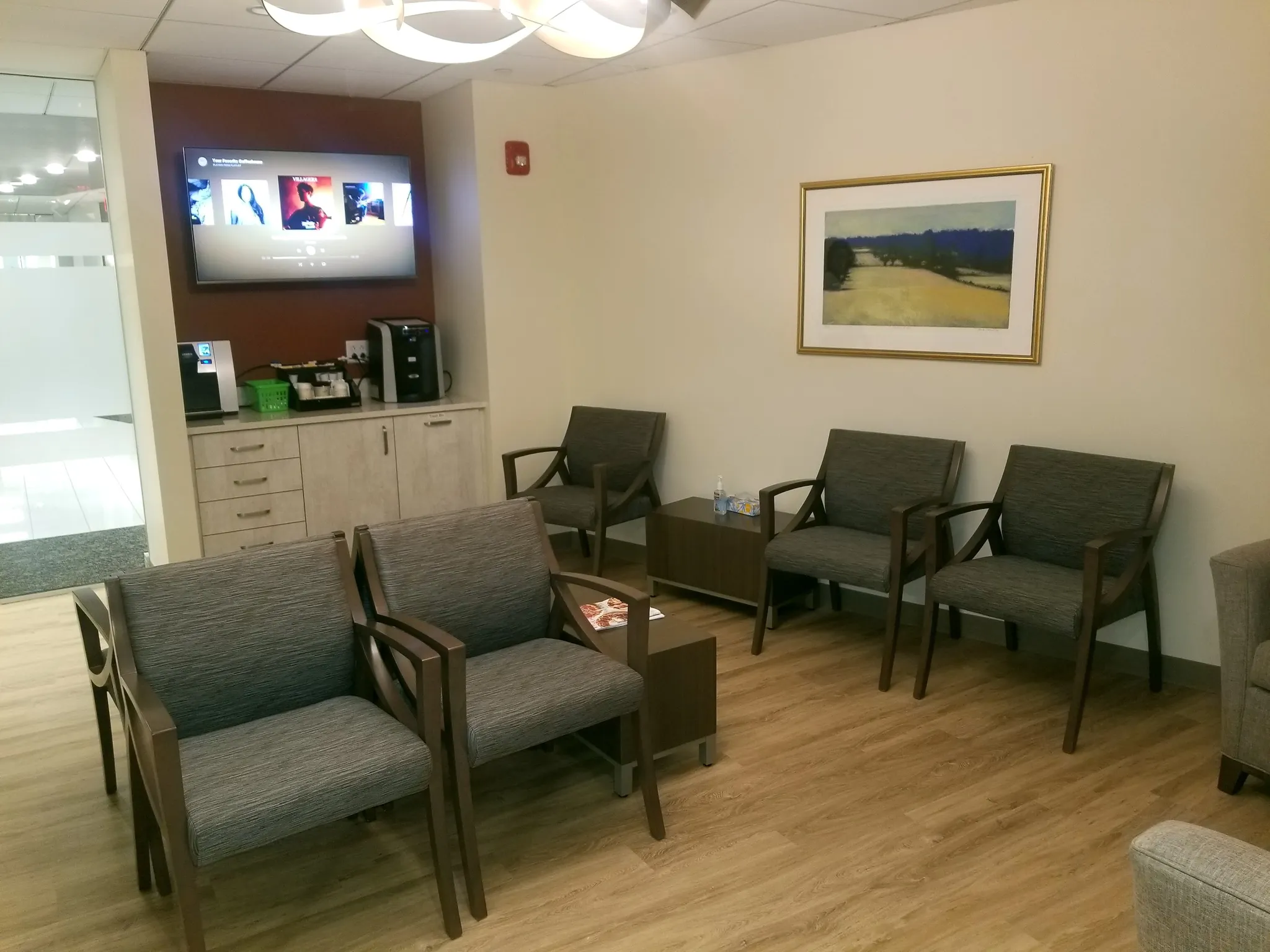

About Boston IVF - Downtown Boston
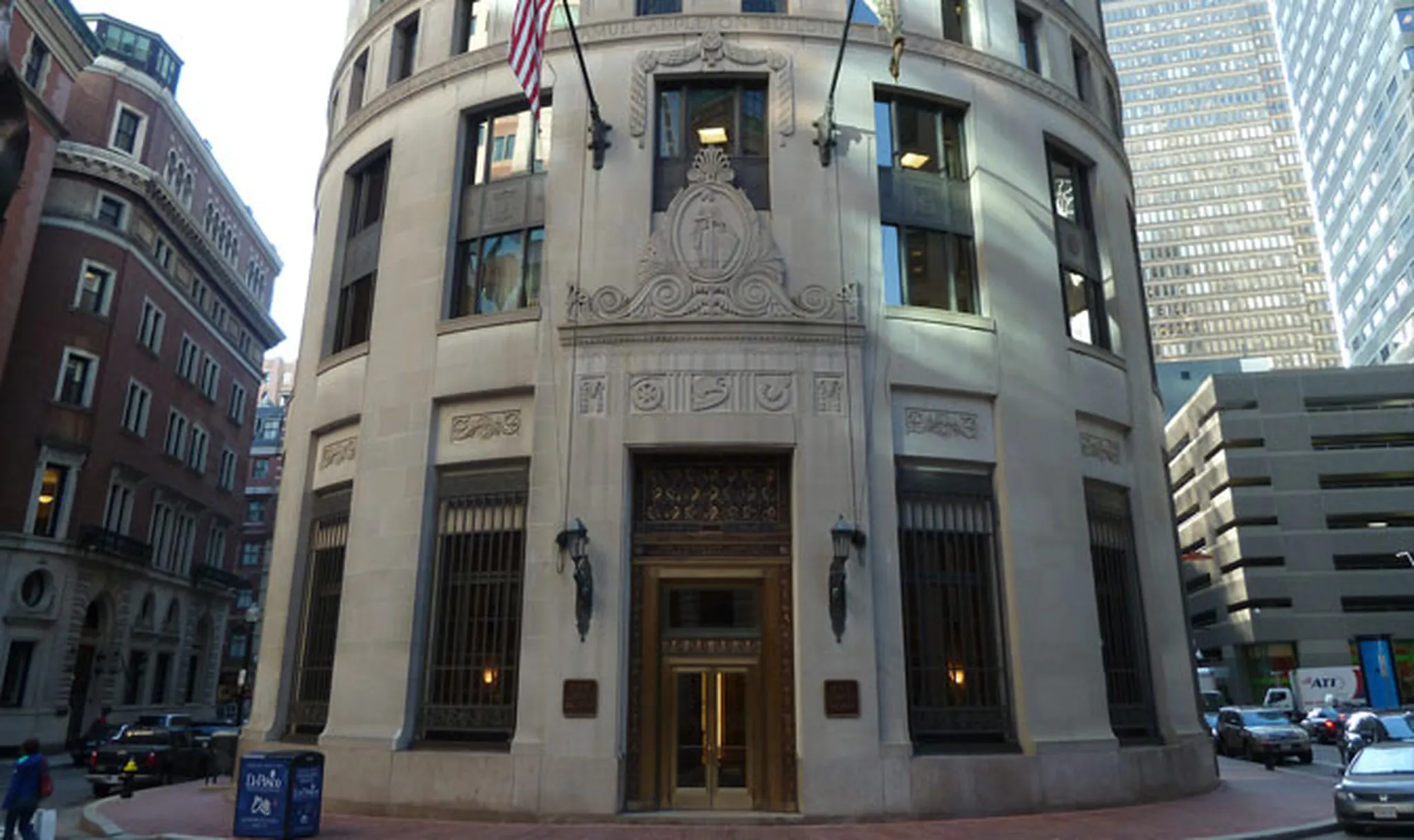
Start with what this office is not: it is not an IVF center. Boston IVF sorts its own locations into three types on the Locations index — 11 full-service IVF centers, 10 monitoring centers, and 1 wellness center, 22 addresses in all. One Liberty Square, 9th Floor, is one of the monitoring centers, and the practice lists exactly three services at this address: consultations, blood and ultrasound monitoring, and saline infusion sonography (SIS).
That distinction is the whole point of the place. A stimulation cycle is a scheduling problem before it is a medical one: repeat bloodwork and scans, often early in the morning and sometimes several times a week, at hours that overlap with a workday. Boston IVF’s own description of the model is that it built one of the largest monitoring networks in New England — “more than 10 additional satellite monitoring sites” across Massachusetts, New Hampshire, Maine, Rhode Island and New York — so that monitoring happens near where you live or work instead of at a single campus. This office is the downtown Boston version of that, in the Government Center area, with early-morning appointments and paid municipal garages at Post Office Square and State Street listed as the places to park.
What does not happen here: egg retrieval, embryo transfer, fertilization, embryo freezing, PGT biopsy. All of that requires the embryology laboratory, and it happens at a network IVF center. The parent organization has run cycles since 1986 and advertises “over 150,000 success stories” and an average of 11 babies born a day system-wide; those are network claims across eleven states, not measurements taken at this address.
The outcome numbers on this page are checkable, but read the denominator carefully. A monitoring office generates no retrieval cycles, so nothing is filed here with SART or the CDC. Cycles for the whole Massachusetts network are reported under a single registry entity — Boston IVF, LLC, ClinicPKID 2056, medical director Samuel A. Pauli — and SART’s 2023 final data for that entity records 7,751 cycles with cumulative live birth rates per intended retrieval of 50.6% under 35, 36.0% at 35-37, 25.8% at 38-40 and 9.1% at 41 and over. The 41-and-over figure is a weighted blend of two bands the registry reports separately: 10.5% across 380 retrievals at 41-42 and 6.4% across 202 at 42 and over. Against the SART 2023 National Summary row of 53.2 / 39.9 / 26.2 / 9.4, the network sits just below the national figure at every age band — not a standout, not a red flag, and in any case not a result attributable to the Downtown office. Our sources hold no fresh-versus-frozen split for this reporting entity, so none of these numbers should be read as protocol-specific.
Patient ratings collected for this listing average 2.7 out of 5 across 21 reviews. That is well below the other Boston IVF addresses we carry — 4.3 across 322 reviews at Waltham, 3.9 across 64 at South Portland — and it belongs to this building alone. The Google listing is titled simply “Boston IVF”, but its registered location is the 9th floor of One Liberty Square, so the score is this office’s rather than the network’s. If you are registering here for monitoring while your cycle is run elsewhere, ask your coordinator which address generated the reviews you are reading.
Accreditations & Awards
- SART member reporting at network level. Boston IVF, LLC submits cycle and outcome data to SART and the CDC, which is why the age-band figures above can be pulled from the public registry rather than taken on faith. This monitoring office is inside that entity and files no report of its own.
- CAP and CLIA — network laboratories, not this address. Boston IVF’s safety page states that the practice is accredited by bodies including the College of American Pathologists and meets CLIA laboratory standards, language aimed squarely at laboratory protocols. This office has no laboratory, and our sources record no verifiable CAP or CLIA number for it, so treat both as claims about the network’s IVF labs.
- New England firsts — network-level, not site-specific: the first IVF/ICSI pregnancy and first donor-egg pregnancy in New England, and the first Massachusetts birth using a patient’s own frozen eggs. None of these is dated or located at One Liberty Square.
- Castle Connolly rankings — the practice’s own published claims, in two separate windows: named a top 5 private practice in the nation for reproductive medicine in 2025, and ranked #1 among private groups in Massachusetts and in the Boston metro area for both reproductive medicine and women’s health across 2024-2025.
- A Newsweek ranking that belongs to another office. Boston IVF - The Waltham Fertility Center was named #11 in Newsweek’s America’s Best Fertility Clinics 2026. The Downtown monitoring office was not on that list.
- Research record, network level. The system publishes landmark studies on fertility care for minority patients and transgender family building, and a research program the practice says informs its evolving standard of care.
- Group affiliation. Boston IVF’s own site and social posts place it inside the IVI RMA North America network; the practice notes that multiple IVI RMA clinics were named in Newsweek’s 2026 America’s Best list.
Why Choose Boston IVF - Downtown Boston
- Monitoring before your workday starts. Bloodwork and a scan several times in a treatment week is the demanding part of a cycle. This office exists to absorb that part near downtown Boston and Government Center, with the early-morning slots the network advertises as the reason its monitoring sites exist.
- The plan stays with your doctor. Monitoring sites are staffed by fertility professionals who coordinate with the physician running your cycle; dose changes and trigger timing are decided by that physician, not by whoever draws your blood. Registering here for monitoring does not hand your protocol to a satellite.
- Consultations with named reproductive endocrinologists. The office keeps no roster of its own. In-person consults are covered by physicians from the network who list Downtown Boston as a consult location — Nina Resetkova and Hadi Ramadan, who consult at this address, and Sandy Li, who splits Downtown Boston with Stoneham. Ask for one of them by name when you book.
- Laboratory depth behind a small front office. When a cycle needs ICSI, PGT, freezing, donor gametes or a surgical case, it moves to a network center with an embryology and andrology laboratory, Waltham being the largest in the system. You get the network’s bench without travelling to it every second day.
- One honest caveat to weigh. A 2.7 average across 21 reviews is thin, and this address publishes no pricing and no site-specific outcome data. Go in with the questions that actually matter to you: which lab processes your cycle, where your embryos would be stored, and which building your transfer happens in.
IVF & Fertility Services
Listed by the practice for this address:
- Consultations — initial and follow-up visits with a covering reproductive endocrinologist
- Blood and ultrasound cycle monitoring — hormone panels and follicle tracking through a stimulated or natural cycle, in early-morning slots
- Saline infusion sonography (SIS) — ultrasound assessment of the uterine cavity with saline
Not performed at this address. These are carried out at the network’s full-service IVF centers:
- IVF and ICSI, including retrieval, fertilization, culture and transfer
- IUI and ovulation induction
- HSG and semen analysis — both listed at full-service centers such as Portland and Waltham rather than here
- PGT-A and PGT-M embryo screening, which needs a laboratory biopsy
- Egg, sperm and embryo freezing for medical or elective preservation
- Donor egg, donor sperm, donor embryo and gestational carrier programs
- Gynecologic surgery for fibroids, polyps, adhesions or tubal disease
Carried at network level rather than on this office’s service list: telehealth consultations, and the Wellness Center’s acupuncture, counseling and nutrition programs. Confirm that a support service is available at the address you are attending before assuming it travels with your registration.
Fees & Packages
There is no published price list — for this office or for the network. Nothing on the Downtown page itemizes a cost, and monitoring visits are only one line in a cycle bill that also covers medications, the laboratory, anesthesia and storage. Ask for the estimate in writing from the center that will run your cycle, and ask that it break out clinic and monitoring, laboratory and embryology, anesthesia, and medications plus storage.
What Boston IVF publishes at network level is help paying for it, and none of it is a Downtown-specific contract:
- Insurance verification before treatment, with a published list of plans the network accepts
- Financing programs for patients paying out of pocket
- A member discount program for Costco members, offered through the Sesame platform
- Grant pathways the practice points patients toward, including the Boomer Esiason Foundation IVF Grant and the Kids Like Connor IVF Grant
- Employer-benefit advocacy resources from Fertility Within Reach, Progyny’s Talk to HR and Resolve
Massachusetts is one of the earlier states to require qualifying insurance plans to cover some infertility diagnosis and treatment, which is why in-state patients have more to claim than patients in mandate-free states. Plan-by-plan exclusions and cycle limits still exist, so verify your own documents rather than assuming the mandate settles it. On logistics: the practice’s directions point to the Post Office Square and State Street municipal garages, and no patient parking allowance is listed for this address.
Patient Journey
- Book the appointment, online or by phone, saying which stage of treatment you are in and what time you can attend.
- First visit at One Liberty Square: history, menstrual and intercourse timing, prior test reports, and a list of the assessments still missing before a plan can be set.
- Monitoring schedule. Once stimulation starts, bloodwork and ultrasound at this office, often early morning and several times across a week, with results relayed to the prescribing physician who decides on dose changes and the trigger shot.
- SIS at this address if your physician wants the uterine cavity looked at before a transfer.
- The procedure moves buildings. Retrieval, fertilization, culture, biopsy and transfer happen at the network center running your cycle. Get that location confirmed in writing before you time a trigger shot around a commute you have not made yet.
- After transfer, ask who draws your pregnancy blood test and where follow-up ultrasounds happen — this office does monitoring, but confirm it will take your specific visit before assuming you can skip the trip to the treating center.
Local Legal Framework
This office performs consultations and monitoring only, so the legal steps that attach to a cycle — parentage, donation contracts, embryo disposition — are settled at the treating center. At state level in Massachusetts:
- Donor eggs, sperm and embryos: donation is lawful in Massachusetts and runs on a written donation agreement setting out each party’s rights and obligations.
- Gestational carriers: altruistic arrangements are practiced, but compensated surrogacy agreements have no comprehensive authorizing statute in the materials we hold and their enforceability is treated as unsettled. Intended parents and the carrier normally keep separate counsel before medications begin.
- Embryo legal status: we hold no Massachusetts rule classifying an embryo as a legal person or as property. What governs in practice is the storage and disposition consent you sign when embryos are created, so read those forms as the contract they effectively are.
- Genetic testing: PGT-A and PGT-M carry no Massachusetts-specific restriction beyond informed consent, with the laboratory work done at a network center.
- Insurance: the state’s mandate for some infertility and IVF coverage predates most others in the country; scope and cycle limits are still set plan by plan.
- LGBTQ+ families: Massachusetts parentage rules do not turn on the sex or marital status of the intended parents.
For third-party reproduction — donor gametes, donor embryos or a gestational carrier — take the paperwork to a Massachusetts reproductive attorney before starting treatment. Our material gives the state-level position qualitatively and does not itemize the statute numbers or procedural requirements.
Location
- Address: One Liberty Square, 9th Floor, Boston, MA 02109
- Phone: +1 (857) 244-6750