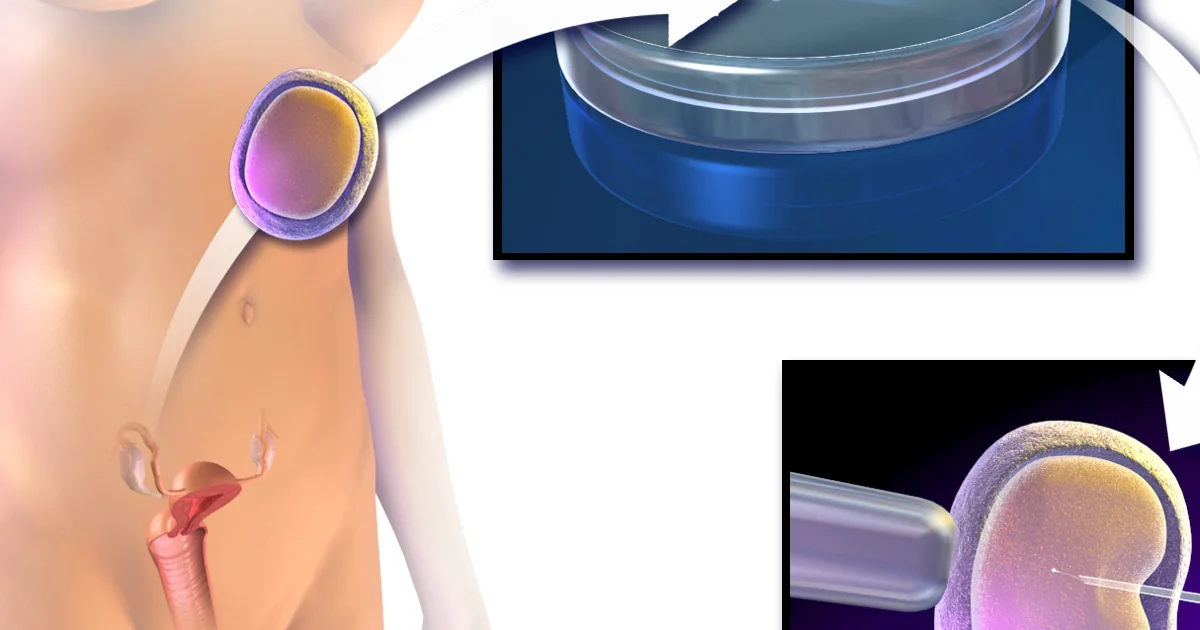
No — you cannot complete a full IVF cycle at home. Egg retrieval is a surgical procedure done under anesthesia and embryos must be grown in a licensed embryology laboratory, neither of which a house can provide.
What can happen at home is the part patients routinely underestimate: self-injected hormones, telehealth visits, and the “remote-monitoring” or “at-home IVF” model some clinics run — local bloodwork and scans near you, with a specialist steering the cycle from afar.
Data here comes from the CDC’s assisted reproductive technology (ART) surveillance program, public ASRM guidance and clinic-published program information, compiled by the ProIVF Medical Editorial Team and reviewed by the ProIVF Medical Advisory Board.
The confusion is understandable, because “IVF at home” searches mix three different things: legitimate remote-care programs, at-home insemination tutorials (a completely different treatment), and home kits that only monitor your cycle. Telling them apart saves thousands of dollars — and keeps you off genuinely unsafe shortcuts.
“In vitro fertilization (IVF) is a series of procedures that combine eggs and sperm for artificial fertilization, and to establish a pregnancy.” — U.S. Centers for Disease Control and Prevention, Assisted Reproductive Technology program documentation (2024)
What Can and Cannot Be Done at Home: The Quick Table
Only injections, consultations and (in remote programs) local monitoring move home; the three medical core steps never do.
| Step of an IVF cycle | At home? | Where it actually happens |
|---|---|---|
| Fertility bloodwork and ultrasound monitoring | Mostly no — needs clinic-grade equipment | Clinic or a local partner lab |
| Hormone injections (stimulation and progesterone) | Yes — most patients self-inject after training | Home |
| Telehealth consultations | Yes | Home |
| Egg retrieval | No — outpatient surgery | Clinic procedure room |
| Fertilization and embryo culture | No — requires an IVF lab | Clinic embryology lab |
| Embryo transfer | No — ultrasound-guided procedure | Fertility clinic |
| At-home insemination (sperm placed in vagina/cervix) | Yes — but this is not IVF | Home or clinic |
The biggest misunderstanding hiding in “at home IVF” results is conflating IVF (fertilization happens in a lab) with at-home insemination (sperm is placed in the body and fertilization happens on its own). They are entirely different treatments — more on that below.
What Does “At-Home IVF” Actually Mean?
When a clinic advertises “at-home IVF,” it almost always means IVF with remote monitoring — not IVF performed in your living room. Everything that needs clinic facilities still happens at the clinic; only the convenient steps move home.
New Hope Fertility Center’s At-Home IVF program is a representative model:
- A video consultation sets a personalized stimulation protocol.
- Monitoring (ultrasounds and bloodwork) happens at a facility near you.
- The clinic’s reproductive specialist runs the whole cycle remotely.
- You travel to the clinic’s city for exactly two things: egg retrieval and embryo transfer — in New Hope’s flow, typically two trips to New York.
The model is not new — satellite monitoring has existed for decades — but telehealth made it common, and it is often paired with gentler protocols like mini IVF, mild stimulation that need fewer monitoring visits. Per New Hope’s published pricing, its at-home program starts around $8,000 per cycle versus about $20,000 for conventional IVF at the same center. The savings come from fewer drugs and fewer in-clinic visits — not from skipping medical steps.
Why Can’t Egg Retrieval and Embryo Culture Happen at Home?
Three hard medical reasons:
Egg retrieval is a surgical procedure
Mature eggs sit inside ovarian follicles, and getting them out means passing a needle through the vaginal wall under ultrasound guidance, usually with sedation or anesthesia. It is outpatient surgery with real — if small — risks: bleeding, infection, and ovarian hyperstimulation syndrome (OHSS), where the ovaries over-respond to stimulation drugs, swell and leak fluid.
It must happen where a doctor can monitor you and treat complications immediately. The full walkthrough is in our egg retrieval guide.
Embryos need a specialized IVF laboratory
After retrieval, eggs meet sperm in a culture dish; where needed, an embryologist injects a single sperm into each egg under the microscope (ICSI). Embryos then grow 3–6 days in incubators with precisely controlled temperature, humidity and gas, in labs meeting strict air-quality and accreditation standards.
None of that is replicable with consumer gear: in the US, ART labs are regulated and must meet federal and accreditation requirements, and the American Society for Reproductive Medicine, ASRM publishes laboratory practice standards. There is no such thing as a home embryo incubator.
Embryo transfer needs ultrasound guidance
Putting the embryo back means threading a thin catheter through the cervix while ultrasound guides it to the optimal spot. It is quick and usually painless — and it is still a physician-performed clinical procedure.
The practical bottom line: every real IVF cycle includes at least one clinic visit for retrieval and one for transfer, however much of the rest happens remotely.
Are “At-Home IVF Kits” Real? What These Products Actually Do
Searches for “ivf kit” surface tempting products, but nothing on the market — and nothing cleared by regulators such as the US FDA — can retrieve eggs, fertilize them or culture embryos at home. Here is what “IVF-adjacent” home products actually are:
| Product you may see advertised | What it really does | Is it IVF? |
|---|---|---|
| Ovulation predictor / cycle-monitoring kits | Track the luteinizing hormone (LH) surge to time intercourse or insemination | No |
| At-home insemination kits | Collection cup, syringe or cervical cap for placing sperm at home | No — insemination, not IVF |
| Sperm collection / analysis kits | Collect a sample for lab analysis or clinic use | No |
| ”DIY IVF” / “IVF monitoring at home” services | Remote cycle monitoring coordinated with a real clinic | No — monitoring only; the clinic still does retrieval and transfer |
The dangerous version: unlicensed sellers offering “home IVF” procedures or selling stimulation drugs with no doctor. Buying injectable hormones online and self-administering them without ultrasound monitoring can let multiple follicles grow out of control — precisely the setup for severe OHSS, which can require hospitalization. Fertility drugs are prescription-only for a reason. If a “deal” claims to replace your fertility clinic entirely, it is not IVF — it is a scam or a health risk.
What Can You Safely Do at Home During an IVF Cycle?
A large share of the patient workload genuinely happens at home, and doing it well improves the whole experience:
- Self-injections. Most stimulation drugs — FSH medications like Gonal-F, GnRH antagonists such as Cetrotide, and progesterone in oil later on — are small subcutaneous or intramuscular shots. Clinics train you (or send a nurse), and most patients manage after a few tries. Our IVF injections guide covers technique, site rotation and staying calm.
- Telehealth visits. Consultations, protocol reviews and result discussions increasingly happen by video.
- Local monitoring. In remote programs, blood draws and scans happen nearby and results go straight to your IVF team.
- Recovery and aftercare. The two-week wait — the 14 days from transfer to the first pregnancy blood test — happens at home; our embryo transfer aftercare guide sorts what helps from what doesn’t.
None of these replaces the clinic — they orbit it.
Is Remote “At-Home” IVF Cheaper? The Real Numbers — and the Savings Trap
The appeal is usually financial, so compare honestly:
- Conventional US IVF typically runs $15,000–$25,000+ per cycle before medication; country-by-country figures are in our IVF cost guide.
- Remote-monitoring / mild-stimulation programs can cost less. New Hope’s published example again: at-home mini IVF from about $8,000 per cycle plus medication, versus roughly $20,000 for conventional IVF at the same center. The savings come from fewer drugs and fewer visits — and you must add travel for retrieval and transfer if you don’t live in the clinic’s city.
- At-home insemination kits cost about $100–$500 and are genuinely cheap — because they are not IVF and their success rates are not in the same league. Per the latest CDC national ART data, one IVF cycle with a single embryo transfer yields a live birth in roughly 40% to 50% of patients under 35 (age-by-age breakdown in our IVF success rate by age guide); at-home insemination succeeds only as well as natural timing allows.
The trap is comparing an IVF price against an insemination price and concluding “IVF at home is a bargain.” A product that cannot retrieve your eggs or grow your embryos is not competing with IVF — it is competing with an ovulation calendar app.
Patient Stories: Three Ways People Meet “Home IVF”
Shared with consent; names and identifying details changed.
Sarah, 37, Chicago — remote-monitored IVF across two states. Her employer plan didn’t cover IVF, so she compared a local quote (about $24,000) with a New York center’s at-home program and chose remote: scans and bloodwork at a Chicago partner lab, video reviews with her doctor, two trips to New York for retrieval and transfer. Total about $12,000 — roughly $8,000 program plus $4,000 flights and hotel. Her first transfer worked; her son was born in 2026. “The part I dreaded — the monitoring — was the easiest. Bloodwork was three blocks from my apartment. The only travel that mattered was the 2 weeks that actually counted.”
Lin, 41, Austin — the near-miss with a “home kit.” Originally from Shanghai and two years into trying, Lin saw an ad for a “home IVF kit” — no lab needed, just $1,900. She almost ordered it until a telehealth consult with a board-certified reproductive endocrinologist talked her out of it. She later learned she’d been close to self-injecting stimulation drugs with no monitoring — a genuine route to severe OHSS. She completed two retrievals at an Austin clinic (about $22,000 including medication), froze embryos from the second, and her first frozen transfer gave her a daughter in early 2026. “I almost paid $1,900 for something that could have hurt me. The real cycle was expensive — but it was real.”
Megan, 34, and Dan, 36, rural Ohio — insemination mistaken for IVF. After a year of trying, Megan bought a $150 insemination kit she’d found searching “ivf at home,” believing it was a gentler IVF. After several failed rounds, a clinic visit finally drew the line: the kit had never involved her eggs or embryos at all. The couple did one conventional IVF cycle (about $18,000 out of pocket; Ohio has no state IVF mandate): 7 eggs retrieved, 2 blastocysts, a chemical pregnancy from the first transfer, and a son born in 2026 from the second. “Nobody ever told me insemination and IVF are completely different things,” Megan says. “I wish I’d asked a doctor a year earlier.”
FAQ
Q: Can IVF really be done completely at home?
No. Retrieval is surgery and embryos must be cultured in a licensed lab, so every genuine IVF cycle includes at least 2 clinic visits — one for retrieval, one for transfer.
What you can do at home — injections, telehealth, and local monitoring in remote programs — surrounds those two steps but never replaces them.
Q: Are at-home IVF kits real?
Not as advertised. No regulator-approved consumer product can retrieve eggs, fertilize them or culture embryos.
Items sold as “IVF kits” — typically $100–$500 — are ovulation monitors, sperm collection kits or at-home insemination kits: legitimately useful for what they actually do, but not IVF.
Q: What is the difference between at-home insemination and IVF?
Insemination places sperm in the vagina or cervix and lets fertilization happen inside the body naturally. IVF retrieves the eggs, fertilizes them in a lab, and transfers an embryo after 3–6 days of culture.
IVF bypasses the fallopian tubes entirely and treats tubal factor, severe male factor and many other diagnoses — insemination does none of that.
Q: Which parts of an IVF cycle can be done from home?
Hormone injections (after training), telehealth appointments, and — in remote-monitoring programs — bloodwork and ultrasounds at a nearby facility, leaving just the 2 procedures that must happen at the clinic. Some clinics brand this “at-home IVF” or “IVF with outside monitoring.”
Q: Can I buy stimulation drugs online and inject them without monitoring?
Don’t. These are prescription drugs, and using them without ultrasound monitoring can let multiple follicles grow unchecked — the setup for severe OHSS requiring hospitalization.
The $1,900 “home kit” in Lin’s story above is exactly this trap: if a seller doesn’t require a doctor and a monitoring plan, walk away.
Q: Is remote at-home IVF cheaper than conventional IVF?
Usually somewhat, because mild protocols use fewer drugs and fewer visits: one published program lists at-home mini IVF at about $8,000 per cycle versus about $20,000 for conventional IVF at the same center — before travel. Ask for an itemized quote and compare total out-of-pocket cost, not the sticker price.
Q: Do home fertility tests help during an IVF cycle?
Some are useful adjuncts — ovulation tracking, first-pass semen screening — but no home product replaces clinic-grade monitoring during treatment. Bloodwork and scan results drive medication dosing; even in an at-home program starting at about $8,000, those readings still come from a real lab, not a home test.
How Should You Plan Your IVF Journey Instead?
If the goal is fewer visits and lower cost, the realistic path is not a DIY kit — it is choosing a clinic whose model fits: remote monitoring, mild stimulation, or a lower-cost IVF destination abroad. Start by understanding the full IVF process step by step, confirm what your insurance actually covers, and collect itemized quotes from at least two clinics before deciding.
Browse verified fertility clinics on ProIVF, or contact our team to talk through your options — we help patients compare real programs, not imaginary ones.
Written by the ProIVF Medical Editorial Team and reviewed by the ProIVF Medical Advisory Board, based on the primary sources linked throughout — government ART surveillance data, professional society guidance and clinic-published program information. New Hope pricing comes from that clinic’s public disclosures; ProIVF has no commercial relationship with New Hope Fertility Center or any other organization mentioned.
Medical disclaimer: This article is for informational purposes only and does not replace professional medical advice, diagnosis or treatment. Always consult a qualified fertility specialist about your individual situation.
Last updated: September 7, 2026