What Is INVOcell and How Does It Differ From IVF?
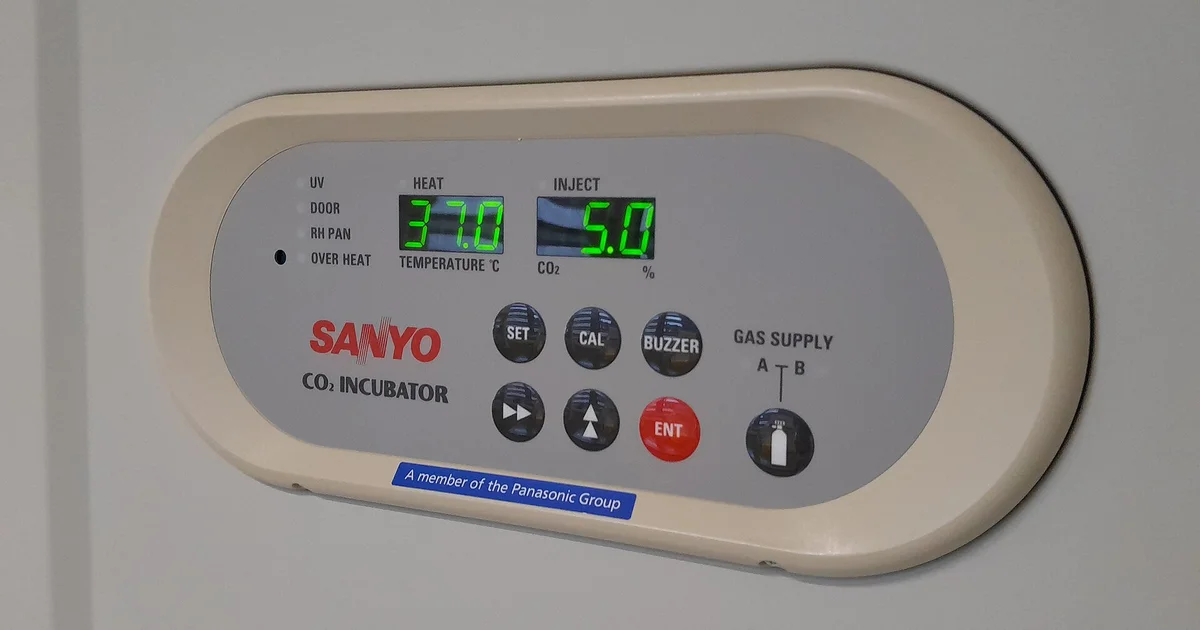
INVOcell cultures eggs and sperm inside a sealed device that the patient wears in her vagina for three to five days, while standard IVF keeps the same embryos in a laboratory incubator held at 37 °C and 5% carbon dioxide.
Everything before and after that window is unchanged: the stimulation injections, the trigger shot, the retrieval, the fertilization step and the transfer are all the procedures you would recognise from a step-by-step IVF cycle.
Where does the embryo actually grow?
The device has an inner chamber that holds oocytes, sperm and culture medium, and an outer shell that keeps the chamber in place in the vaginal vault. Body heat supplies the 37 °C, and the vaginal mucosa maintains the carbon dioxide tension the embryos need, so no incubator, no laboratory air handling and no embryologist sitting beside the dish are required during culture.
The US Food and Drug Administration cleared the device for minimal-stimulation cycles, culture of up to 72 hours and a maximum of seven oocytes; many clinics now use it for five days to reach the blastocyst stage, which is use beyond the cleared instructions.
What stays identical to a standard IVF cycle?
Almost everything that determines your bill and your calendar. Retrieval is still a surgical procedure under sedation, fertilization can still be conventional or by ICSI, and embryos are still graded, transferred or frozen on the same schedule described in our embryo development guide.
| Step | Standard IVF | INVOcell |
|---|---|---|
| Stimulation | Conventional or mild protocols | Designed around mild stimulation; clinics vary |
| Trigger and retrieval | Same | Same, including egg retrieval procedure |
| Fertilization | Insemination or ICSI in the lab | Insemination or ICSI, then the chamber is loaded |
| Culture site | Incubator at 37 °C, 5% CO₂ | Vagina, sealed chamber, 3–5 days |
| Transfer day | Day 3 or day 5 | Usually day 5 (95% of real-world cycles) |
| Embryo freezing | Any surplus blastocysts | Possible, but often fewer surplus embryos |
| Genetic testing | Biopsy of any blastocyst | Possible in principle, limited by embryo numbers |
Do INVOcell and IVF Produce the Same Embryos?
Not quite: in the only randomized trial that compared the two head to head, conventional IVF produced 50.6% top-quality blastocysts against 30.7% with intravaginal culture, yet live birth rates were 60% and 55% respectively and were not statistically different.
That gap matters more than it first appears. Fewer quality blastocysts means fewer embryos to freeze, fewer to biopsy for PGT-A and less cushion if the first transfer fails.
What did the randomized trials find?
The 2016 trial randomized 40 women under 38 with a body mass index below 36 and an anti-Müllerian hormone level between 1 and 3 ng/mL to either intravaginal culture or conventional incubation, using the same mild gonadotropin protocol and a single monitoring scan — Doody et al., Journal of Assisted Reproduction and Genetics, 2016.
Quality blastocysts transferred were 97.5% of those available in the IVF arm versus 84.9% in the device arm (p = 0.09), which is the number that explains the similar birth rates: the embryos that made it to transfer looked equivalent even though the device produced fewer of them overall.
“IVF was shown to be superior to IVC in creating quality blastocysts. However, both IVF and IVC produced identical blastocysts for transfer resulting in similar live birth rates.” — Doody et al., Journal of Assisted Reproduction and Genetics, 2016 (PubMed 26843390)
A smaller Brazilian randomized study of eight couples per arm found 46.7% of recovered blastocysts in the device arm versus 40% with conventional culture at day 5, but only 28% expanded blastocysts against 66% in the IVF arm — Aguiar et al., JBRA Assisted Reproduction, 2023. The medium inside the device held its pH at 7.25–7.26, close to the 7.29 of the laboratory dishes.
What do real-world cycles show?
Five US centres reported 463 patients and 526 cycles between them, with blastocyst recovery of 19% to 34% per oocyte loaded and cumulative live birth plus ongoing pregnancy of 29% to 53% per cycle started, or 40% to 61% per transfer — Jellerette-Nolan et al., F&S Reports, 2021.
Those clinics loaded a mean of 6.4 to 9.5 oocytes per device, retrieved 9.2 to 16 oocytes per cycle, transferred on day 5 in 95% of cycles and restricted use mostly to women under 38 with anti-Müllerian hormone above 0.8 ng/mL — useful detail, because it shows what case selection looks like outside a trial protocol.
A 2024 systematic review pooled ten studies and 776 intravaginal culture cycles and reached the same verdict in one sentence: outcomes are comparable to IVF, but quality embryo creation may be lower — Dubois et al., Fertility and Sterility, 2024.
Who Is INVOcell a Good Fit For?
It fits patients who expect a modest egg yield, want a mild stimulation protocol, or are treated where a full embryology laboratory is not available — and it is a poor fit for anyone who needs many embryos banked.
The device is priced and marketed as a lower-cost option, but the honest version of that claim is narrower than the marketing: it removes incubator time and laboratory infrastructure, not medication, retrieval, anaesthesia, ICSI, genetic testing or the transfer itself.
Is INVOcell cheaper than standard IVF?
Nobody has published a verified national price list, and the peer-reviewed literature says so directly — a 2019 case report from the University of Colorado notes that it remains unclear how much savings the method actually delivers — Babcock Gilbert and Polotsky, Case Reports in Women’s Health, 2019.
What you can control is the comparison. Ask for an itemised quote for both pathways covering monitoring scans, retrieval, anaesthesia, culture, ICSI, PGT-A, freezing and storage; a US cycle all-in typically runs $15,000 to $30,000 before add-ons, as our US IVF cost breakdown sets out, so a discount on culture alone rarely changes the total by more than a few thousand dollars.
Can two partners share the pregnancy?
Yes, and this is the one indication where the technology does something a standard incubator cannot: one partner’s eggs can be fertilised and cultured in the other partner’s body before transfer, so both partners contribute physiologically.
That is not a marketing hypothetical. A 2019 case report documented exactly this arrangement under the title “vaginal culture for IVF allows two mothers to carry the same pregnancy”, and the 2024 review of shared-conception technologies treats intravaginal culture as one of two established routes for same-sex female couples alongside reciprocal IVF.
What Are the Limits and Drawbacks?
The limits are embryo arithmetic, regulatory scope and evidence depth, not safety — no trial has reported a safety signal, but no trial has been large enough to exclude a modest difference either.
The most concrete constraint is the one nobody advertises: if you want three blastocysts frozen for later children, a method that yields fewer quality blastocysts per cohort is a bad trade regardless of the price.
What does the evidence still not answer?
There is no randomized evidence in women over 38, no trial powered for cumulative live birth across multiple transfers, and no cost-effectiveness analysis from an independent group; the largest datasets come from a device company’s own real-world registry and from investigators with device-manufacturer affiliations.
Availability is uneven as well. The technology is used in the United States, Brazil, Malaysia and a number of other markets, but it is not offered in most European public systems and not in mainland China, so for families travelling abroad the practical question becomes which destination clinic actually runs the protocol rather than which country has approved a device.
Three Patient Experiences
These accounts are shared with consent and edited for privacy; names and identifying details have been changed, and every clinical figure quoted reflects the sources cited above.
Camila, 34, São Paulo — the six-oocyte cycle. After 14 months of trying with a male-factor diagnosis, she was offered a mild protocol on the grounds that her anti-Müllerian hormone of 1.1 ng/mL made a large egg yield unlikely. Six oocytes went into the device, two blastocysts came back on day 5, one was transferred and her daughter was born at 39 weeks. “The part that surprised me was the quiet,” she said. “No daily calls from the lab, no photographs of embryos — just a device I wore for five days.” Her clinic quoted 32,000 reais (about $5,900 at the time) for the device cycle against 61,000 reais for conventional IVF.
Dana and Priya, 36 and 38, Toronto — shared motherhood. Dana’s eggs were retrieved and fertilised, and the chamber was placed in Priya, who carried the pregnancy. They paid CAD 21,400 for the combined cycle, of which the device component replaced roughly CAD 3,000 of laboratory culture fees. “We wanted one pregnancy that belonged to both of us biologically, not one of us donating and the other carrying,” Priya said. “The five days felt like the only part of the whole process that was ours.” One euploid blastocyst was transferred and she delivered at 38 weeks.
Aisha, 41, Kuala Lumpur — the cycle that did not work. With an anti-Müllerian hormone of 0.5 ng/mL she produced four oocytes, one blastocyst formed, and the single transfer did not implant. The clinic charged 19,000 ringgit (about $4,000) and she moved to a donor-egg programme the following year. “I do not regret trying it,” she said, “but nobody told me that one blastocyst is a normal result at 41, not a bad-luck result.” That is the arithmetic the trial data implies: fewer quality blastocysts per cohort leaves less margin for a failed transfer.
FAQ
Q: Is INVOcell as successful as standard IVF?
Per transfer, essentially yes: the randomized trial reported live birth of 60% with IVF and 55% with the device in 40 selected women, and the 526-cycle real-world series reported 40% to 61% per transfer. Per cycle started, expect a lower cumulative result because fewer surplus embryos are available to freeze.
Q: How long does the device stay inside?
Three days for the original cleared protocol of up to 72 hours, and five days at most clinics that culture to blastocyst; 95% of the 526 real-world cycles transferred on day 5, and you go to the clinic for removal rather than removing it yourself.
Q: How many eggs fit in one device?
The FDA-cleared limit is seven oocytes, and real-world clinics loaded a mean of 6.4 to 9.5, with a reported maximum of 34 in a single device. If your anticipated yield is 15 or more, you are outside the label and should ask how the clinic handles it.
Q: Can you do PGT-A with INVOcell?
Technically yes, because a blastocyst can be biopsied after the five days of culture. Practically the trial data argues against relying on it: 30.7% of oocytes yielded quality blastocysts versus 50.6% with conventional culture, so you may have fewer embryos to test.
Q: Does wearing the device hurt?
Reported experience is pressure or awareness rather than pain, and the trials describe it as well tolerated. What the literature does not provide is a validated comfort score, so ask the clinic how many of its last 100 patients asked for early removal.
Q: Is INVOcell available in China?
Not as a licensed clinical service: the US clearance covers up to 72 hours and seven oocytes, it is used in Brazil, Malaysia and selected other markets, and mainland China has no approved clinical programme. Families considering it usually pair the decision with a destination visit, which is why clinic-level verification matters more than device approval.
Q: Who should not choose INVOcell?
Women over 38, anyone with an expected yield well above seven oocytes, anyone planning PGT-A on several embryos, and anyone whose clinic cannot offer a day-5 transfer protocol. In those groups the device’s lower blastocyst yield works directly against the goal.
Q: Does the vagina really replace an incubator?
For temperature and carbon dioxide, largely yes: the device is sealed, body temperature holds 37 °C, and the vaginal environment maintains the gas tension, which is why the measured pH inside the chamber stayed within 0.04 of laboratory dishes in the 2023 comparison.
What to Keep
Four things decide whether this choice is rational for you:
- Compare per transfer and per cycle started, because the trial’s 60% versus 55% live birth figure is per transfer and hides a smaller embryo pool.
- Ask how many blastocysts you can realistically freeze, since fewer quality blastocysts is the documented cost of the method.
- Request itemised quotes for both pathways rather than a headline discount, because culture is only $1,500 to $4,000 of a $15,000 to $30,000 US cycle.
- Verify the clinic runs a day-5 protocol and has a plan for surplus oocytes, because the seven-oocyte and 72-hour limits are the label, not the practice.
If your priority is the largest possible embryo pool for genetic testing or repeated transfers, conventional incubation remains the safer default; if your priority is a low-intervention cycle or shared biological parenthood, the device is a legitimate option rather than an experiment.
Embryo and outcome figures in this article come from the randomized trials and real-world series cited above, indexed in PubMed; national success-rate context is published by the CDC’s ART surveillance programme and the Society for Assisted Reproductive Technology. To compare clinics that offer either pathway, browse our verified clinic profiles or contact the ProIVF team.
About this article: Researched and written by the ProIVF Medical Editorial Team from PubMed-indexed randomized trials, a 526-cycle multicentre series, a 2024 systematic review and FDA-labelling descriptions reproduced in the peer-reviewed literature, with AI-assisted tools used only for literature organization and initial drafting under editorial direction. Reviewed by the ProIVF Medical Advisory Board; our editorial standards are on our About page. ProIVF has no commercial relationship with any device manufacturer or clinic named here, and this article is not medical advice.





