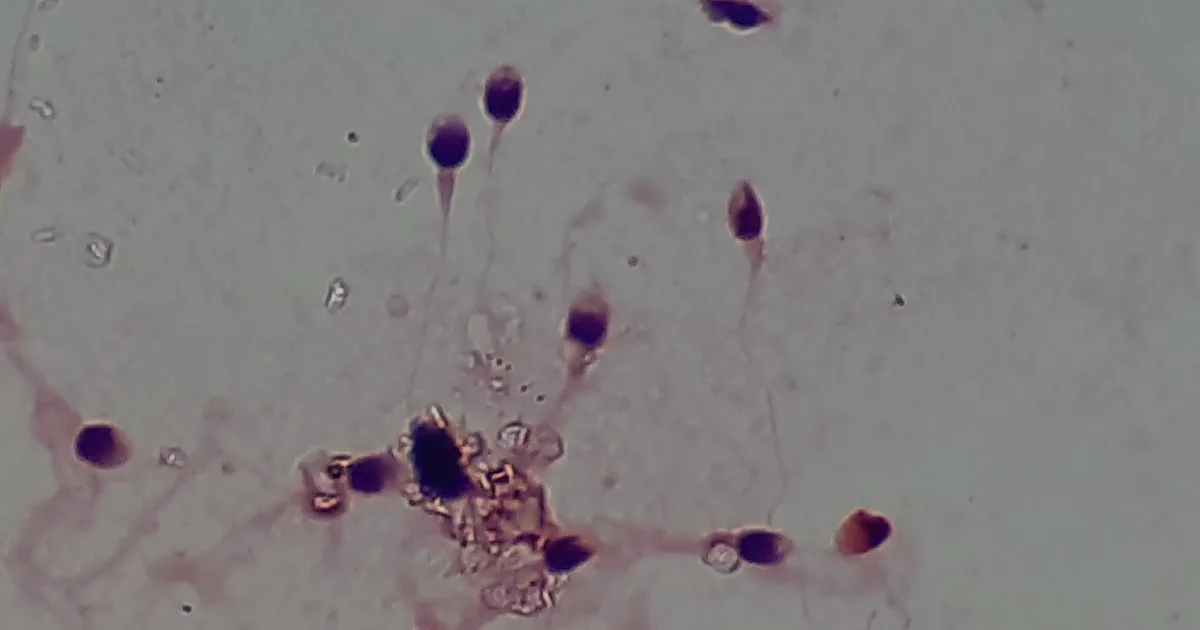
For men, Pregnyl treats one FDA-listed cause of infertility, hypogonadotropic hypogonadism, with sperm first appearing at a median of 7.5 to 15 months on therapy. The label states the male indication in one line: “Selected cases of hypogonadotropic hypogonadism (hypogonadism secondary to a pituitary deficiency) in males.”
Pregnyl is urinary-derived human chorionic gonadotropin (hCG), and hypogonadotropic hypogonadism means a weak pituitary signal to the testis, not a failing testis. This article draws on the FDA-published Pregnyl prescribing information on DailyMed and on peer-reviewed studies indexed in PubMed. The ProIVF Medical Editorial Team wrote it and the ProIVF Medical Advisory Board reviewed it. The doses shown are the label’s, not a prescription for you.
What Does the Pregnyl Label Actually Approve for Men?
One of the label’s three indications covers men: hypogonadotropic hypogonadism, quoted word for word below.
“Selected cases of hypogonadotropic hypogonadism (hypogonadism secondary to a pituitary deficiency) in males.” — Pregnyl (chorionic gonadotropin) prescribing information, DailyMed, effective 2 December 2025
The parenthetical does the deciding: the deficiency has to sit above the testis, at the pituitary. hCG is not approved for men whose testes themselves have failed.
The label’s contraindication list opens with “High serum FSH, indicating primary gonadal failure”. A raised FSH is the signal that the testis, not the pituitary, is the broken part — and Pregnyl cannot help there.
How is Pregnyl supplied and given?
Each vial holds 10,000 USP units of chorionic gonadotropin, a dose counted in units of hormone activity rather than milligrams. The drug is a dried powder, reconstituted by mixing with a solvent before use, and that solvent contains benzyl alcohol.
The FDA-published label sets the route and the vial rule in one line: “For intramuscular use only. Each multiple-dose vial is to be used for one patient.”
Intramuscular means the drug goes into a muscle, not under the skin. A multiple-dose vial holds more than one injection, and one patient uses it.
What are the two label regimens for men?
The label’s two male regimens differ by months, not days: one runs 6 weeks, the other 9 to 12 months. Both appear as schedules “advocated by various authorities,” not as a single approved protocol.
| Label regimen | Dose in USP units | Duration |
|---|---|---|
| Series 1 | 500 to 1,000 three times a week, then the same dose twice a week | 3 weeks + 3 weeks |
| Series 2 | 4,000 three times weekly, then possibly reduced to 2,000 three times weekly | 6 to 9 months, plus an additional 3 months |
Three injections of 4,000 USP a week is 12,000 USP weekly, about 52,000 USP a month, and roughly 470,000 USP across nine months — close to 47 vials of the 10,000 USP strength. That arithmetic is why clinic protocols, and clinic bills, diverge so widely on this drug; ask for the dose, the vial strength and the number of injections per month in writing.
Why Is the Same Drug a Trigger Shot for Women and a Months-Long Treatment for Men?
The difference is duration, not drug: a trigger shot is 5,000 to 10,000 USP units given once. The longer male regimen is 4,000 USP three times weekly for 6 to 9 months.
For ovulation induction the label gives that dose “1 day following the last dose of gonadotropins,” as a single event mimicking the LH surge. LH stands for luteinizing hormone, the surge that releases an egg. For a man with pituitary failure there is no surge to mimic. The deficit is permanent, so the signal has to be supplied again and again.
The asymmetry also reflects what each gonad has to do. Ovulation releases an egg that already exists. Spermatogenesis, the testis’s own sperm-production cycle, has to restart inside the seminiferous tubules — the coiled tubes where sperm are made.
The cells that finally appear in the ejaculate were recruited months before they become detectable. So a negative semen analysis at month 3 carries almost no information, and the published medians cluster between 7.5 and 15 months rather than weeks.
Why Does Pregnyl Work in Some Men and Not Others?
Pregnyl is not testosterone, and it replaces only one of the two signals the testis needs. Men who also lack FSH, the hormone that drives sperm production, respond more slowly and less completely.
hCG mimics LH because the two share an identical alpha subunit. That mimicry tells the Leydig cells, the testis’s own testosterone factories, to produce testosterone inside the testis — the intratesticular concentrations spermatogenesis needs.
The WHO reference values set the semen thresholds a treated man is measured against. In the sixth edition the lower reference limits are a concentration of 16 million/mL, total motility of 42% and progressive motility of 30%. Progressive motility counts only the sperm swimming straight ahead.
- Combination beats monotherapy: a meta-analysis of men with congenital hypogonadotropic hypogonadism pooled 1,240 men (PMID 39434392). Weighted mean time to sperm recovery was 10 months with combination therapy versus 33 months with monotherapy, and recovery rates were 66.76% versus 51.9%.
- A pooled outcome picture: a second meta-analysis covered 41 studies and 1,673 men (PMID 39445789). After a median 18 months of treatment, mean sperm concentration was 11.6 million/mL (95% CI 8.4–14.9), and hCG plus FSH beat hCG alone.
- Most men do not reach normal counts: in that same pooled analysis, 78% of treated men had any sperm appear and 55% exceeded 1 million/mL. Fewer cleared the higher bars: 36% exceeded 5 million/mL, 24% exceeded 10 million/mL, and only 15% exceeded 20 million/mL.
The 1,240-man meta-analysis carried high heterogeneity (I² = 86% and 68%), so treat its direction as solid and the exact months as approximate. For many men Pregnyl is a route to any sperm rather than to reference-range counts. Sometimes that is enough for a semen analysis to move from azoospermia — no sperm in the ejaculate — to a treatable picture. Our guide to azoospermia covers where surgical sperm retrieval fits if the ejaculate stays empty.
How Long Before Sperm Appear?
Expect 7.5 to 15 months of treatment before sperm appear in the ejaculate, and expect testicular volume at baseline to set the pace.
A single-center Chinese series treated 50 men with prepubertal-onset hypogonadotropic hypogonadism using hCG plus recombinant FSH, the lab-made form of the hormone (PMID 40878119). Spermatogenesis started in 82.0% (41 of 50) of them, at a median 7.5 months. Median testicular volume rose from 4.0 mL to 9.0 mL, and a larger baseline volume was the only predictor of success.
| Measured endpoint | Baseline | After therapy |
|---|---|---|
| Median serum testosterone | 0.10 ng/mL | 3.16 ng/mL after hCG pretreatment |
| Median testicular volume | 4.0 mL | 9.0 mL |
| Median sperm concentration | none (azoospermic) | 5.2 million/mL |
| Median total motility / normal forms | — | 35% / 4% |
Injection frequency matters less than patients fear. A 160-man cohort on once-weekly gonadotropin therapy achieved spermatogenesis in 74% (119/160) cases at a median 13 months (PMID 33915281, Endocrine Practice 2021). Weekly dosing matched twice-weekly dosing on time to sperm appearance (14 versus 15 months) and produced a higher median concentration (20.9 versus 11.7 million/mL).
GnRH pulses are the other option, and they only work when the pituitary can still answer. A 2025 Reproductive Biology and Endocrinology trial compared pulsatile GnRH against hCG plus HMG in 155 post-pubertal men with congenital disease (PMID 40119359). HMG is urinary FSH, and GnRH stands for gonadotropin-releasing hormone, the brain signal one level above the pituitary. Spermatogenesis rates were similar — 82.1% versus 75.8% (P = 0.356) — but GnRH worked faster: 12.34 versus 14.74 months (P = 0.038).
Is Pregnyl the Same Thing as a Testosterone Booster?
No — Pregnyl restores the testis’s own signal, while injected testosterone switches that signal off. For a man still trying to conceive, testosterone injections are the wrong drug: they suppress both upstream signals, LH and FSH.
That suppression shuts down intratesticular testosterone production and can drop sperm counts to near zero. Our longer piece on testosterone and hCG in male fertility covers withdrawal and recovery in detail.
- Where hCG sits in that literature: a Fertility and Sterility review of anabolic-steroid hypogonadism found no quality studies meeting the inclusion criteria (PMID 24636400). Its conclusion instead names management as the “judicious use of testosterone replacement therapy, hCG, and selective estrogen receptor modulators”.
- Clomiphene is a different mechanism: it raises your own LH and FSH rather than replacing them. That is why some clinics reach for it first — see clomiphene for fertility.
- Brand is not the variable: Pregnyl is one of several hCG products on the market. The overview of what Pregnyl is compares it with recombinant and other branded versions.
What Gets Monitored, and How Often?
Monitoring has a fixed order: baseline hormones, testosterone after a short hCG run-in, then testicular volume and semen analysis every three months.
The 2025 protocol above (PMID 40878119) is specific enough to use as a checklist. It starts from baseline LH, FSH, testosterone and testicular volume, then gives hCG injections three times weekly for four weeks. Serum testosterone is re-measured after that pretreatment, recombinant FSH is added, and the pair is followed with testicular volume and semen analysis every three months. Success was defined as the detection of at least one sperm in a semen sample.
Two numbers from that series are worth taking to your own appointment. The median concentration among men who responded was 5.2 million/mL, and 4 of the 6 men actively seeking pregnancy conceived.
What Are the Side Effects and Practical Limits in Men?
One label warning matters most for a man being treated: breast tissue growth, stated without hedging as “HCG treatment may sporadically cause gynecomastia.”
| Label item | What it means for a man being treated |
|---|---|
| ”HCG treatment may sporadically cause gynecomastia” | Breast tenderness or enlargement is a reported effect; report it rather than stopping unilaterally |
| Contraindication: prior hypersensitivity to human gonadotropins or excipients | A previous reaction to any hCG product rules Pregnyl out |
| Contraindication: high serum FSH (primary gonadal failure) | The drug is aimed at pituitary-level failure, not testicular failure |
| ”For intramuscular use only” | Self-administration schedules differ from subcutaneous hCG products — confirm technique with the clinic |
| Pediatric warnings (precocious puberty; cryptorchidism therapy “between the ages of 4 and 9”) | The box carries children’s indications that have nothing to do with adult male fertility |
Ask who reviews your hormone results and how often. On a timeline this long, monitoring — not the prescription — decides whether you stop too early.
What Should You Ask Before Starting Pregnyl?
Five questions settle most of the uncertainty before the first injection, and each has a documented answer.
- Is my FSH low, normal or high? Pregnyl is aimed at pituitary-level failure, and the label lists high serum FSH indicating primary gonadal failure as a contraindication.
- Which label regimen is this, and how many months? The two published options run 6 weeks and 9 to 12 months, so a plan described as “three months” is neither.
- Am I getting hCG alone or hCG plus FSH? Combination therapy ran faster in 1,240 men: a weighted mean 10 months versus 33 months.
- How will we measure response? The 2025 protocol behind the 82.0% result measured testicular volume and semen analysis every three months, and defined success as at least one sperm.
- What is the plan if no sperm appear? Some men finish the course azoospermic, so the next step is usually retrieval and then ICSI, where an embryologist injects one sperm into one egg — not more months of injections.
Those five answers also set the cost conversation. A 9-to-12-month gonadotropin course and a single trigger injection are not the same purchase. What IVF costs shows how medication sits inside a total cycle price.
Three Men, Three Pregnyl Timelines
Three anonymized composites, drawn from patterns ProIVF users report, took 11, 14 and 9 months to a result. Names, amounts and specific details are illustrative; your diagnosis, protocol, medication brand and costs will differ — confirm everything with your clinic.
Case 1: Kuala Lumpur, 29 — First Sperm at Month 11
He had congenital hypogonadotropic hypogonadism, and it took 11 months of gonadotropin therapy to produce his first sperm. Years of low energy and no pubertal progress came before that diagnosis.
Baseline testicular volume was 3 mL, with FSH and LH both undetectable. He started hCG three times weekly, added FSH at month two, and the first count came in at about 2.1 million/mL.
“My wife asked when we would stop counting,” he said. “I said when the number stops being zero.” Medication came to roughly RM 24,000 over the year.
Case 2: Manchester, 36 — Ready to Quit at Month 6
This 36-year-old had secondary hypogonadism after pituitary surgery, and sperm did not appear until month 14. At month six there was still nothing, and his clinic proposed continuing to 18 months.
His regimen was high-dose hCG plus FSH, and a baseline testicular volume of 5 mL had predicted a late response rather than a failed one. He took that second opinion and never went back to the first clinic.
“Six months of injections for nothing felt like madness,” he said. “I wanted to quit.” Medication and monitoring on the second course came to about £6,800.
Case 3: Toronto, 33 — The Fix Was Stopping a Drug
This 33-year-old arrived after anabolic steroid use, with LH and FSH suppressed and a sperm count under a million. His urologist never reached for Pregnyl.
He stopped testosterone, used hCG short-term while the axis recovered, then switched to clomiphene. Count recovered to 18 million/mL at month 9, and his partner conceived naturally at month 13.
“I came in expecting a fertility drug,” he said. “What I needed was to stop the one I was taking.” Out-of-pocket costs, the steroid years included, ran to about C$4,300.
FAQ
Q: What is Pregnyl used for in men?
One of the label’s three indications: hypogonadotropic hypogonadism, meaning infertility caused by a pituitary deficiency rather than testicular failure. The other two cover prepubertal cryptorchidism, undescended testes in boys usually aged 4 to 9, and ovulation induction in women.
Q: How is Pregnyl dosed for male hypogonadism?
The label’s first regimen is 500 to 1,000 USP units three times weekly for three weeks, then twice weekly for three weeks. The second runs 4,000 USP units three times weekly for 6 to 9 months, possibly cut to 2,000 USP units for a further three months.
Q: How fast does Pregnyl work in men?
Published medians run from 7.5 months (hCG plus recombinant FSH, 82.0% success) to 13–15 months in larger cohorts. So a negative test at month 3 is not proof that treatment failed.
Q: Does hCG work without FSH?
Sometimes, but less well: in 1,240 men with congenital disease, combination therapy recovered sperm in a weighted mean 10 months versus 33 months on monotherapy. Recovery rates were 66.76% versus 51.9%, and the pooled studies varied widely.
Q: Can Pregnyl raise testosterone instead of fertility?
It raises testosterone indirectly, by stimulating the testes — in one 2025 series median serum testosterone went from 0.10 to 3.16 ng/mL after hCG pretreatment. If the goal is fertility, hCG is used precisely to avoid injecting testosterone, which suppresses sperm production — see testosterone and hCG.
Q: Does Pregnyl cause gynecomastia in men?
The regimens run 6 weeks or up to 12 months, so any tenderness builds across months rather than after one dose. The label states the risk directly and attaches no incidence percentage: “HCG treatment may sporadically cause gynecomastia.”
Q: Is weekly Pregnyl as good as three times a week?
Published gonadotropin data say the gap is small: in the congenital-HH subgroup of that same Chinese cohort (95 treated weekly against 223 twice weekly), once-weekly therapy reached 78% success against 64%. Median time to sperm was 14 versus 15 months either way.
Q: What if no sperm ever appear?
If no sperm appear after a full 9 to 12 months, the pathway turns to retrieval rather than more injections. That means micro-TESE, surgery to take sperm straight from the testis, then ICSI; the male infertility and IVF guide sets out that workup.
Your Next Step
Pregnyl is a narrow, slow, monitorable drug: one approved male indication, doses counted in USP units, and outcomes measured in months rather than weeks. Before starting, put three things in writing: FSH and LH results, the regimen and vial strength, and the review interval for volume and semen analysis.
If the plan is a long gonadotropin course, compare how clinics structure male treatment and monitoring in our hospital directory. For a protocol that has stalled, contact us for a second opinion. For the wider cost picture, see what IVF costs.
This article was written by the ProIVF Medical Editorial Team and reviewed by the ProIVF Medical Advisory Board. Its sources are the FDA-published Pregnyl prescribing information on DailyMed, WHO laboratory manual reference values, and peer-reviewed studies indexed in PubMed. It is written to give patients objective, accurate information.
Medical disclaimer: This content is for informational purposes only and does not constitute medical advice. Gonadotropin therapy requires a prescription, monitoring and individualized dosing. Always consult a licensed specialist about your specific situation, and contact us with any questions.
Last updated: October 17, 2026