PRP fertility treatment has not been shown to increase live births in IVF — the 2024 Cochrane review of 12 randomised trials, covering 1,069 women, graded the certainty of evidence as very low for almost every outcome it examined. The largest properly blinded ovarian trial found more eggs but fewer pregnancies.
This article draws on randomised trials and systematic reviews published through October 2026 from PubMed and the Cochrane Library, plus guidance from the UK’s Human Fertilisation and Embryology Authority (HFEA). Clinics named here appear in the ProIVF directory, so read this as a directory listing with a commercial relationship.
What Exactly Is PRP, and How Is It Given?
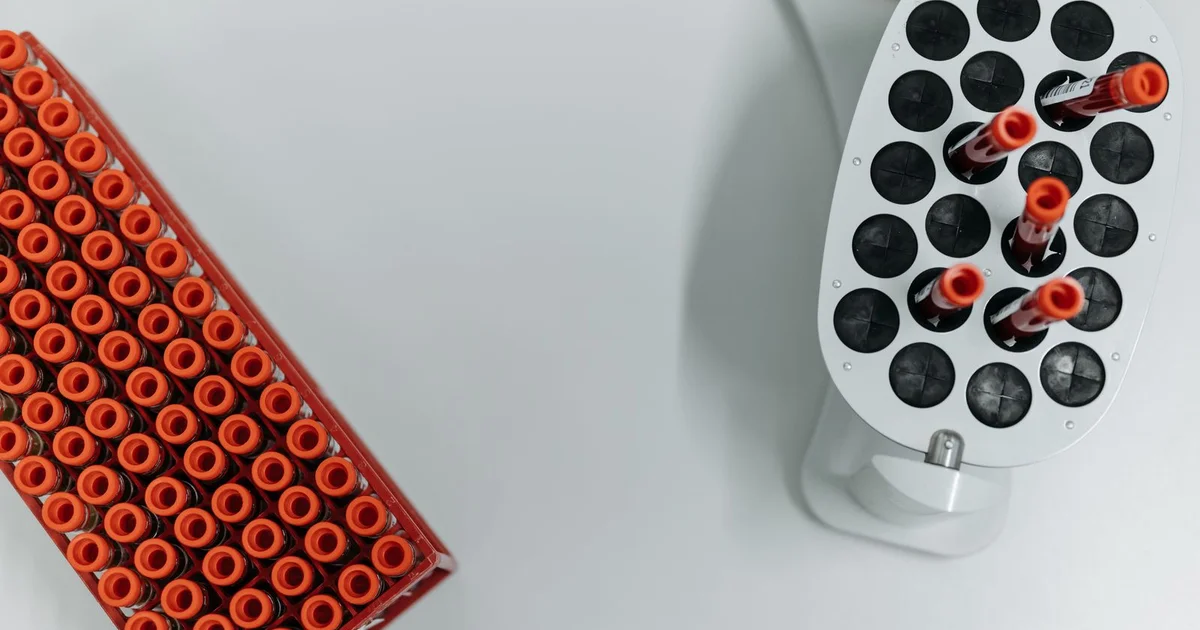
Platelet-rich plasma is made from your own blood: a sample is drawn, spun in a centrifuge to concentrate the platelets, and that plasma placed where the clinic believes it will help.
Platelets carry alpha granules packed with growth factors, the signalling proteins that drive tissue repair. That is the entire rationale: flood the ovary or the lining with repair signals and hope it responds.
Four distinct procedures are sold under one name, and they are not interchangeable:
- Intraovarian injection — PRP goes into one or both ovaries ahead of a stimulation cycle, in women with diminished ovarian reserve or poor response.
- Intrauterine infusion — PRP passes through a soft catheter into the uterine cavity ahead of an embryo transfer, for a thin endometrium or repeated implantation failure.
- Intratesticular injection — PRP goes into the testis of men with non-obstructive azoospermia, studied as a way to restart sperm production.
- Topical or adjunct use — PRP applied around the endometrium after uterine surgery, for example in Asherman’s syndrome.
A trial that infuses the uterus says nothing about injecting an ovary.
Does PRP Increase Live Births in IVF?
No trial has demonstrated a live-birth benefit that survives blinding and risk-of-bias assessment.
The Cochrane review (Vaidakis, Papapanou and Siristatidis, Cochrane Database of Systematic Reviews, 2024) is the closest thing to a settled verdict. Its structure is itself the finding: 12 parallel-group randomised trials, 1,069 women, one trial judged at low risk of bias for its reported outcomes.
| Comparison | Outcome | Pooled effect (95% CI) | Studies / women | Certainty |
|---|---|---|---|---|
| Intrauterine PRP vs placebo or none, low risk-of-bias trial only | Live birth | OR 1.10 (0.38–3.14) | 1 study / 94 | Very low |
| Intrauterine PRP vs placebo or none, all trials | Live birth or ongoing pregnancy | OR 2.38 (1.16–4.86), I² = 54% | 6 studies / 564 | Very low |
| Intrauterine PRP vs placebo or none, all trials | Clinical pregnancy | OR 2.22 (1.50–3.27), I² = 24% | 9 studies / 824 | Very low |
| Intraovarian PRP vs no intervention | Ongoing pregnancy | OR 1.09 (0.33–3.63) | 1 study / 73 | Very low |
| Intraovarian PRP vs no intervention | Clinical pregnancy | OR 0.90 (0.31–2.60) | 1 study / 73 | Very low |
| Intrauterine PRP vs intrauterine G-CSF | Live birth | OR 0.88 (0.43–1.81) | 1 study / 132 | Very low |
| All intrauterine trials | Miscarriage | OR 1.54 (0.59–4.01), I² = 0% | 5 studies / 504 | Very low |
A pooled odds ratio above 2 looks encouraging until you see how it was produced. Eight of the nine intrauterine trials enrolled women who had already had two or three failed transfers; most were unblinded, and several were small and single-centre.
The review’s own sensitivity analysis tells the real story: restricted to the low risk-of-bias trial, the live-birth effect collapses to OR 1.10 across an interval spanning no effect. Cochrane converts that interval into patient terms, the most useful number in the paper: at a 17% live birth rate without intervention, PRP’s very low-certainty estimate spans anything from 7% to 40%.
We are uncertain about the effect of intrauterine or intraovarian administration of PRP on outcomes of assisted reproduction technology in infertile women. The pooled results should be interpreted with caution.
— Vaidakis D, Papapanou M, Siristatidis CS, Autologous platelet-rich plasma for assisted reproduction, Cochrane Database of Systematic Reviews 2024 Apr 29, CD013875
Do Ovarian Reserve Numbers Improve With PRP?
Yes — on paper, often. That is the trap in this area.
What did the blinded Spanish trial find?
More eggs, then fewer pregnancies. The Barrenetxea team randomised 60 women aged 30–42 with poor ovarian reserve (POSEIDON groups 3 and 4) in a blinded, placebo-controlled trial (Human Reproduction 2024, PMID 38423539).
Cumulative mature oocytes across three retrievals were 10.45 with PRP versus 8.91 in controls (95% CI of the difference 0.42–2.66; P = 0.008), and by the third retrieval the gap was 5.27 versus 4.15 (P = 0.029). Euploid blastocyst numbers were identical (0.81 versus 0.81, P = 1.000), and clinical pregnancies were significantly lower with PRP: 8 of 30 (27%) versus 18 of 30 (60%), P = 0.018.
Pregnancy per intention-to-treat was 43% (26 of 60), and the authors flagged the paradox rather than explaining it away.
What did PROVA find?
No difference at any endpoint. The US and Turkish multicentre PROVA trial (Herlihy et al., Human Reproduction 2024, PMID 38725194) tested the claim head-on: 83 women under 38 with documented poor response, randomised to intraovarian PRP or no intervention before stimulation, ICSI, PGT-A and single euploid embryo transfer.
- Mature (MII) oocytes per cycle: 2.8 ± 2.4 with PRP versus 3.1 ± 3.3 in controls (P = 0.9)
- Blastocysts: 1.0 ± 1.3 versus 1.3 ± 2.1 (P = 0.8)
- Euploid blastocysts: 0.8 ± 1.1 versus 0.9 ± 1.6 (P = 0.5)
- At least one euploid blastocyst: 45% versus 37% (P = 0.4; RR 0.9, 0.6–1.2)
- Sustained implantation rate: 31% versus 29% (RR 1.0, 0.7–1.3)
- Post-treatment antral follicle count: 7.9 versus 6.8 (P = 0.3); AMH 0.99 versus 0.70 ng/mL (P = 0.2)
PROVA’s conclusion is unambiguous: intraovarian PRP does not improve oocyte yield or other IVF outcomes, and the results do not support its use. Two limitations matter — controls received no sham ovarian injection, and preparations are not standardised between clinics.
Where do the positive numbers come from?
From the largest dataset and the weakest design. A 2025 retrospective series from the same network (Molinaro et al., Fertility and Sterility 2025, PMID 40379042) compared 100 stimulation cycles before bilateral intraovarian PRP with 231 after it in 111 poor responders.
Antral follicle count rose from 2.6 to 5.3, maturation from 65.8% to 80.8%, fertilisation from 61.6% to 75.8%, implantation from 9.4% to 35.1%, and biochemical pregnancy from 12.5% to 41.5%.
Mature oocyte yield barely moved (2.4 to 3.0), and there was no concurrent control, so every participant also aged a year. The series ended in 23 clinical pregnancies — 17 after transfer, 6 spontaneous — and 7 live births. In the primary ovarian insufficiency subgroup (mean age 38.7 years, AMH 0.1 ng/mL) follicle count rose from 1.0 to about 1.9–2.1 with no outcome improvement.
How strong is the thin-lining evidence?
Weak, and weaker on reanalysis. A meta-analysis of 8 randomised trials in 678 women reported thickness up by a mean of 1.23 mm and live birth RR 2.46 (1.57–3.85) PMID 39215227.
A 2026 update restricted to 7 trials found clinical pregnancy RR 2.32 with an interval of 1.02–5.31, heterogeneity at I² = 90.5%, very low certainty, and the pregnancy result vanishing when any single trial was removed PMID 42676517. Full threshold detail is in the endometrial thickness before embryo transfer guide.
Is PRP Safe?
Nobody knows, because the trials did not look. Across the 12 Cochrane trials, no study reported pain, infection, allergic reaction, fetal growth restriction or fetal abnormality.
Non-reporting is not evidence of safety; it is a gap, and no registry exists for add-on complications.
One signal emerged. Intrauterine PRP may increase preterm delivery versus no intervention: OR 8.02 (95% CI 1.72–37.33; 1 study, 120 women), graded low certainty. The wide interval means the true effect could be smaller, but this is the only harm signal large enough to change a conversation.
The procedures are not neutral either. An ovarian injection passes a needle through the vaginal wall into an organ that will then be stimulated hard; a uterine infusion resembles a transfer catheter pass. Both carry bleeding, infection and pain risks the trials left blank. A narrative review of intratesticular PRP in non-obstructive azoospermia (Cakiroglu et al., Fertility and Sterility 2025, PMID 40262698) calls the field pre-evidence: azoospermia affects roughly 1% of men and 5%–10% of infertile men, and micro-TESE remains the primary route to sperm.
How Do Regulators Classify PRP?
The UK regulator treats PRP as an unproven add-on, not a treatment. HFEA’s add-on guidance rates PRP red, its lowest rating, for intraovarian use in diminished ovarian reserve and intrauterine use in a thin or refractory endometrium, recurrent implantation failure, Asherman’s syndrome or intrauterine adhesions, and recurrent pregnancy loss.
In every case the stated reasoning is identical: potential safety concerns plus no moderate- or high-quality evidence of effectiveness.
For most patients, having a routine cycle of proven fertility treatment is effective without using any treatment add-ons.
— HFEA, Platelet-rich plasma (PRP) add-on guidance, accessed October 2026
That extends to the preparation: centrifuge and kit systems cleared for orthopaedic or wound use are not cleared to improve fertility, and a cleared device does not mean the reproductive indication was approved. Professional bodies describe standard care as ovulation induction, IUI and IVF, as summarised in ACOG’s fertility treatment overview; PRP is not on those lists.
What Does PRP Cost, and Who Pays?
No randomised trial in this evidence reported what it charged, so there is no citable price for PRP in IVF. What is citable is the surrounding cycle.
Published US price lists for a standard IVF cycle run from about $14,500 to $21,700 at clinics that itemise. Medication averages roughly $5,000 more for a stimulation cycle and about $2,000 for a transfer-only cycle; component detail is in our Washington state price breakdown and the wider IVF cost in the USA guide.
Add-ons are quoted separately and rarely covered, because insurers follow mandate rules rather than clinic menus — see the IVF insurance guide. Ask for the PRP fee as a written line item before consenting: a clinic that cannot itemise its own add-on is telling you something about how it was validated.
What Should You Ask Before Agreeing to PRP?
Four questions separate a research programme from a revenue line. Take them in order and treat the answers as evidence about the clinic, not about PRP.
Which indication am I being offered this for?
Ovarian reserve, lining thickness, implantation failure and male factor are four claims needing four datasets, so ask for evidence on yours, not a slide deck about platelets.
Can the clinic show me its own outcomes?
A clinic doing enough PRP to recommend it routinely can produce results with and without it. Because no randomised evidence is that specific, its own audit is the best source available, and refusing to share it is an answer.
How is the PRP prepared?
Platelet concentration, activation method and kit differ between clinics, which PROVA lists as a limitation: two clinics selling “PRP” are not selling the same substance.
Is this a registered trial or a retail add-on?
If it is an ethics-approved trial with a control group, ask what consent says about stopping the add-on after one failed cycle; if it is not, you are buying an unproven service at retail price.
What Three Patients Were Told About PRP
These accounts are composite scenarios prepared by our editorial team from directory submissions; identifying details are altered, and no clinic here is characterised as providing poor care. Prices come from published US price lists.
Mei, 38, Seattle: PRP offered alongside a low-reserve diagnosis
Her AMH was 0.6 ng/mL and her antral follicle count 4. The itemised quote read $21,700, the top of that clinic’s published range, plus about $5,000 in medication.
The clinic proposed bilateral intraovarian PRP before her next stimulation, describing follicle count gains of “two to three times”.
She asked one question: what the clinic’s own live birth rate had been with and without PRP. The answer: the programme was too new to report. She declined the add-on, spent the money on a second accumulation retrieval, and transferred one euploid embryo at a clinic she picked using our selection checklist.
“I did not object to being an early adopter,” Mei said. “I objected to paying retail for something the clinic could not count.”
Anna, 33, Birmingham: three failed transfers and a 6.2 mm lining
Her specialist offered intrauterine PRP infusion 48 hours before a fourth transfer. She had already read the thin-lining meta-analyses: about a millimetre of gain, very low certainty, a live-birth figure that vanished when one trial was removed.
She asked instead for a different preparation protocol and a hysteroscopy, which found a small polyp. After removal her lining measured 7.4 mm on the same estradiol dose, and her next transfer ended in a live birth at 37 weeks.
“Nobody at the clinic mentioned preterm birth when they discussed PRP,” Anna said. “I found the Cochrane number myself, and that changed how much I trusted the rest.”
Elif, 41, Istanbul: non-obstructive azoospermia in her husband
The couple was offered intratesticular PRP before a repeat micro-TESE, framed as “waking the testis up”. The literature they were shown did not support that claim, and the reviews call the procedure pre-evidence.
They proceeded with micro-TESE alone, found sperm on the second attempt, and used them for ICSI in a fresh cycle with PGT-A — no PRP, no add-on fee.
“The urologist said something I keep repeating,” Elif said. “The honest version of this offer is ‘we do not know, and it costs extra’.”
Who Should Skip PRP, and Who Might Still Discuss It?
Skip it in practice if you are being charged for it as a routine part of an IVF cycle. No indication has evidence of a live-birth benefit, the regulator with the world’s most explicit policy rates it red, and the one randomised trial that raised egg numbers saw clinical pregnancies fall.
Two situations justify a conversation rather than a signature. First, diminished ovarian reserve inside a research setting: PROVA tested women under 38 and found nothing, but primary ovarian insufficiency and severe low-reserve cohorts remain small, and a registered trial with follow-up consent is a different proposition from a retail add-on.
Second, a thin endometrium that has already cancelled transfers. Start with protocol and uterine pathology, a sequence covered in the recurrent implantation failure guide and the low AMH guide; both are cheaper to change than an unproven infusion.
If you are choosing between clinics on the strength of a PRP programme, weight checkable numbers instead: published success rates by age, single embryo transfer discipline, and whether the clinic reports to SART or the CDC.
FAQ
Q: Does PRP work for low ovarian reserve?
Randomised evidence says no. In PROVA, 83 women under 38 with poor response produced 2.8 mature oocytes with PRP versus 3.1 without (P = 0.9), with no difference in blastocysts, euploid blastocysts or sustained implantation; Cochrane’s pooled ongoing pregnancy estimate was OR 1.09 (0.33–3.63) from 73 women.
Q: Does PRP thicken the endometrium?
By roughly a millimetre, in low-certainty trials. The 2024 meta-analysis of 8 randomised trials in 678 women found a mean gain of 1.23 mm (95% CI 0.87–1.59); the 2026 update of 7 trials found 0.94 mm with heterogeneity at I² = 90.5% and very low certainty.
Q: Is intrauterine PRP safe before transfer?
Mostly unmeasured: none of the 12 Cochrane studies reported pain, infection, allergic reaction, fetal growth restriction or fetal abnormality. The one harm signal was preterm delivery, OR 8.02 (1.72–37.33) in a single study of 120 women, graded low certainty.
Q: Is PRP approved for infertility?
No fertility regulator has approved it as a treatment. HFEA’s add-on guidance rates PRP red across 5 indications: intraovarian use for diminished reserve, and intrauterine use for thin or refractory lining, repeated implantation failure, Asherman’s syndrome or intrauterine adhesions, and recurrent pregnancy loss.
Q: Can PRP help men with azoospermia?
No evidence yet that it restores sperm production. A 2025 narrative review calls intratesticular PRP for non-obstructive azoospermia ongoing research; azoospermia affects about 1% of men and 5%–10% of infertile men, and micro-TESE remains the primary route to sperm.
The Bottom Line on PRP Fertility Treatment
PRP is the clearest example in IVF marketing of a plausible mechanism outrunning the evidence. Growth factors repair tissue; that does not mean an ovarian injection yields more competent eggs or a uterine infusion makes a baby likelier.
Twelve randomised trials, 1,069 women and one low risk-of-bias study later, certainty is very low, the regulator’s rating is red, and the only blinded trial that raised oocyte count lowered pregnancies.
Ask the clinic for its own audited numbers for your age and diagnosis and compare them with published success rates before signing anything. For a second opinion on a quoted plan, send it to our medical team or start with the clinic directory.
About this article — compiled by the ProIVF Medical Editorial Team from the Cochrane review of PRP for assisted reproduction (CD013875, 2024), the two randomised ovarian trials cited above, thin-endometrium meta-analyses, the intratesticular PRP review, and guidance from the Human Fertilisation and Embryology Authority and ACOG. Figures were checked against source papers by the ProIVF Medical Advisory Board. ProIVF is a commercial clinic directory and lists some clinics referenced here, so this article states evidence rather than a recommendation.
Medical disclaimer: educational content only, not medical advice, diagnosis or treatment guidance. Fertility decisions depend on your age, diagnosis, reserve and local law; discuss any add-on with a licensed reproductive medicine specialist and ask for written, itemised pricing.
Last updated: 20 October 2026