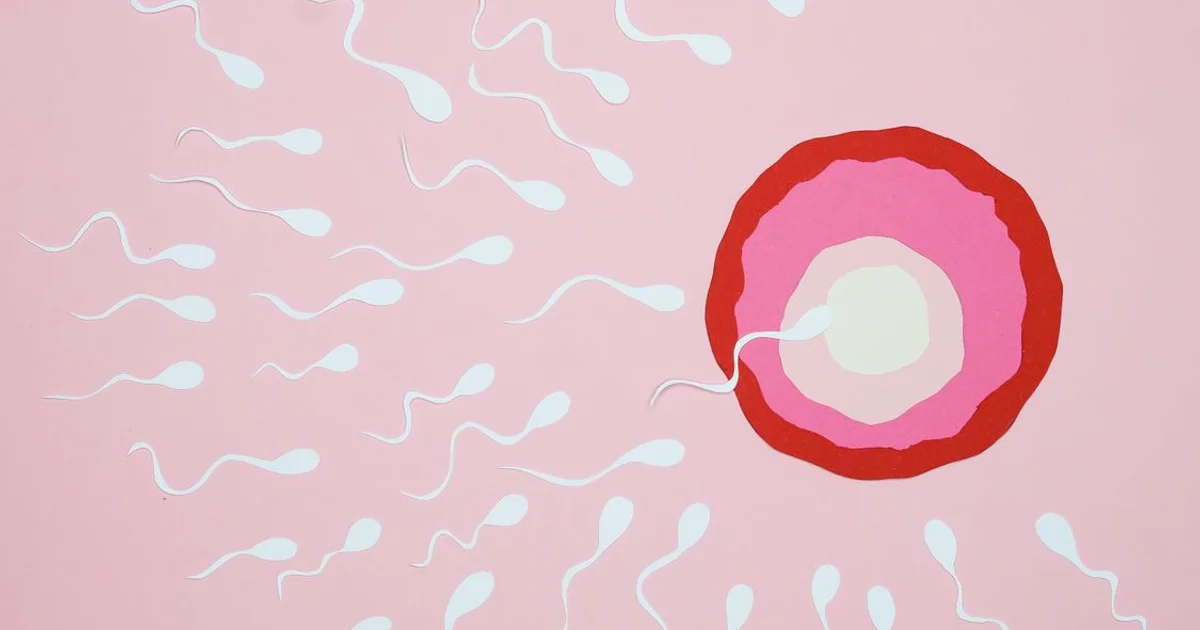
In vitro fertilization (IVF) was first successfully used on July 25, 1978, when Louise Joy Brown — the world’s first test-tube baby — was born at Oldham General Hospital in England. The breakthrough required roughly two decades of research that began with animal embryo experiments in the 1950s, and today more than 12 million babies worldwide have been born through IVF.
IVF History Timeline: Key Milestones at a Glance
IVF was not invented in a single moment; it advanced through a chain of firsts spanning from 1959 to the 2020s.
| Year | Milestone | Who / Where |
|---|---|---|
| 1959 | First IVF birth in mammals (rabbits) | Dr. Min Chueh Chang, USA |
| 1969 | First human eggs fertilized in vitro | Dr. Robert Edwards & Dr. Patrick Steptoe, UK |
| 1975 | First (failed) human IVF pregnancy | Edwards & Steptoe |
| 1978 | First successful IVF birth — Louise Brown | Edwards & Steptoe, Oldham, UK |
| 1981 | First US IVF baby | Dr. Howard & Dr. Georgeanna Jones, Norfolk, VA |
| 1984 | First donor egg IVF pregnancy | Dr. Alan Trounson, Australia |
| 1992 | First ICSI birth (single sperm injection) | Dr. Gianpiero Palermo, Belgium |
| 1996 | First PGT (genetic testing of embryos) | Dr. Alan Handyside, UK |
| 2004 | First live birth from a vitrified (flash-frozen) egg | Japan / global centers |
| 2010 | Nobel Prize in Physiology or Medicine awarded to Robert Edwards | — |
| 2020s | Over 12 million IVF babies born worldwide | Global |
Each row marks a capability that did not exist before it — and several of them, like ICSI and PGT, now define what a modern IVF cycle looks like.
Who Invented IVF?
IVF is credited to two British researchers: physiologist Robert Edwards and gynecologist Patrick Steptoe, who worked together from 1968 until the first IVF birth in 1978.
Dr. Robert Edwards (1925–2013) had been studying the biology of fertilization since the 1950s. By 1968 he could fertilize human eggs in a petri dish — but he could not get those embryos to implant in a uterus. What he still needed was a surgeon who could retrieve eggs safely.
Dr. Patrick Steptoe (1913–1988) was a gynecologist who had pioneered laparoscopic surgery. He developed a way to collect eggs from the ovaries through a laparoscope, avoiding open surgery. The two met in 1968 and formed one of the most productive partnerships in medical history.
Their decade of joint work was marked by denied funding, ethical attacks, and repeated failures before the first pregnancy succeeded. Edwards received the 2010 Nobel Prize in Physiology or Medicine for the invention of IVF — Nobel Prize facts. Steptoe died in 1988 and could not share the honor.
What Happened Before the First IVF Baby?
Four decades of animal and human embryo research — from the 1890s to the 1970s — made the 1978 birth possible.
1950s — Early animal research. Dr. Min Chueh Chang at the Worcester Foundation in Massachusetts achieved the first IVF birth in rabbits in 1959, proving that fertilization outside the body could produce healthy mammalian offspring. His work built on earlier studies by Walter Heape (1890s, rabbit embryo transfer) and Gregory Pincus (1930s, rabbit IVF).
1960s — Human egg fertilization. Edwards published the first successful in vitro fertilization of human eggs in 1969. The media called it a “test-tube baby breakthrough,” but implantation remained the unsolved problem.
1970s — The Steptoe-Edwards partnership. The pair faced intense opposition. The UK Medical Research Council refused funding, calling their work unethical, and British newspapers labeled them “baby-makers” and “Dr. Frankenstein.” The team pressed on with private donations and support from Oldham Hospital.
1975 — The first (failed) pregnancy. Edwards and Steptoe achieved their first chemically confirmed human pregnancy — but it was an ectopic pregnancy that could not survive. Steptoe wrote in his notes that their “hopes were dashed,” yet the failure proved something crucial: an IVF embryo could implant in a human uterus.
1977 — The successful cycle. Lesley Brown, a 30-year-old woman whose fallopian tubes were blocked, became the next candidate. Her eggs were retrieved by laparoscopy, fertilized with her husband John’s sperm, and one embryo was transferred. A pregnancy test confirmed success on May 10, 1978.
When Was the First IVF Baby Born?
Louise Joy Brown was born at 11:47 p.m. on July 25, 1978, delivered by caesarean section at Oldham General Hospital and weighing 5 lb 12 oz (2.608 kg). Her birth made front-page news around the world.
Her mother, Lesley Brown, had tried to conceive for nine years. Earlier surgeries had blocked both her fallopian tubes, making natural conception impossible — IVF was her only option, and it worked on the first attempt.
Louise Brown grew up healthy and later had two children of her own naturally, showing that people conceived through IVF face no additional fertility challenges. Her full life story is covered in our article on Louise Brown and the first IVF birth.
How Did IVF Spread Around the World?
Within eight years of Louise Brown’s birth, IVF had produced first babies across four continents.
1981 — First US IVF baby. Elizabeth Carr was born at the Jones Institute in Norfolk, Virginia, where Drs. Howard and Georgeanna Jones adapted the Steptoe-Edwards technique for American medicine.
1982 — First IVF baby in Australia, a country that would soon become an early IVF powerhouse.
1983 — First IVF babies in Sweden, France, and Japan. Japan became the first Asian country to achieve a successful IVF birth.
1984 — First donor egg IVF pregnancy. Australian researcher Dr. Alan Trounson showed that one woman’s eggs could be carried to term by another — opening the door to egg donation programs.
1986 — First IVF baby in China. China’s first test-tube baby was born at Peking University Third Hospital, launching assisted reproduction in the world’s most populous country.
By the end of the 1980s, IVF was practiced in more than 20 countries, with success rates of only about 10% to 15% per cycle. The modern clinical standards those early experiments eventually produced are maintained today by the American Society for Reproductive Medicine, ASRM.
What Breakthroughs Changed IVF After 1978?
Six advances between 1992 and the 2010s reshaped IVF: ICSI, PGT, egg vitrification, frozen embryo transfer as standard, the 2010 Nobel Prize, and PGT-A screening.
1992 — Intracytoplasmic sperm injection (ICSI). Drs. Gianpiero Palermo and Paul Devroey in Brussels developed a technique that injects a single sperm directly into an egg. ICSI solved male-factor infertility — a factor in nearly 50% of couples seeking IVF — letting men with very low counts, poor motility, or abnormal morphology achieve fertilization.
1996 — Preimplantation genetic testing (PGT). Dr. Alan Handyside in London successfully screened embryos for genetic disorders before transfer, allowing families carrying conditions such as cystic fibrosis to have healthy children. For how the procedure works today, see our PGT genetic screening guide.
1998 — First IVF baby from a vitrified egg. Embryos had been slow-frozen since 1984, but eggs were far harder to freeze. Vitrification — flash-freezing at extreme speed — dramatically improved survival rates and eventually made egg freezing a mainstream option. Our egg freezing guide covers who should consider it and how.
2000s — Frozen embryo transfer becomes standard. Better freezing technology made frozen embryo transfers (FET) as effective as fresh ones, reducing the need for repeated stimulation cycles and lowering the risk of ovarian hyperstimulation syndrome (OHSS). A step-by-step walkthrough of the modern protocol is in our IVF procedure guide.
2010 — The Nobel Prize. The Nobel Committee formally recognized the achievement:
“The Nobel Prize in Physiology or Medicine 2010 has been awarded to Robert G. Edwards ‘for the development of in vitro fertilization’.” — The Nobel Assembly at Karolinska Institutet, prize announcement, 2010
2010s — PGT-A and genetic screening. Next-generation sequencing made comprehensive chromosome screening affordable, so clinics could select the healthiest embryos and raise success rates significantly.
How Different Is IVF Today Than in 1978?
Patients who did IVF in 2002, 2013, and 2024 had almost unrecognizable versions of the same treatment — as these three era-specific stories show. All three are composite narratives based on real patient experiences, not records of specific individuals.
Sarah, 42, conceived in 2002 (USA). “When I started IVF in 2000, success rates for women over 40 were around 6% per cycle. My doctor was honest that it could take multiple rounds, and after three retrievals and five transfers over two years I finally got pregnant with my daughter. The hardest part wasn’t the injections — it was the uncertainty. Every negative pregnancy test felt like a door closing.”
“Back then there was no time-lapse imaging; the embryologist took the embryos out of the incubator every day to check them under a microscope. Looking back, I wish I had started at 38, when my chances were better. The technology was still so new.”
Mei, 35, conceived in 2013 (Thailand). “We chose Bangkok because it was far cheaper than Singapore. The clinic used ICSI because my husband had low sperm motility, and we also did PGT-A. Of 10 eggs retrieved, 6 fertilized, and only 2 embryos were genetically normal — one of them became our son. If we had been doing this in the 1990s, ICSI and PGT didn’t exist, and we might never have known why our earlier attempts failed.”
Priya, 31, conceived in 2024 (India). “My first cycle in 2022 failed because none of my embryos reached blastocyst — the lab in my small city had no time-lapse system or good incubators. I switched to a major Delhi clinic using EmbryoScope monitoring, and the second cycle worked. The 2020s brought AI-assisted embryo grading and better culture media. The IVF I had in 2024 was a completely different treatment from my cousin’s in 2015.”
FAQ
Q: Who is credited with inventing IVF?
Dr. Robert Edwards (physiologist) and Dr. Patrick Steptoe (gynecologist) are jointly credited with inventing IVF. They worked together from 1968 to 1978, and Edwards received the 2010 Nobel Prize for the achievement.
Q: Was the first IVF baby really made in a test tube?
No — despite the “test-tube baby” label the media gave Louise Brown in 1978, her fertilization actually happened in a petri dish. The name stuck and is still used today.
Q: When did IVF first succeed in the United States?
The first US IVF baby, Elizabeth Carr, was born in December 1981 at the Jones Institute in Norfolk, Virginia — three years after the UK program began and 19 years after the first successful IVF birth.
Q: When did IVF become common?
IVF became widely available in developed countries in the mid-to-late 1980s, but it only became genuinely mainstream in the 2000s, when success rates rose and insurance coverage expanded in some regions.
Q: How many IVF babies have been born since 1978?
More than 12 million babies have been born worldwide through IVF and related assisted reproduction technologies as of the mid-2020s.
Q: What was the biggest breakthrough after IVF was invented?
ICSI (intracytoplasmic sperm injection), introduced in 1992, is widely considered the most important refinement. It overcame male-factor infertility — which affects nearly 50% of couples seeking IVF — roughly doubling the number of couples who could benefit from treatment.
Q: When were frozen embryos first used successfully?
The first pregnancy from a frozen embryo was reported in 1983. Vitrification, the ultra-rapid freezing method, became standard practice in the late 2000s and dramatically improved embryo and egg survival rates.
Q: How much has IVF changed since 1978?
Completely. IVF in 1978 meant natural-cycle monitoring, simple culture media and laparoscopic egg retrieval; a modern cycle uses controlled ovarian stimulation, ultrasound-guided transvaginal retrieval, time-lapse embryo imaging, genetic testing and vitrification.
Per-cycle success rates have gone from under 10% in the 1980s to a majority of transfers producing pregnancies for favorable-prognosis patients today.
From 1978 to Your Own IVF Journey
The core steps of IVF — stimulation, retrieval, fertilization, transfer — have been unchanged since 1978, but success rates, safety and access have advanced far beyond what Steptoe and Edwards could imagine. A treatment once available to a handful of pioneers is now a tailored set of options for different causes of infertility.
If you are considering IVF, start by understanding your fertility situation and comparing clinics that fit your needs. Browse our global directory of fertility hospitals, or read What Is IVF? The Complete Beginner’s Guide for a look at the modern procedure. For official US outcomes by age, see the CDC’s ART success rate data, and for pricing across destinations, our 2026 IVF cost guide. You can also contact our team for guidance on next steps.
About this article: Researched and written by the ProIVF Medical Editorial Team using peer-reviewed literature, CDC surveillance data and official Nobel Prize archives, and reviewed by the ProIVF Medical Advisory Board. Learn about our editorial standards on our About page.
Last updated: 2026-07-13. This article is for informational purposes only and does not constitute medical advice. IVF outcomes vary based on individual medical factors. Always consult a licensed reproductive endocrinologist for personalized guidance. ProIVF recommends verifying all clinic information directly before making treatment decisions.