'%20d='m0%200%2016%2011h61%2061%2061%2061%2060L47%2037h61%2061%2060%2061L16%2063h61%2061%2061%2061%2060L47%2089h61%2061%2060%2061L16%20115h61%2061%2061%2061%2060L47%20141h61%2061%2060%2061L16%20166h61%2061%2061%2061%2060L47%20192h61%2061%2060%2061L16%20218h61%2061%2061%2061%2060z'/%3e%3c/svg%3e)


About Shady Grove Fertility - Rockville
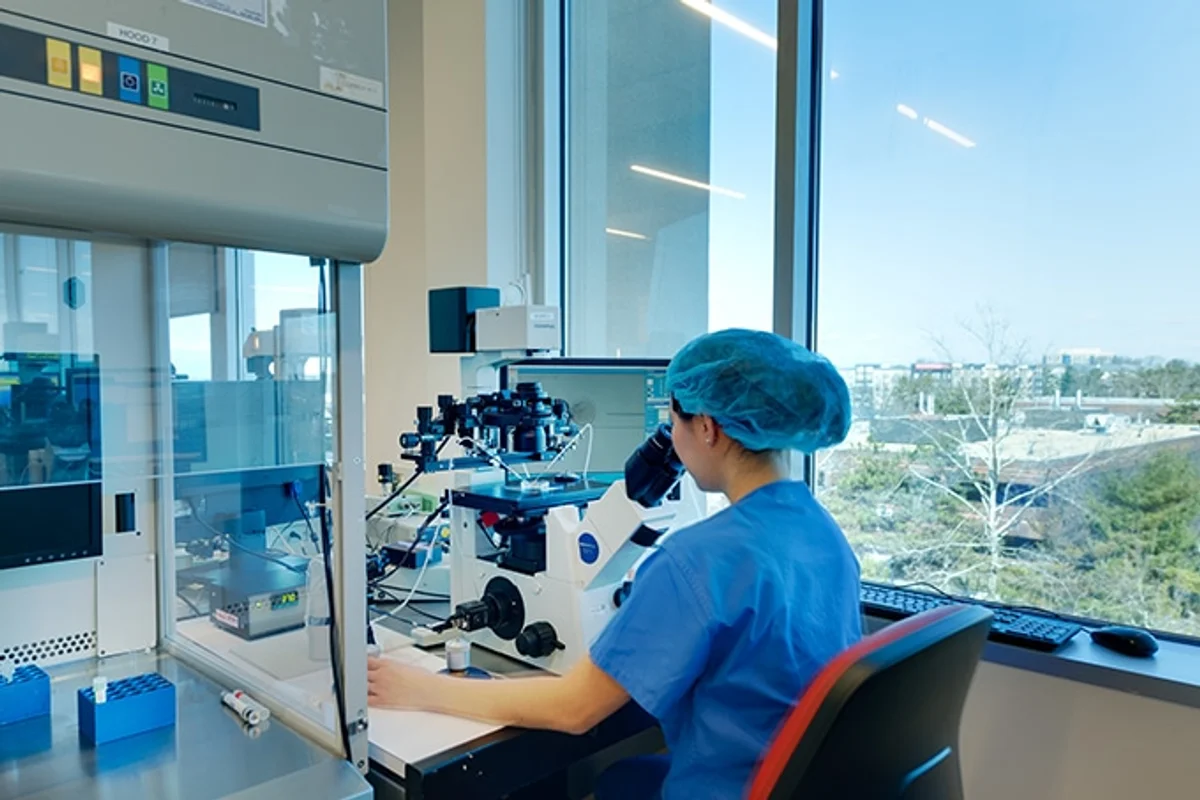
Rockville is Shady Grove Fertility’s headquarters and flagship office. The practice occupies 51,155 square feet on the fourth and fifth floors of 9601 Blackwell Road, just outside Washington, D.C., and it houses the network’s largest in vitro fertilization and embryology laboratory — the one that serves patients across Maryland, Virginia and the District of Columbia. An accredited ambulatory surgery center sits in the same building, so egg retrievals and most reproductive surgery happen in-house; some procedures are scheduled at SGF’s Towson and Fairfax offices instead. Physician appointments run seven days a week.
Michael J. Levy, M.D. and Arthur W. Sagoskin, M.D. founded the practice more than 30 years ago. SART records membership from 1991, the year carried on this page. SGF states that more than 100,000 babies have been born to its patients, that over 4,000 OB/GYNs refer to it, that it has collected 5,000-plus five-star patient reviews, and that 96% of surveyed patients would refer a friend. Those are the practice’s own numbers. No registry counts babies by clinic, so read them as marketing you can ask about, not as data you can verify.
What the success figures cover. The SART report cited on this page (clinic ID 2329) is not a Rockville-only report. SART registers SGF’s Maryland and Virginia offices as one cluster — Arlington, Fairfax, Frederick, Fredericksburg, K Street and Rockville — because the group files under its earliest office name. So the 13,620 cycles and the age-band live birth rates in the table above describe six offices, not this building. SART 2023 final, cumulative live birth per intended retrieval counting all transfers: 54.7% under 35, 40.7% at 35-37, 27.2% at 38-40, 9.4% at 41 and over. Set that against the SART 2023 national averages on this page — 53.2 / 39.9 / 26.2 / 9.4 — and the honest read is a program running slightly above the national baseline in each band, and exactly at it for patients over 40. That is respectable. It is not the top of the country, and a clinic quoting you a rate per embryo transfer instead of per retrieval will look better on paper off the same laboratory.
The CDC keeps a separate entry named for this address — Shady Grove Fertility-Rockville, ART clinic ID 179 at 9601 Blackwell Road — and its 2022 record reports 12,989 cycles, with live birth by age band at 54.9 / 39.0 / 25.2 / 8.6. That cycle count is far too high for one office, so treat it as group-level reporting filed under the Rockville name too. The detail worth having is what the 2022 record says about how cycles are run here: 82.5% of transfers were frozen embryos rather than fresh, and preimplantation genetic testing was used in 52% of cycles. For patients new to the practice, the CDC 2022 cumulative live birth rate after a single retrieval was 59.0% under 35, 44.3% at 35-37, 30.6% at 38-40 and 7.7% over 40; after one or two retrievals, 67.6 / 53.8 / 39.5 / 12.3.
Two more figures the practice publishes: a high-order multiple birth rate (triplets or more) under 1%, which SART marked with special recognition, and more than 15,000 cycles reported in 2018. Both are network-wide claims, and SGF says its results sit in the top quartile of SART-reporting programs nationally — a statement about the network, not about the six-office cluster’s age bands above.
Accreditations & Awards
- The Joint Commission accreditation on the embryology laboratory at the Rockville headquarters. Along with CAP, this is the credential that governs how your eggs, sperm and embryos are handled.
- AAAHC accreditation for the Rockville Ambulatory Surgery Center, so retrievals and reproductive procedures are performed in an accredited surgical suite rather than a procedure room.
- CAP accreditation recorded on the SGF laboratory entry in the SART clinic directory.
- SART member since 1991 (SART #0205), with cycles reported to SART and the CDC each reporting year. That reporting is why the age-band numbers on this page exist publicly, and why you can pull the same table yourself.
- Castle Connolly #1 physician practice for reproductive care, 2024. A practice-level designation for Shady Grove Fertility, not an award to the Rockville office alone.
- SART recognition for a high-order multiple birth rate under 1%, clinic-stated.
- Fertility Equity certification, held for providing culturally competent care to groups facing reproductive health inequities.
- Aetna Institute of Excellence and Optum Center of Excellence (Maryland) designations. These are payer network standings — useful when you are checking coverage, not a clinical accreditation.
- Additional SGF ambulatory surgery centers and laboratories are reported at Chesterbrook and Towson, Denver, Atlanta, Fairfax, Richmond, Manhattan and Tampa.
Why Choose Shady Grove Fertility - Rockville
- Monitoring seven days a week, starting at 7:00 a.m. Stimulation cycles demand blood work and ultrasounds on short notice, sometimes daily. Rockville runs monitoring weekdays 7:00-11:45 a.m. and weekends 7:00-11:30 a.m., which is the difference between keeping your job and quitting it for a cycle.
- The network’s largest IVF and embryology lab is in this building, serving Maryland, Virginia and D.C., and it is Joint Commission accredited and CAP listed. The practice’s CDC record for this address shows genetic testing used in 52% of cycles, which is a laboratory doing PGT routinely.
- Surgery on site. An AAAHC-accredited ambulatory surgery center is run from the same address, with a Director of Reproductive Surgery (MIGS-trained) and a board-certified urologist directing reproductive urology on staff. Some procedures are done at the Towson or Fairfax offices.
- Donor egg at scale. SGF calls its Donor Egg Program the largest in the nation and states that all donors are fully screened and ready to cycle. A larger screened pool usually means shorter waits and more match options; ask which donors are open in your month before you commit to a timeline.
- Shared risk refund options. The practice markets 100% refund programs for IVF, which convert an unpredictable number of cycles into a fixed up-front price. Read the eligibility rules — age, ovarian reserve and diagnosis typically gate entry.
- Cases get discussed by the whole physician group. SGF runs weekly in-person physician meetings and a journal club, and the medical record is open to its clinicians around the clock, so a second opinion inside the practice does not require an appointment.
- A paper trail on outcomes. Rockville’s SART medical director of record for the 2023 cluster report is Lauren Roth, M.D., who sees patients at this office. The physicians reporting your results are the physicians treating you.
IVF & Fertility Services
- In Vitro Fertilization (IVF): ovarian stimulation with injectable medications, blood work and ultrasound monitoring, transvaginal egg retrieval, embryo culture and transfer.
- ICSI (Intracytoplasmic Sperm Injection): single-sperm injection for male factor infertility or prior fertilization failure.
- PGT-A and PGT-M: genetic screening of embryos for chromosome number, and diagnostic testing for known single-gene conditions. Genetic screening and testing is a listed service line, and the practice’s CDC record shows PGT used in 52% of cycles.
- Frozen embryo transfer: the dominant transfer strategy here — 82.5% of transfers in the CDC 2022 record were frozen rather than fresh.
- IUI and low-tech options: ovulation induction and intrauterine insemination, with the diagnostic work listed below.
- Fertility and ovarian reserve testing and diagnosis, semen analysis, and hysterosalpingogram (HSG) — all performed at this office rather than sent out.
- Donor egg, donor sperm and donor embryo cycles.
- Gestational carrier programs for patients who cannot carry a pregnancy, including gay male couples and patients without a uterus.
- Egg freezing and fertility preservation for patients with cancer, before chemotherapy or radiation.
- LGBTQIA+ family building: reciprocal IVF, donor sperm and gestational carrier paths, single-patient cycles.
- Reproductive surgery and minimally invasive gynecologic surgery: hysteroscopic and laparoscopic procedures, Asherman syndrome (intrauterine adhesions) treatment, hysterectomy for transgender male patients, and interval cerclage for cervical insufficiency, performed by the practice’s Director of Reproductive Surgery.
- Reproductive urology and male infertility evaluation, including surgical sperm retrieval, under the practice’s Director of Reproductive Urology.
- Financial counseling, offered as a service line rather than a billing office afterthought.
Fees & Packages
There is no published price list for this office. Shady Grove Fertility does not post cycle-by-cycle fees online, so get a written estimate from a financial counselor before you start medications — that number is the one your insurer and your bank account will be compared against.
Two things shape cost here more than the sticker price. The first is the Shared Risk 100% Refund Program, sold as a bundled option that returns your money if a cycle does not produce a live birth; eligibility is screened, and the terms decide whether the refund is worth the premium. The second is Maryland’s coverage mandate, below, which is why a policy issued in this state with maternity benefits may be required to pay for IVF at all.
Maryland insurance mandate. Maryland Insurance Article Section 15-810, “Benefits for In Vitro Fertilization,” requires insurance policies issued in Maryland that include maternity coverage to cover IVF: up to three IVF cycles per live birth, with a lifetime maximum of $100,000. As of January 1, 2021 the law dropped its marriage requirement and cut the waiting period from two years to one year of unprotected intercourse, or three artificial insemination attempts within a year.
Networks and fertility benefit managers. The practice lists Aetna (with Aetna Institute of Excellence standing), CareFirst Blue Cross Blue Shield, Cigna, United Healthcare, Kaiser, and Tricare/Humana Military among contracted plans, and works with the fertility benefit managers Carrot, Maven Clinic, Optum (Optum Center of Excellence, Maryland) and Progyny. If your employer offers Carrot, Maven or Progyny, check it before you check your plan — these programs often authorize cycles a standard policy excludes. SGF states that roughly 70% of its patients have some coverage for infertility treatment and about 90% have their first consultation covered.
Patient Journey
- Book a new patient consultation, by phone or through an online request. Ask before you go which records to bring and whether your insurance has already been verified.
- Bring or transfer your records — prior cycles, labs, imaging, operative notes, and any semen analysis already done elsewhere. Repeating tests you already have is one of the easier ways to waste a month.
- Diagnostic workup at this office: fertility and ovarian reserve testing, semen analysis, and hysterosalpingogram. Rockville runs these in-house, so results come back without a second trip to an outside facility.
- A treatment plan and a financial review. Financial counseling is a listed service at this office. This is the visit where you compare straight fee-for-service IVF against a Shared Risk refund option, and where insurance verification under Maryland’s mandate gets documented in writing rather than discussed verbally.
- Monitoring, including weekends. Stimulation is followed with blood work and ultrasound weekdays 7:00-11:45 a.m. and weekends 7:00-11:30 a.m.
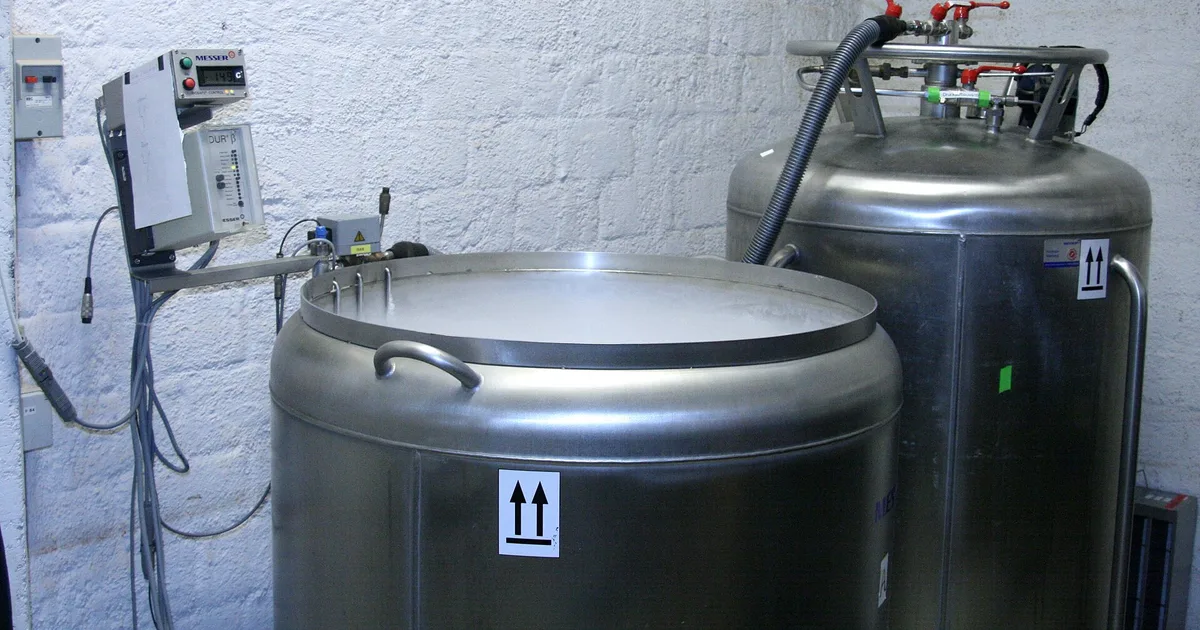
- Retrieval and laboratory work. Eggs are retrieved in the on-site ambulatory surgery center; fertilization by insemination or ICSI happens in the Rockville embryology laboratory, where most embryos are cultured and frozen for later transfer rather than transferred fresh.
- Transfer, pregnancy test and follow-up. Spare embryos are banked. Ask for the embryo disposition paperwork and read it before medications start, not after a cycle ends.
- Between visits: after-hours emergencies go to the local office number, which routes to an on-call physician.
Local Legal Framework
Maryland’s assisted reproduction law that touches your wallet is Maryland Insurance Article Section 15-810, “Benefits for In Vitro Fertilization.” Policies issued in Maryland that carry maternity benefits must cover IVF treatment, limited to three IVF cycles per live birth and a lifetime maximum of $100,000. Effective January 1, 2021, the statute removed the marriage requirement and shortened the qualifying waiting period from two years to one year of unprotected intercourse, or three attempts at artificial insemination within a year. Coverage of IVF medications, and of diagnostic work that precedes a cycle, is a separate question — the mandate is about cycle treatment, so read the denial letter and ask your employer’s benefit manager to re-adjudicate.
IVF, ICSI, PGT, egg donation, sperm donation, donor embryos and gestational carrier arrangements are all offered at this address, and the practice runs programs in each of those areas. What the materials documenting this office do not show is a Maryland statute that settles donor offspring parentage or embryo disposition the way some states do. Two practical consequences: your embryo disposition and donor agreements are governed by contract and by court order rather than by one clean law, and if you are using donor gametes or a gestational carrier — or building a family as a same-sex couple — have a Maryland reproductive law attorney document parentage before a transfer, not after a positive test. Ask the practice what its legal review process is, in writing, and who pays for it.
Location
- Address: 9601 Blackwell Rd, 4th and 5th Floors, Rockville, MD 20850
- Phone: (301) 340-1188