Seed cycling has never been shown to improve pregnancy or live birth rates: the 2025 systematic review that pooled 10 studies and 635 women found small improvements in cycle regularity and symptom scores, but no study in it measured whether anyone conceived.
This article was researched and drafted by the ProIVF Medical Editorial Team from the peer-reviewed studies and nutrient databases cited inline, and reviewed before publication by the ProIVF Medical Advisory Board. Where a claim rests on a nutrient mechanism rather than a clinical trial, we say so.
Does Seed Cycling Actually Work for Fertility?
No controlled study has tested seed cycling against pregnancy or live birth. The evidence base consists of small trials of individual seeds, mostly in PCOS, plus a 2025 review that could not perform a meta-analysis because the studies were too different from one another.
Seeds are nutritious food and the practice is unlikely to hurt you. The problem is the confidence of the claims, which runs far ahead of the data.
Where Does Seed Cycling Come From?
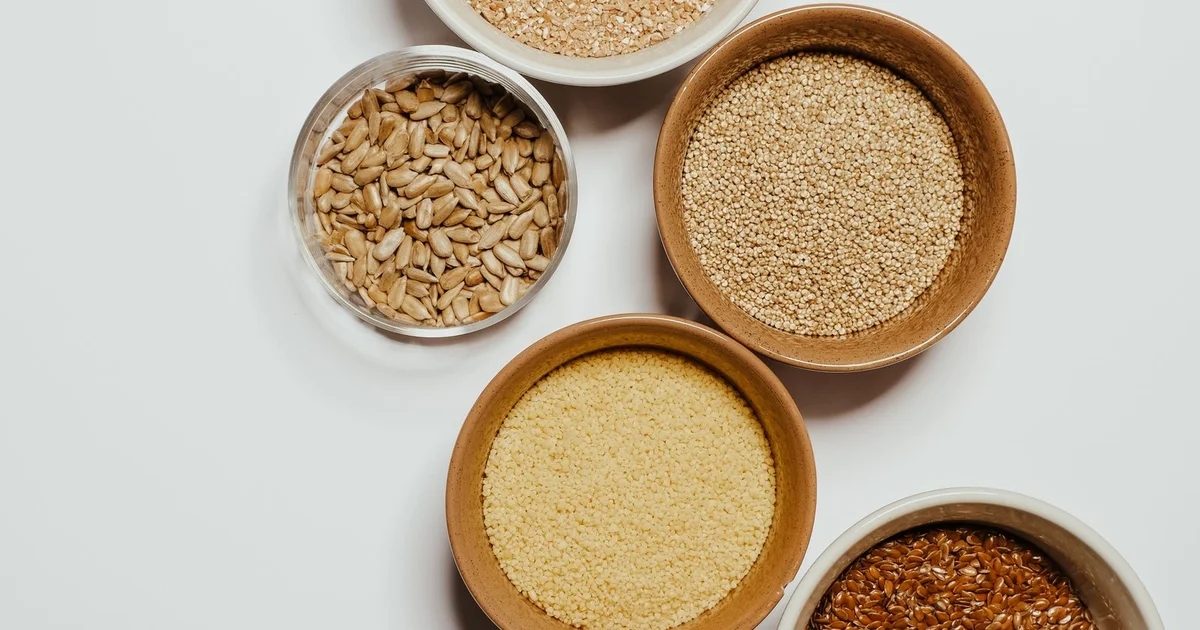
The protocol asks you to eat 1-2 tablespoons of flax and pumpkin seeds during the follicular phase, then switch to sesame and sunflower seeds after ovulation, on the theory that each pair supplies the precursors or nutrients the matching hormone phase needs.
It spread through wellness blogs and social media rather than through clinical research, and its logic is borrowed from nutrient biochemistry rather than from trials in cycling women. Flaxseed does contain lignans, pumpkin and sesame do contain zinc, and sunflower seeds are rich in vitamin E; none of that establishes that eating them on a schedule changes your hormones.
What Does the 2025 Review Actually Show?
Ten studies published between 2015 and 2025, covering 635 women aged 15-49 with PCOS or premenstrual syndrome, reported improvements in menstrual regularity, PMS severity, sex hormone markers and metabolic profiles (Nagarajan et al., Cureus, 2025). The authors graded the evidence as low to medium risk of bias but moderate quality overall, and they could not pool the results statistically.
What the review measured, and what it did not
The primary outcomes were hormonal markers such as estrogen, progesterone and the LH/FSH ratio, symptom scores, and metabolic parameters such as BMI, lipids and insulin resistance. Pregnancy and live birth were not among the outcomes, so the review cannot tell you whether seed cycling helps anyone have a baby.
Most included studies also examined seeds as individual supplements rather than the full phased protocol. A flaxseed trial is not a seed-cycling trial, even though the two get quoted interchangeably.
The authors’ own conclusion
The review’s closing sentence is worth reading before any influencer’s version:
“While findings suggest that seed cycling is a low-cost, safe, and potentially effective adjunct for managing PMS and PCOS, the conclusion is based on small sample sizes and moderate-quality evidence, underscoring the need for larger randomized controlled trials and standardized intervention protocols.” — Nagarajan et al., Cureus, 2025
That is a fair summary: possible small benefit for symptoms, no data for fertility, and a research field that has not yet run the decisive trial.
What Do the Flaxseed Trials Actually Measure?
Two randomized trials dominate the flaxseed literature, both in women with PCOS and both using 30 g of ground flaxseed daily for 12 weeks. Neither was designed to measure pregnancy.
Metabolic outcomes
In 41 women with PCOS, adding 30 g of flaxseed powder daily to lifestyle advice reduced body weight, fasting insulin, HOMA-IR, triglycerides, hs-CRP and leptin, and raised HDL and adiponectin, compared with lifestyle advice alone (Haidari et al., Nutrition Journal, 2020). Those are real metabolic effects, and they matter because insulin resistance drives anovulation in PCOS.
Hormone shifts without pregnancy outcomes
In 70 women with PCOS, the same 30 g daily dose raised FSH from 9.72 to 10.59 µU/mL (treatment effect 0.87, 95% CI 0.086-1.75; p = 0.027) and lowered the LH/FSH ratio by 0.341 (95% CI -0.63 to -0.08; p = 0.031) over 12 weeks (Najdgholami et al., Frontiers in Endocrinology, 2025). AMH, LH, estradiol, DHEAS and androstenedione did not change.
A moved FSH number is not a pregnancy. Both trials stopped short of reporting ovulation rates, conception or live birth, which is the gap that seed-cycling marketing fills with anecdote.
Do Seeds Change Your Hormones?
Flaxseed lignans are converted by gut bacteria into enterodiol and enterolactone, weak estrogen-like compounds, and that conversion is measurable. In 18 premenopausal women eating 10 g of flaxseed powder daily in a randomized crossover study, urinary enterolactone rose from 3.16 to 27.79 µmol/day and enterodiol from 1.09 to 19.48 µmol/day (Lampe et al., American Journal of Clinical Nutrition, 1994).
Why the phase timing has no support
The same study found two things that undermine the protocol. Individual responses varied 3- to 285-fold, so one person’s enterolactone rise tells you nothing about yours; and excretion did not differ between the follicular and luteal phases, meaning the body did not care when in the cycle the seeds arrived.
If lignans matter at all, total daily intake is the variable, not which seed you eat on cycle day 19. That is also why a mixed handful of all four seeds every day is a defensible alternative to the phased schedule.
How Long Should a Luteal Phase Be?
The average luteal phase is 14 days, and a short one is common: in a prospective cohort of 284 women and 1,635 cycles, a luteal phase of 11 days or less including the day of ovulation occurred in 18% of cycles (Crawford et al., Fertility and Sterility, 2017).
Short luteal phase and chance of pregnancy
Women with a short luteal phase had 0.82 times the odds of conceiving in the following cycle after adjustment for age. By 12 months, however, the cumulative probability of pregnancy was not significantly different, which suggests that an isolated short cycle delays conception rather than preventing it.
Short luteal phase and miscarriage
A separate cohort of 252 women found no link between a short luteal phase and pregnancy loss: the adjusted risk ratio was 1.01 (95% CI 0.57-1.80) for women with at least one cycle under 10 days, in a sample where 18.7% of pregnancies ended in miscarriage (Duane et al., BMC Pregnancy and Childbirth, 2022).
If your luteal phase is repeatedly 8-9 days, that is worth a clinical work-up for thyroid disease, prolactin, low body weight or luteal support options. Seeds are not the lever that moves it.
Is Seed Cycling Safe During IVF?
Seeds themselves are safe for almost everyone, and no study suggests they interfere with stimulation drugs, triggers or progesterone support. The practical issues are fiber load, calories and the temptation to substitute food rules for prescribed medication.
Fiber, bloating and timing
Four tablespoons of mixed seeds add roughly 220 kcal and 5-8 g of fiber a day. Starting that abruptly during stimulation, when progesterone and enlarged ovaries already slow the gut, is a reliable way to spend a week bloated.
Introduce seeds gradually, and keep the daily amount steady rather than doubling up “for the luteal phase”.
What it should not replace
Seed cycling is not a substitute for luteal support, thyroid treatment, ovulation induction or a transfer protocol. If you are taking prescribed progesterone after a transfer, the timing and route are set by your clinic, and adding seeds does not change the dose you need.
What Do the Seeds Actually Give You?
Per tablespoon, the four seeds are close in calories and different in micronutrients. The table uses USDA FoodData Central values scaled to a 10 g tablespoon.
| Seed | Energy per tbsp | Standout nutrient | Fiber per tbsp |
|---|---|---|---|
| Flaxseed, ground | 53 kcal | 2.3 g ALA (plant omega-3) | 2.7 g |
| Pumpkin seeds | 56 kcal | 0.8 mg zinc | 0.6 g |
| Sesame seeds | 57 kcal | 98 mg calcium | 1.2 g |
| Sunflower seeds | 58 kcal | 3.5 mg vitamin E | 0.9 g |
Ground flaxseed is the one worth grinding: whole seeds pass through undigested, and the lignans are inside the hull (USDA FoodData Central, flaxseed record 169414).
What Should You Do Instead?
If the goal is a pregnancy rather than a symptom score, the interventions with outcome data are unglamorous: correct the diagnosis, time intercourse or treatment properly, and support the luteal phase when a clinician says you need it.
| Goal | What has evidence | Where to start |
|---|---|---|
| Know whether you ovulate | Cycle tracking plus mid-luteal progesterone or ultrasound | Fertility awareness |
| Improve egg or sperm quality | Three months of diet, weight and smoking changes; targeted supplements | Supplements guide |
| PCOS-related anovulation | Weight loss, inositol, letrozole or metformin under supervision | PCOS and fertility |
| Support after transfer | Prescribed progesterone at the prescribed dose and route | Progesterone after transfer |
| Build a diet that supports treatment | Mediterranean pattern, adequate protein and fiber | IVF diet guide |
Seeds can stay in the diet as food. They just should not be the plan.
What Do Patients Actually Experience?
The three accounts below are composite cases written for illustration, not real patient records, and they contain no identifying details.
Case 1: six months of seeds before a diagnosis (33, Shenzhen). A 33-year-old with cycles ranging from 45 to 70 days spent about 120 yuan a month on four kinds of seeds and followed the phase schedule for six months. Her cycles did not shorten, and a work-up found PCOS with a high AMH and no ovulation in two of three monitored cycles. Letrozole produced ovulation in the first cycle; she conceived in the third cycle.
Case 2: seeds during stimulation (36, Melbourne). A 36-year-old added four tablespoons of seeds daily on the day she started injections, then spent the last ten days of stimulation constipated and bloated. Her scan showed 7 follicles and 4 mature eggs, which her clinic attributed to her age and ovarian reserve. “I thought I was helping my lining and I was just uncomfortable,” she said.
Case 3: the supplement that displaced a prescription (29, Toronto). A 29-year-old with irregular cycles replaced her prescribed metformin with seed cycling for four months because she wanted a “natural” approach. Her fasting insulin rose from 14 to 21 µIU/mL, her cycles stayed irregular, and her clinic restarted metformin before adding letrozole. She conceived seven months later.
FAQ
Q: How long does seed cycling take to work?
There is no evidence-based timeline, because no trial has measured a fertility outcome. Symptom studies ran 8-12 weeks, and the flaxseed trials used 12 weeks at 30 g a day, so three months is the shortest window in which anyone has looked.
Q: Does seed cycling lengthen a short luteal phase?
No study has shown that it does. Mean luteal phase length is 14 days, and 18% of cycles in a 1,635-cycle cohort were 11 days or shorter; the treatments with data for a short luteal phase are hormonal, not dietary.
Q: Can seed cycling help PCOS?
Seeds may help PCOS metabolically: 30 g of flaxseed daily for 12 weeks lowered fasting insulin and HOMA-IR in a 41-woman trial. Whether that translates into more ovulations is unproven, and letrozole remains the first-line ovulation induction drug.
Q: Do I have to follow the phases, or can I mix all four seeds?
Mixing is defensible. In an 18-woman crossover study, urinary lignan excretion did not differ between the follicular and luteal phases, so the timing claim has no measured basis; total daily intake is what changed the numbers.
Q: Is seed cycling safe during IVF stimulation?
The seeds are safe, but four tablespoons add about 220 kcal and 5-8 g of fiber a day, which can worsen bloating when ovaries are enlarged. Introduce them gradually and never use them to replace prescribed progesterone or thyroid medication.
Q: What about sesame and sunflower seeds for progesterone?
No human data show that either raises progesterone. The two flaxseed trials that came closest used 30 g a day for 12 weeks and measured FSH and the LH/FSH ratio, not progesterone.
The progesterone rise after ovulation comes from the corpus luteum, and the only reliable way to support it in a treatment cycle is prescribed luteal support.
Q: How many calories are in a day of seed cycling?
Two tablespoons per phase is roughly 110 kcal; the four-tablespoon version used by many people is about 220 kcal. That is modest, but it is not free if you are also gaining weight on progesterone.
Q: When should I see a doctor instead of adjusting seeds?
After 12 months of trying if you are under 35, after 6 months if you are 35 or older, or immediately if cycles are longer than 35 days, absent, or if you have known PCOS, thyroid disease or male-factor findings.
Where to Go From Here
Seeds are food, and food matters, but none of it replaces a diagnosis and a timed plan. ProIVF lists clinics by country with success rates and Chinese-language support so you can compare options before booking (find a clinic).
This article is for general information and does not replace individual medical advice. If your cycles are irregular, or you are making changes during an IVF cycle, discuss them with your own clinician rather than adjusting them alone.
Research figures above link to their PubMed record or the cited nutrient database; numbers used as clinical convention and the figures inside the patient cases are illustrative and are not individually sourced. More about how we work is on our about page.
Last updated: 25 November 2026