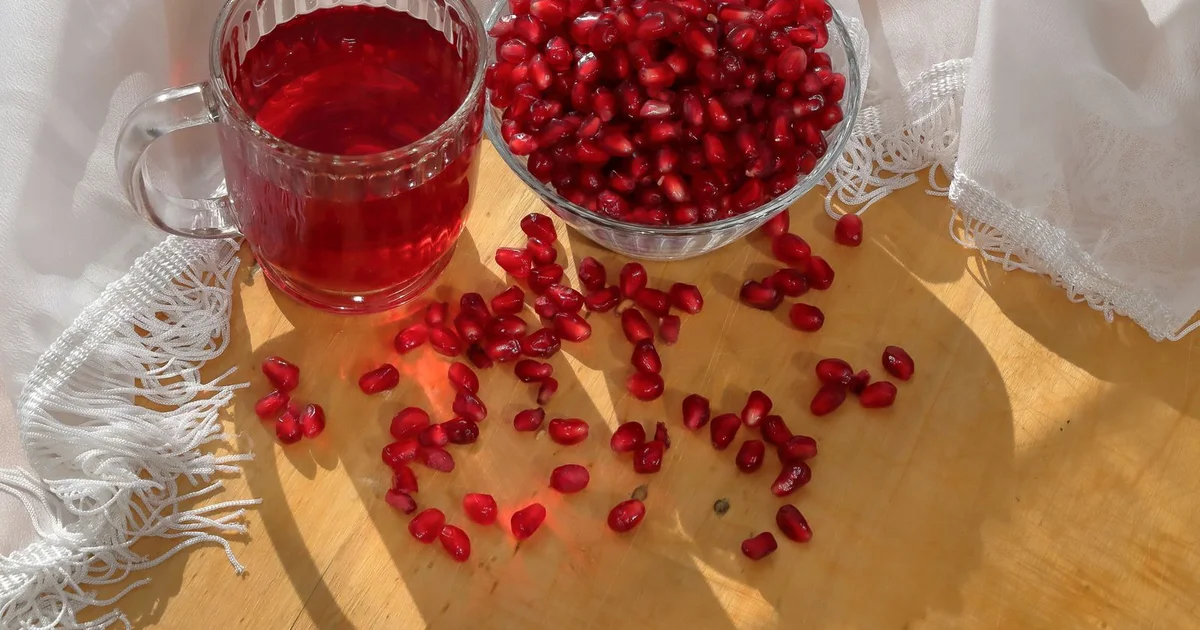
Pomegranate juice is a pleasant drink and a poor fertility treatment: the single randomized trial in this area tested a pomegranate-and-galangal tablet in 70 men, not juice, and no human study has ever shown that juice thickens the uterine lining.
This article was researched and drafted by the ProIVF Medical Editorial Team from the peer-reviewed papers and nutrient databases cited inline, and reviewed before publication by the ProIVF Medical Advisory Board. Where a claim rests on mechanism or on animal work rather than on human trial data, we label it as such.
Does Pomegranate Juice Actually Improve Fertility?
No controlled human study has shown that pomegranate juice improves pregnancy or live birth rates. The strongest human evidence is a single three-month trial of a tablet combining pomegranate extract with galangal, a ginger relative, and it measured sperm counts rather than babies.
That result is interesting enough to deserve a careful read, and narrow enough that it should not be translated into a daily juice habit. The rest of this article separates what was tested from what was only assumed.
What Is Actually in Pomegranate Juice?
A 100 g serving of bottled pomegranate juice provides 54 kcal and 12.6 g of sugar, with 214 mg of potassium and 24 µg of folate (USDA FoodData Central, record 167787). The same serving contains just 0.1 g of fiber, because juicing removes the seed and skin.
How much sugar is in a 250 mL glass?
A 250 mL glass, the amount most wellness posts recommend, carries roughly 133 kcal and about 31 g of sugar. That is close to the sugar in a can of regular soft drink, delivered without the fiber that whole fruit provides.
For anyone with insulin resistance, PCOS or gestational diabetes risk, this matters more than any theoretical antioxidant benefit. Fiber and sugar load affect ovulation and metabolic markers in ways that pomegranate polyphenols have never been shown to match.
Where the polyphenols actually sit
Pomegranate polyphenols are real, but they are concentrated in the peel. When researchers compared 29 accessions, whole-fruit homogenate had about 20-fold higher antioxidant activity than aril juice, and punicalagin from the peel was the dominant tannin (Tzulker et al., Journal of Agricultural and Food Chemistry, 2007).
Clear bottled juice is mostly aril juice, so it carries less of what the marketing highlights.
Can Pomegranate Juice Improve Sperm Quality?
The only randomized human trial in this area did not study juice, and it did not study pomegranate alone. It studied a commercial tablet combining standardized pomegranate fruit extract with greater galangal rhizome, given daily for three months to men whose semen quality fell short of sperm-bank thresholds.
What the 2014 trial found
Seventy men were randomized and 66 completed: 34 on the active tablet and 32 on placebo (Fedder et al., PLOS ONE, 2014). Total motile sperm count rose from 23.4 to 37.8 million in the treated group, a 62% increase, versus 19.9 to 23.9 million, a 20% increase, on placebo (p = 0.026).
Sperm morphology did not change.
The daily tablet dose supplied 1,000 mg of pomegranate extract and 764 mg of galangal, an amount the authors estimated corresponded to 500-1,000 mL of high-quality pomegranate juice based on ellagitannin content. Two of the authors were commercializing the product, a conflict they disclosed in the paper.
Why that trial cannot be read as a juice recommendation
The study had no pregnancy outcome, lasted one cycle of spermatogenesis, and cannot separate pomegranate from galangal. In the authors’ own words:
“Running chemical analyses of the tablets confirmed the presence of several potentially bioactive compounds, e.g. antioxidants, however at present we do not know, which of these compounds may be responsible for the increase in TMSC.” — Fedder et al., PLOS ONE, 2014
Twelve years later, no trial of pomegranate juice alone has been published in men. Anyone quoting the 62% figure while recommending a glass of juice is quoting a tablet study and changing the intervention.
What the wider antioxidant evidence says
Oral antioxidants as a class have weak, inconsistent support in male subfertility.
The 2022 Cochrane review pooled 90 trials and 10,303 men and found that antioxidants may raise live birth (OR 1.43, 95% CI 1.07-1.91) and clinical pregnancy (OR 1.89, 95% CI 1.45-2.47), both on very low-certainty evidence; when trials at high risk of bias were removed, the live-birth result disappeared (Peto OR 1.22, 95% CI 0.85-1.75) (de Ligny et al., Cochrane Database of Systematic Reviews, 2022). Antioxidants also increased mild gastrointestinal upset (OR 2.70, 95% CI 1.46-4.99).
If a couple wants to test the antioxidant hypothesis, the sensible version is a three-month trial of a specific supplement with a repeat semen analysis, not an open-ended juice habit. A repeat test costs far less than a wasted IVF cycle and actually answers the question.
Can Pomegranate Juice Thicken the Uterine Lining?
No human study has measured endometrial thickness after pomegranate juice. The claim comes from rodent work on pomegranate seed extract and from the general idea that antioxidants improve blood flow, and neither has been converted into a clinical trial with lining thickness or implantation as an endpoint.
What actually determines lining thickness
Lining thickness is driven by estradiol exposure, the number of days of progesterone, and the cycle protocol, not by diet. In 30,676 single euploid frozen transfers across 25 centres, the median lining was 8.9 mm, and a lining under 7 mm was associated with lower live birth in programmed cycles (aOR 0.78, 95% CI 0.70-0.87) (Genovese et al., Human Reproduction, 2025).
The relationship is a gradient rather than a hard cutoff. A meta-analysis of 67 studies reported live-birth rates of 26% at 6-8 mm, 35% at 10-12 mm and 43% at 12-14 mm (Pérez-Milán et al., Ultrasound in Obstetrics & Gynecology, 2025). Those numbers come from transfer cycles with measured hormone levels, which is the kind of evidence a juice cannot replace.
Why the blood-flow story sounds better than it is
Pomegranate does improve some vascular measures in cardiovascular studies, mostly blood pressure and endothelial function in older adults. Reproductive blood flow is a different question in a different population, and no trial has connected the two.
If your clinic reports a thin lining, the levers that change it are estradiol dosing, route and duration, the protocol itself, and occasionally adjuncts such as PRP under study conditions. Juice is not one of the levers.
Where Did the 250 mL a Day Rule Come From?
There is no clinical guideline behind the daily glass. The advice grew through fertility forums and supplement marketing, and it coincided with a long commercial campaign promoting pomegranate juice as a premium health product.
The number itself is plausible only because it is a round, photogenic amount. Nothing in the peer-reviewed literature establishes 250 mL, 8 oz or any other volume as a fertility dose.
Is Pomegranate Juice Safe During an IVF Cycle?
For most people, a glass of juice is harmless. The two situations that need attention are anticoagulant use and a high sugar load during stimulation or after transfer.
Blood thinners and drug interactions
Pomegranate juice has been implicated in warfarin instability.
A case report described a 64-year-old woman on a stable 4 mg daily warfarin dose whose INR became subtherapeutic after she stopped drinking pomegranate juice two to three times a week (Komperda, Pharmacotherapy, 2009). A review of warfarin-fruit interactions found 23 relevant publications, including 15 case reports, and listed pomegranate among the fruits to ask about when INR control is unstable (Norwood et al., Journal of Pharmacy Practice, 2015).
If you take warfarin, heparin, or another anticoagulant during an IVF cycle, tell your clinic before adding a regular juice habit.
Sugar, PCOS and the two-week wait
A daily 250 mL glass adds about 31 g of sugar and 133 kcal. In PCOS, where insulin resistance is part of the pathophysiology, liquid sugar is the least useful form of carbohydrate.
After transfer, the same glass is simply extra energy at a time when many people are already gaining weight from progesterone and reduced activity.
Whole pomegranate arils are a better package: the same polyphenols with fiber and a slower glucose rise, at roughly 83 kcal per 100 g.
What Works Better Than Pomegranate Juice?
The interventions below have trial support for the outcomes that matter, which juice does not.
| Strategy | What the evidence shows | Where to start |
|---|---|---|
| Folic acid 400 µg daily before conception | Reduces neural tube defects; juice provides 24 µg per 100 g, roughly a sixteenth of the supplement dose | Supplements guide |
| Three months of a tested male supplement plus repeat semen analysis | Antioxidants may raise live birth (OR 1.43) on very low-certainty evidence | Male fertility guide |
| Treating the actual semen diagnosis | Total motile count, morphology and DNA fragmentation each change the treatment path | Semen analysis |
| A Mediterranean-style diet with adequate protein and fiber | Improves metabolic markers that feed into ovulation and implantation | IVF diet guide |
| Luteal support exactly as prescribed | Progesterone route and duration are the variables your clinic actually controls | After transfer |
If you want pomegranate in your week, eat the arils and treat the juice as a treat rather than a protocol.
What Do Patients Actually Experience?
The three accounts below are composite cases written for illustration, not real patient records, and they contain no identifying details.
Case 1: the daily glass before transfer (34, Hangzhou). A 34-year-old preparing for a frozen transfer drank 250 mL of pomegranate juice every morning for six weeks because a group chat said it thickened the lining. Her lining measured 7.2 mm on the day of progesterone start, the transfer went ahead, and she did not conceive. The clinic’s own protocol change for the next cycle, adding vaginal estradiol, moved the lining to 8.6 mm.
Case 2: the semen analysis that changed the plan (38, Manchester). A couple with two years of trying spent about £40 a month on juice and supplements for the husband. A repeat semen analysis showed a total motile count of 9 million, and the clinic moved directly to ICSI. “We spent a year on drinks when we should have spent a month on a test,” the wife said in the counselling session.
Case 3: the warfarin interaction (41, Singapore). A 41-year-old on long-term warfarin for a previous thrombosis added pomegranate juice to her IVF preparation. Her INR dropped from a stable 2.4 to 1.7 over three weeks, which delayed her stimulation start by a month while her cardiologist adjusted the dose. She had not thought to mention the juice.
FAQ
Q: How much pomegranate juice should I drink to improve fertility?
There is no evidence-based dose, because no human trial has tested juice for fertility outcomes. A 250 mL glass supplies about 31 g of sugar and 133 kcal, so if you drink it, treat it as a treat and not as a daily prescription.
Q: Does pomegranate juice help with implantation?
No study has shown that. Implantation depends on embryo competence, lining thickness and hormone timing; in 30,676 euploid frozen transfers the median lining was 8.9 mm, and juice has never been tested against that endpoint.
Q: Can pomegranate juice increase sperm count?
The only randomized trial used a pomegranate-and-galangal tablet, not juice, and reported a 62% rise in total motile sperm (23.4 to 37.8 million) over three months. No published trial has tested juice alone, and the tablet study did not measure pregnancy.
Q: Is pomegranate juice safe in early pregnancy?
A normal serving is considered safe for most people, and pomegranate is not a known teratogen. The exception is anticoagulant therapy: case reports link juice to INR instability with warfarin, and in one report a stable INR of 2.4 fell to 1.7 within three weeks of stopping the juice.
Q: Does pomegranate juice affect estrogen or progesterone?
No human data show a meaningful change in either hormone. In 18 premenopausal women, 10 g of flaxseed a day raised urinary enterolactone nearly nine-fold, and pomegranate has not even been studied that way; the “hormone balance” claims circulating online have no measured hormone levels behind them.
Q: Is pomegranate juice better than pomegranate seeds?
Whole arils are the better choice: about 83 kcal per 100 g with fiber, versus 54 kcal and 12.6 g of sugar per 100 g of juice and almost no fiber. The polyphenols in the peel are largely lost either way.
Q: What about pomegranate extract capsules?
Capsules vary widely in standardization and dose, and only one commercial combination product (1,000 mg pomegranate extract plus 764 mg galangal) has been tested in a randomized trial of 70 men. If you take one, treat it as an unproven supplement, check for interactions, and do not expect a change in pregnancy rates.
Q: How long before IVF should my partner start lifestyle changes?
Sperm production takes about 74 days, so three months is the practical window. That is long enough for a repeat semen analysis to show whether an intervention worked, which is the only way to know.
Where to Go From Here
Pomegranate juice will not decide an IVF outcome, but a semen analysis, a lining check and a protocol review can. ProIVF lists clinics by country with success rates and Chinese-language support so you can compare options before booking (find a clinic).
This article is for general information and does not replace individual medical advice. If you take anticoagulants, have PCOS or diabetes, or are preparing for a transfer, discuss any new daily drink or supplement with your own clinician.
Research figures above link to their PubMed record or the cited regulatory page; numbers used as clinical convention and the figures inside the patient cases are illustrative and are not individually sourced. More about how we work is on our about page.
Last updated: 25 November 2026