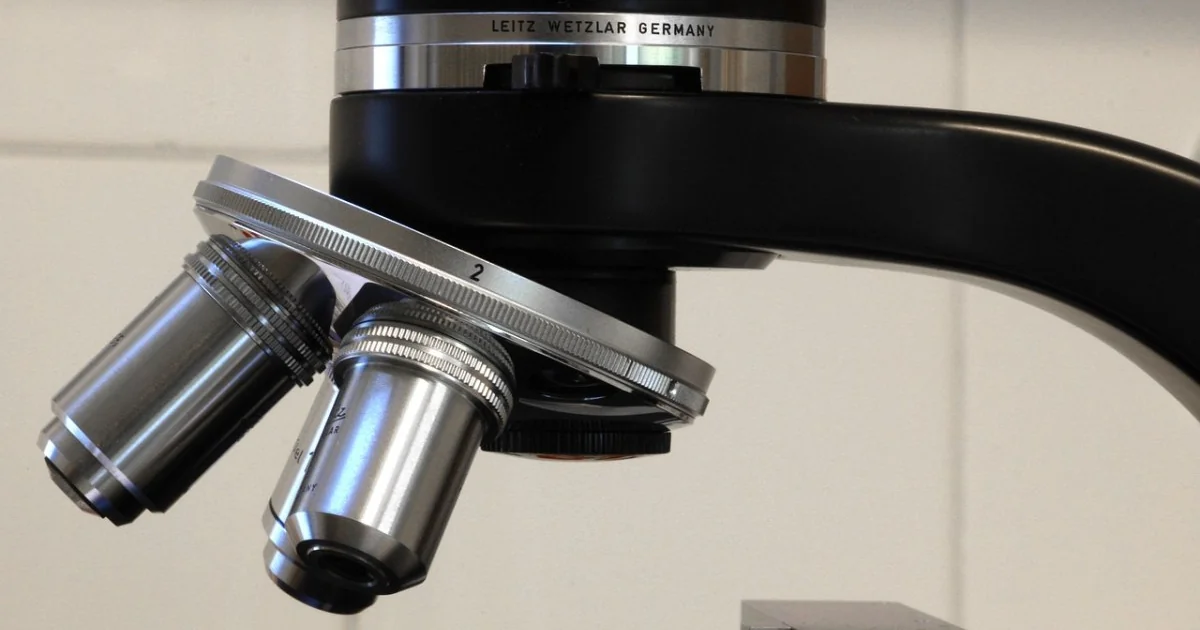
An embryologist is the scientist who handles your eggs, sperm and embryos from the moment the eggs leave the retrieval room until they are transferred, frozen or tested — and it is one of the biggest levers in IVF that patients almost never see. Even a chromosomally normal embryo implants only about 50-60% of the time, and much of what separates one clinic’s numbers from another’s is the quality of the embryology lab and the hands running it.
The figures here come from peer-reviewed studies indexed in PubMed (Cimadomo 2023, Le 2025, Yaghi 2026, Dhaenens 2025) and the international Alpha/ESHRE laboratory consensus, together with professional guidance from the European Society of Human Reproduction and Embryology (ESHRE) and regulator guidance from the UK’s Human Fertilisation and Embryology Authority (HFEA). They were compiled by the ProIVF Medical Editorial Team and reviewed by the ProIVF Medical Advisory Board.
What Is an Embryologist, Exactly?
A clinical embryologist is a laboratory specialist trained to run the assisted-reproduction steps that happen outside the body: identifying and preparing the eggs, preparing the sperm, fertilizing the eggs, growing embryos day by day, grading them, biopsying them for genetic testing, freezing and thawing them, and loading the best one into the transfer catheter.
The doctor plans your stimulation and performs the retrieval and transfer; the embryologist owns everything that happens in between, in the lab. In the UK, IVF may only be carried out in a centre licensed by the HFEA and overseen by a named Person Responsible, and internationally the Alpha/ESHRE consensus sets shared minimum criteria for how oocytes and embryos are assessed and reported. Many senior embryologists hold a master’s degree in clinical embryology and are themselves published researchers.
Why Does the Embryologist Matter So Much?
Because the lab, not the prescription pad, is where most of the losses happen. A single embryo that is genetically normal still implants no more than 50-60% of the time, so at least four in ten euploid transfers fail at the first hurdle — and miscarriage takes a further share of the ones that do implant — Cimadomo et al., Human Reproduction Update, 2023.
Most of that gap is outside your control, but not all of it: the same review found that maternal age of 38 or older, obesity, previous repeated implantation failure and abnormal pre-transfer progesterone each shift the odds.
Two things an embryologist controls directly move that odds line:
- The culture environment. Temperature, gas stability, media and air purity are set and watched by the lab team. In one 2025 single-centre feasibility study — no control group, so read it as proof of concept rather than proof of benefit — a purpose-built clean-room lab kept particles about 6 times below the ISO class 5 standard and volatile organic compounds at 0.00 ppm, and its vitrified-blastocyst transfers reached a 58.5% pregnancy rate and a 36.2% implantation rate — Le et al., Clinical and Experimental Reproductive Medicine, 2025.
- How many usable embryos you end up with. A lab that cultures more blastocysts and freezes them well gives you more attempts from a single retrieval, and cumulative success keeps climbing with each one: 68.3% after six and 78.0% after ten blastocyst transfers, across 31,478 transfers in 11,463 women — Dhaenens et al., Human Reproduction, 2025. That study tracks outcomes by transfer rather than by laboratory, so treat it as the case for maximising usable embryos, not as a direct measure of lab skill.
The Istanbul consensus was written to set minimum criteria for assessing oocyte and embryo morphology, so that laboratories can describe embryo development in comparable terms. — Alpha Scientists in Reproductive Medicine & ESHRE Special Interest Group of Embryology, Human Reproduction, 2011
What Does the Embryologist Do to Your Eggs, Step by Step?
1. Finding and preparing the eggs
The retrieval needle brings out follicular fluid, and the embryologist scans it under the microscope to recover each cumulus-oocyte complex, washes it free of blood and tissue, and places it in an incubator. Speed matters: every egg is kept out of the incubator only as long as necessary.
2. Preparing the sperm
Semen is left to liquefy and then run through density-gradient centrifugation and a swim-up step to concentrate the motile, normally shaped cells. When a sample is weak, the embryologist may spend hours selecting individual sperm.
Under WHO 6th-edition criteria the embryologist counts 200 sperm to assess morphology, where the lower reference limit for normal forms is 4%.
3. Fertilizing the eggs — IVF or ICSI?
For conventional IVF the embryologist adds a defined number of prepared sperm around each egg and lets fertilization happen on its own. For ICSI they inject one selected sperm directly into one egg, which is used for poor sperm samples, surgically retrieved sperm, or when embryos will be tested with PGT-A.
ICSI is also offered when sperm DNA fragmentation is high, on the reasoning that it skips the steps where a damaged sperm would otherwise have to compete and penetrate the egg — though the evidence that this raises live birth is still mixed.
4. Growing and grading the embryos
Embryos are cultured to day 3 or grown on to day 5-6 blastocyst, and the embryologist scores them — most labs use the Gardner system, a number for expansion plus two letters for the inner cell mass and the trophectoderm. Grading predicts averages, not your single embryo: in the Cimadomo review, blastocysts graded below Gardner’s BB had roughly 60% lower odds of live birth than better-graded ones (OR 0.40, 95% CI 0.24-0.67), and a poor inner cell mass or trophectoderm alone carried a similar penalty. Our embryo grading guide explains how to read your own report.
5. Biopsying for genetic testing
For PGT-A the embryologist lifts a few cells from the trophectoderm of each blastocyst. Done by an experienced hand this is treated as low-risk, and post-biopsy blastocysts survive vitrification well in labs that do it routinely — see our embryo testing guide.
6. Freezing and thawing
Extra embryos are vitrified — flash-frozen in liquid nitrogen at -196°C — and warmed just before a frozen embryo transfer. Vitrification and warming are pure embryologist technique: survival depends on how the cells are handled, not on the machine alone.
7. Setting up the transfer
On transfer day the embryologist selects which embryo or embryos to move, warms or prepares them, and loads them into the catheter that the clinician places in the uterus.
How Do You Judge a Good Embryology Lab Before You Choose a Clinic?
Ask about the lab itself, not only the doctor’s bedside manner. A clinic that runs its own accredited embryology lab tends to do better than one that ships eggs to an outside lab, and the details below are the minimum you can verify — our guide to choosing an IVF clinic covers the wider framework.
| What to ask | Why it matters | Green flag |
|---|---|---|
| Lab accreditation | Independent quality standards | CAP/CLIA (US), HFEA licence (UK), ISO 15189, provincial Health Commission approval (mainland China) |
| Air and environment | Volatile compounds and particles stress embryos | Active carbon/HEPA air filtration, monitored VOC, stable 37°C and gas |
| Embryologist experience and cycle volume | Repetition is itself quality control | Senior embryologists on site; enough annual cycles to keep skills sharp |
| Witnessing and double-checking | Prevents mix-ups of gametes and embryos | Electronic witnessing (RI Witness or equivalent) plus two-person verification |
| Culture technology | Better selection and less handling | Time-lapse incubation where indicated; documented lab outcomes |
| Data transparency | Lets you compare honestly | Age-specific live birth rates, fertilization and blastulation rates published |
A reasonable set of questions to bring to a consultation:
- Is the embryology lab in-house and accredited?
- Who is the senior embryologist, and what is their qualification?
- Do you use an electronic witnessing system?
- What are your fertilization, blastulation and warming-survival rates?
- Can I see age-specific live birth data, not just per-cycle success?
These are the same checks behind our IVF success rate guide, and you can compare listed centers in the ProIVF hospital directory.
Will AI Replace the Embryologist?
No — on current evidence AI is a second set of eyes, not a replacement. A 2026 systematic review and meta-analysis found that conventional morphology grading and time-lapse imaging “remain subjective and show only modest predictive accuracy”, and that AI platforms such as iDAScore and KIDScore are being adopted to standardize that selection — Yaghi et al., European Journal of Obstetrics & Gynecology and Reproductive Biology, 2026. The same review found no significant difference in clinical pregnancy rate between AI-assisted and morphology-based selection (RR 0.99, 95% CI 0.87-1.12), so standardisation is the realistic promise, not superiority.
The hands that microinject, biopsy and vitrify an egg remain human, and the best results come from labs where a skilled embryologist works alongside validated tools.
What the Lab Changed for Three Families
The accounts below are illustrative patient composites shared to show how lab decisions play out; identifying details are changed and the money figures are indicative of typical cycle costs, not individually sourced.
Ana, 38, Los Angeles — “The embryologist’s call on ICSI is why we had a baby.” Ana’s partner had borderline counts, and her first clinic defaulted to conventional IVF; only four eggs fertilized and just one borderline embryo reached day 3. After a fresh cycle that cost her about $22,000, she moved to a center where a senior embryologist switched to ICSI, cultured to blastocyst, and biopsied for PGT-A. Two euploid embryos came back, one transferred, one frozen. “The embryologist sat with us and explained why the eggs didn’t fertilize last time. Nobody had done that before.” A healthy daughter was born the following year.
Mei, 41, Shenzhen, treated in Bangkok — “The thaw was the part I’d never thought about.” After two failed transfers with good-looking embryos, Mei’s third cycle used a freeze-all strategy; three blastocysts were vitrified. On transfer day two survived warming cleanly and one did not, and the lab’s warming-survival rate became the number she asked every clinic about afterwards. Across three cycles and flights from Shenzhen she spent around $16,000. “I used to grade my embryos by their letters. Now I ask what my warming survival was.” She reached a live birth at the second frozen transfer.
Priya, 35, Singapore — “The lab was why I stopped shipping eggs.” Priya began at a clinic without an in-house lab, where eggs were handled off-site, and got no blastocysts. Switching to a center with an accredited on-site embryology lab and time-lapse incubation, her next cycle produced three blastocysts and a single transfer ended in a singleton pregnancy at about S$28,000 total. “Same drugs, same age, different lab. That was the whole difference for me.” She delivered at 39 weeks.
FAQ
Q: Is an embryologist a doctor?
No. An embryologist is a laboratory scientist, usually trained to degree or master’s level in clinical or reproductive embryology, not a medical doctor.
The fertility physician makes your treatment plan; the embryologist runs the lab steps behind outcomes like the 50-60% implantation ceiling even for a chromosomally normal embryo.
Q: How many embryos actually survive a good lab?
Even in strong labs a genetically normal embryo implants 50-60% of the time, and cumulative live birth rises with each transfer — 68.3% by the sixth and 78.0% by the tenth across 31,478 transfers in 11,463 women — so one embryo failing is normal, not a verdict on you.
Q: Does the embryology lab really change success rates?
Yes. Air quality, gas and temperature stability, and the embryologist’s technique in injection, biopsy and vitrification all move outcomes; a well-controlled clean-room lab reported a 58.5% pregnancy rate on vitrified-blastocyst transfers in a 2025 study, though that was a single centre without a control group, so treat “no in-house lab” as a caution rather than a proven cause of poorer results.
Q: What is ICSI and when does the embryologist use it?
ICSI is the injection of a single selected sperm directly into one egg. The embryologist uses it for sperm below the WHO 6th-edition reference limits of 30% progressive motility or 4% normal forms, for sperm retrieved surgically, and whenever embryos will be tested with PGT-A to avoid stray sperm DNA.
Q: Are frozen embryos as good as fresh ones?
Vitrification does not appear to harm blastocysts that survive the thaw — post-biopsy blastocysts warm with high survival in experienced labs — and for many patients freeze-all transfers give equal or better results because the lining is prepared separately.
Q: Should I ask about the lab before choosing a clinic?
You should. Ask whether the embryology lab is in-house and accredited, who the senior embryologist is, whether an electronic witnessing system is used, and what the fertilization, blastulation and warming-survival rates are — a strong lab warms vitrified blastocysts reliably — and these are the verifiable markers behind the numbers in our success rate guide.
Planning Care Around a Strong Lab
The embryologist never meets most patients, yet that person and their lab decide how many of your eggs become embryos, how many survive freezing, and which embryo goes back. When you compare clinics, weight the embryology lab as heavily as the doctor you like — browse accredited centers in the ProIVF hospital directory, or contact our team for a consultation matched to your case.
Medical disclaimer: this article is general information, not medical advice, and does not replace a consultation with a reproductive medicine specialist. Success rates vary by clinic, age and diagnosis.
About this article — compiled by the ProIVF Medical Editorial Team from the peer-reviewed studies and regulator pages linked above, and reviewed by the ProIVF Medical Advisory Board. Research figures link to their PubMed record or the cited regulator page; numbers used as clinical convention and the figures inside the patient cases are illustrative and are not individually sourced. Where a clinic is described by type rather than by name, and where a centre appears in the ProIVF directory, assume a commercial relationship and verify the claims independently.
Last updated: 2026-10-30