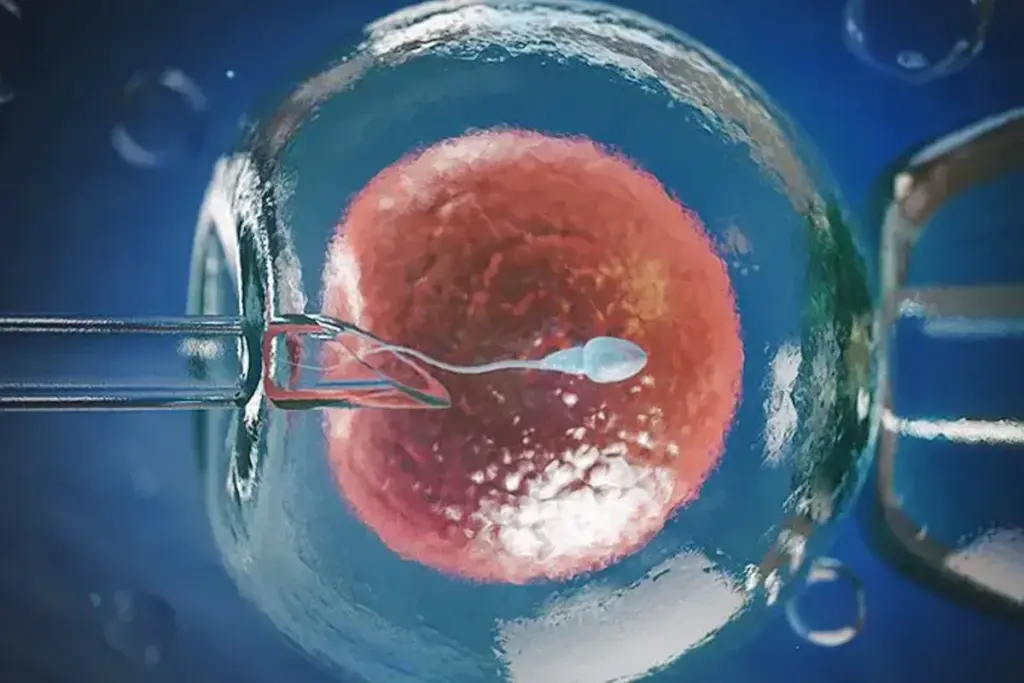
IVF culture media is the fluid that feeds and protects an embryo from fertilization until transfer or freezing, usually its first 5-7 days outside the body. A 2025 analysis of 47 commercial media from 11 brands — a market led by Vitrolife, CooperSurgical and FUJIFILM Irvine Scientific (Research and Markets, 2025) — found that no two share an identical composition, yet most manufacturers still refuse to publish full formulas.
What Are the 6 Key Fluids in an IVF Cycle?
Once eggs and sperm leave the body, every downstream step depends on specialized fluids. For the full walkthrough, see our IVF process step-by-step guide.
| Fluid | Used at | Core function | Touches the embryo? |
|---|---|---|---|
| Oocyte retrieval (washing) medium | Egg pickup | Flushes follicles to recover egg-cumulus complexes | No (removed during handling) |
| Sperm preparation medium | Semen processing | Washes seminal plasma; selects motile sperm | No (handling only) |
| Fertilization medium | Fertilization (Day 0) | Ionic environment for sperm-egg fusion | Yes |
| Cleavage medium | Days 1-3 | Supports low-energy cleavage-stage metabolism | Yes |
| Blastocyst medium | Days 3-6/7 | Supports high-energy glycolytic blastocyst metabolism | Yes |
| Transfer / vitrification medium | Transfer or freezing | Buffers environmental shifts; protects membranes | Yes |
Steps 3-5 are the embryo culture media — every fluid the embryo soaks in from fertilization to transfer.
What Is IVF Culture Media Made Of?
From Ham’s F10 to Antioxidant Formulas: A Short History
| Era | Landmark formula | Innovation |
|---|---|---|
| 1978 | Ham’s F10 | First medium for human IVF (Louise Brown); designed for mouse cells |
| 1985 | HTF (Quinn et al.) | Built from fallopian-tube ion concentrations — the “back to nature” origin |
| 1990s | Sequential media (G1/G2) | Gardner team matched the tube-to-uterus transition in stages |
| 2000s | Single-step media (Global) | “Let the embryo choose” philosophy |
| 2010s | Time-lapse media (G-TL etc.) | Formulated for incubators with built-in imaging |
| 2020s | Antioxidant formulas (Gx series) | Added acetyl-L-carnitine, N-acetylcysteine, alpha-lipoic acid |
The 2025 Ingredient Census: 40 Compounds, 47 Media, 11 Brands
Zagers et al. (Human Reproduction, 2025) quantified 40 ingredients across 47 products from 11 brands.
Energy substrates:
| Ingredient | Fertilization medium | Cleavage medium | Blastocyst medium | Single-step medium |
|---|---|---|---|---|
| Glucose (mM) | 2.5-3.0 | <0.5 | 2.5-3.3 | 0.5-1.0 |
| L-lactate (mM) | 2.2-9.7 | 2.2-47.5 | 5.1-11.9 | 5.0-9.7 |
| D-lactate (mM) | 0 (most brands) | 0-10.4 (Irvine contains D-lactate) | 0 (most brands) | 0 |
| Pyruvate (mM) | 0.19-0.47 | 0.06-0.47 | 0.08-0.37 | 0.23-0.47 |
| Carnitine (μM) | 0-61 | 0-89 | 0-98 | 0-57 |
- A “high-low-high” glucose pattern defines every sequential system: high at fertilization (2.5-3 mM), deliberately low at cleavage (<0.5 mM) to reduce glycolytic stress, high again at blastocyst stage (2.5-3.3 mM).
- D-lactate is Irvine Scientific’s controversial ingredient — over half the lactate in the Early Cleavage and MultiBlast series is the D-form, a metabolic dead end mammals cannot metabolize (Zagers 2025 / Morbeck 2014).
- Carnitine varies up to 98-fold (0-98 μM), affecting fatty-acid beta-oxidation and embryo energy metabolism.
Amino acids:
| Amino acid (μM) | Human tubal fluid (mid-luteal) | Vitrolife G-TL | Irvine CSC + DSS | Cook Sydney Cleavage |
|---|---|---|---|---|
| Glycine | 1137 ± 216 | 208 | 6 | 3833 |
| Glutamine | 542 ± 44 | 22 | 0 | 93 |
| Leucine | 95 ± 11 | 183 | 0 | 21 |
| Lysine | 160 ± 22 | 213 | 0 | 25 |
| Arginine | 93 ± 14 | 315 | 0 | 26 |
Two results startle: Irvine’s Early Cleavage Medium (+DSS) contains zero measurable concentration of 13 amino acids, and Cook Sydney Cleavage Medium’s glycine is 3.4 times the tubal-fluid level (3833 vs 1137 μM). The team’s conclusion: no two commercial media are identical — even within one parent company — and if the ideal formula were known, no company would sell distinct versions at once.
Protein Supplements: HSA, SSS, DSS, rHA
Protein sources differ substantially between products: HSA (human serum albumin — human blood, most common, standardized), SSS/SPS (human blood, with alpha/beta globulins and lipids), DSS (synthetic + serum, less batch-to-batch variation) and rHA (recombinant, avoids blood-borne risk; used by G-MM).
Clinical significance: protein type and concentration alter embryo gene expression — Kleijkers (2016) found different media changed blastocyst expression of genes governing apoptosis, protein degradation, metabolism and cell-cycle regulation.
Sequential vs Single-Step Culture: Which Is Better?
For pregnancy rates, neither wins: the 2016 meta-analysis (4 RCTs, 498 patients) found no significant difference in clinical or ongoing pregnancy or miscarriage. The interesting signals are perinatal and genetic.
Pregnancy Rates: The Sfontouris Meta-Analysis
| Outcome | Single-step | Sequential | RR (95% CI) | p-value |
|---|---|---|---|---|
| Clinical pregnancy rate | 42.9% | 40.1% | 1.09 (0.83-1.44) | 0.53 |
| Ongoing pregnancy rate | 32.2% | 32.4% | 1.11 (0.87-1.40) | 0.39 |
| Miscarriage rate | 14.7% | 18.3% | 0.89 (0.44-1.81) | 0.74 |
In the blastocyst-transfer subgroup only, single-step edged ahead (34.8% vs 34.1% ongoing pregnancy), without significance.
Perinatal Outcomes: The MOSART Finding
The 2022 MOSART study analyzed 1,532 ongoing singleton pregnancies — 1,058 single-step, 474 sequential.
| Perinatal outcome | Single-step | Sequential | aOR (95% CI) |
|---|---|---|---|
| Large for gestational age (LGA) | 7.1% | 5.9% | 2.1 (1.04-4.22) |
| Preterm birth | 12.1% | 14.1% | 0.84 (0.61-1.15) |
| Low birth weight | 5.3% | 6.3% | 1.35 (0.64-2.85) |
| Gestational diabetes | 7.8% | 3.8% | 1.35 (0.64-2.85) |
Single-step carried a significant 2.1-fold increase in LGA risk (p=0.038), holding after adjustment for maternal age, race, protein supplementation, oxygen tension, fertilization method and embryos transferred. Sunde et al. proposed that an embryo undernourished early in culture may be “programmed” to accelerate growth in the nutrient-rich uterus.
Does Culture Medium Affect Aneuploidy Rates?
Deng’s 2020 JARG study compared PGT-A results from 347 sequential and 519 single-step cycles.
| Age group | Aneuploidy, single-step | Aneuploidy, sequential | Difference |
|---|---|---|---|
| Under 38 | 44.5% | 36.4% | +8.1%, p<0.05 |
| 38 and over | 68.8% | 66.0% | Not significant |
In patients under 38, single-step embryos were significantly more often aneuploid (44.5% vs 36.4%), cutting euploid embryos per cycle from 3.3 to 2.6. See our PGT-A embryo genetic screening guide.
How Should You Choose Between Them?
- Previous LGA delivery: sequential preferred; single-step warrants caution (elevated LGA risk).
- Under 35 with many embryos: either works, but watch the ~8-percentage-point aneuploidy gap.
- Time-lapse incubation: single-step fits better; sequential requires pausing imaging.
Both systems have produced millions of healthy babies; these are population statistics, not individual predictions — laboratory quality remains the most important variable.
Why Don’t Manufacturers Disclose Culture Media Ingredients?
Because media are regulated as medical devices rather than drugs, manufacturers can withhold formulas as trade secrets — and the 2024 CooperSurgical recall showed what that costs patients.
What Happened in the CooperSurgical Recall
In March 2024 CooperSurgical recalled one batch that could cause embryo development arrest worldwide; U.S. patients sued, saying it destroyed their embryos (STAT News, 2024).
Key facts:
- The recall covered more than 10,000 bottles; litigation alleged a magnesium deficiency in the affected medium
- CooperSurgical has still not published the exact defective composition
- FDA: Class II recall (temporary or medically reversible effects)
The Tip of a Systemic Iceberg
The recall exposed an industry-wide problem: full media composition is not public. Paulson and Adashi were blunt:
“The unbearable ignorance of the composition of IVF culture media.” — Richard J. Paulson and Eli Y. Adashi, Reproductive BioMedicine Online, 2023, DOI: 10.1016/j.rbmo.2023.103645
They describe how company-scientist collaborations faded, leaving recipes as “heirlooms” whose composition no one knows; unable to see inside the bottle, labs dare not switch brands even to a better formula, and innovation stalls.
Root causes:
- FDA classification as “medical devices,” not drugs, carries far lighter disclosure requirements
- Manufacturers invoke trade secrets, and formulations can change between batches without notice
- No global registry tracks culture media composition and quality
Who Is Responding with Transparency?
| Company | Transparency level | Notes |
|---|---|---|
| Vitrolife | Partial | Ingredient lists, no concentrations |
| FUJIFILM Irvine Scientific | Partial | Lists + some concentrations |
| CooperSurgical (SAGE/ORIGIO/Global) | Low | Three brands, no concentrations |
| Cook Medical | Low | Incomplete ingredient lists |
| Gynemed | Moderate | GM501: more independent data |
| FertiPro | Moderate | GAIN Complete relatively open |
Can Follicular Fluid Predict Embryo Quality?
Before an egg ever meets engineered culture medium, it matures for months inside follicular fluid, the natural liquid surrounding the developing oocyte.
Follicular fluid forms from plasma filtered through follicular capillaries plus granulosa and cumulus secretions — far more complex than any commercial medium, with hormones, growth factors, cytokines, lipids, proteins and extracellular vesicles.
Which Follicular Fluid Markers Track Embryo Quality?
A 2024 proteomics study — Int J Mol Sci 2024 — compared follicular fluid from 110 follicles across 50 egg donors with each egg’s blastocyst: DKK3 and heat shock cognate 71 kDa protein ran high in top-quality fluid (OR 2.8, p=0.07), IgA1hc and TGF-beta-induced protein in low-quality fluid (differences significant).
A 2022 Frontiers in Endocrinology study of 100+ follicular fluid samples reported hormone-based blastocyst prediction:
| Follicular fluid marker | Predicts | Sensitivity | Specificity | AUC |
|---|---|---|---|---|
| LH ≥5.75 mIU/mL | Top-quality blastocyst | 100% | 55.6% | 0.711 |
| FSH ≥8.44 mIU/mL | Top-quality blastocyst | 88.9% | 64.6% | 0.747 |
LH and FSH in a single follicle’s fluid can therefore predict top-quality blastocyst potential — per-follicle “personalized embryo selection” is moving from science fiction toward practice.
From Follicular Fluid to Culture Medium: The Formulation Gap
Commercial media still differ sharply from human tubal fluid (mid-luteal, MDPI Biomolecules 2026): glycine 1,137 μM vs 6-3,833 μM across brands (638-fold); glucose 6,159 μM vs <500 μM (below 1/12); L-lactate 3,136 μM vs 2,200-47,500 μM (15-fold); pyruvate 106 μM vs 60-470 μM (4.4-fold). The review argues most media diverge from tubal fluid (blastocyst media approximate uterine fluid better) and that D-lactate may disturb embryo metabolism and epigenetics; plasma-based media (Plasmax, HPLM) show better fidelity, and Utsunomiya et al.’s OVIT, built from a complete tubal metabolome, reported improved IVF outcomes.
Do Antioxidant Culture Media Improve IVF Outcomes?
For patients aged 35-40, yes in one 2024 trial: a Japanese prospective RCT (Kuramoto Women’s Clinic, 127 cycles) tested the Vitrolife Gx series supplemented with three antioxidants — acetyl-L-carnitine, N-acetylcysteine and alpha-lipoic acid.
Key results in the 35-40 subgroup: the antioxidant medium significantly improved day-3 embryo development, day 5-6 blastocyst formation, top-quality blastocyst rate and live birth after single frozen embryo transfer (all p<0.05). Under 35, there was no significant benefit.
Patients aged 35-40 may benefit from labs running antioxidant media such as the Gx series.
Does Oxygen Level in the Incubator Matter?
Yes — MOSART shows oxygen is tightly bundled with culture choice: 94.4% of single-step cultures used 5% low oxygen vs 74.1% of sequential at 20% atmospheric. Low-oxygen (5% O₂) culture significantly improves blastocyst formation, and top labs now almost universally use it.
| Oxygen level | Physiological basis | Effect on blastocyst formation |
|---|---|---|
| 5% O₂ (physiological) | Natural oxygen tension in tube and uterus | Baseline |
| 20% O₂ (atmospheric) | Increased oxidative stress | Blastocyst rate down 10-15% |
How Do You Evaluate a Clinic’s Culture System?
These 8 questions show how seriously a lab treats its culture system; broader criteria are in our how to choose an IVF clinic guide.
- Which medium brand — mainstream (Vitrolife / Irvine / CooperSurgical)?
- Sequential or single-step, and why?
- Antioxidant supplementation for patients 35+?
- Incubator oxygen — routinely 5%?
- Full composition and concentrations available?
- Medium lot numbers systematically recorded?
- Frozen-embryo survival rate (>95%)?
- Time-lapse incubators (EmbryoScope/Geri)?
Red Flags
Treat any of these as a warning sign:
- 🚩 Unbranded or unknown culture media
- 🚩 The clinic refuses to name the medium brand
- 🚩 No change of medium brand or system since before 2019
- 🚩 No batch-number traceability records
- 🚩 Blastocyst rates below CDC/SART averages for your age
Five Patient Stories About Choosing Culture Media
All cases below are anonymized examples based on common clinical scenarios.
Case 1 — Age 35: Switching Media After Two Failures
A 35-year-old Beijing patient completed two cycles on unbranded domestic medium; every embryo graded 3CC or below. At an international clinic using Vitrolife Gx antioxidant medium with 5% low-oxygen culture plus three months of CoQ10 pretreatment, her third cycle yielded 3 blastocysts (4BB, 4BC, 3BB) from 9 eggs, she conceived after transfer, and the total cost was roughly 120,000 CNY.
Case 2 — Age 42: Media vs Age
A 42-year-old patient with AMH 0.8 ng/mL produced 3 fertilized eggs from 6 on Irvine CSC single-step medium — and zero blastocysts. At her next clinic, on Vitrolife G2 sequential medium, 3 of 4 eggs fertilized and one Day 6 (4BC) blastocyst transferred successfully.
For patients over 42, sequential culture’s lower aneuploidy signal (Deng 2020) plus a more physiological nutrient progression may suit embryos at arrest risk.
Case 3 — Age 38: Living Through the CooperSurgical Recall
A 38-year-old Los Angeles patient retrieved 15 eggs in March 2024; 12 fertilized and 8 looked healthy on Day 5 — one transferred, seven frozen. Her clinic’s CooperSurgical medium lot was later recalled for abnormal magnesium content, and 3 of the seven frozen embryos did not survive thawing.
Because the clinic kept complete lot records, the affected embryos could be identified — without batch traceability, none could.
Case 4 — Age 33: From Single-Step to Sequential Before PGT-A
A 33-year-old PGT-A patient on Global Total single-step medium had 7 of 9 biopsied blastocysts aneuploid (77.8%) — far above the ~30% expected at her age. Switched to Vitrolife G1/G2 sequential medium, her next cycle produced 3 euploid of 8 blastocysts (62.5% aneuploidy), lifting her euploid count from 2 to 3 and transfer chances from one to two.
Her gap exceeded Deng’s 2020 population finding (8 points under 35) but pointed the same way.
Case 5 — Age 39: Experimental Follicular Fluid Selection
A 39-year-old U.S. patient joined a trial sampling follicular fluid from every follicle at retrieval and measuring LH and FSH per the Front Endocrinol 2022 protocol, in which LH ≥5.75 mIU/mL flagged a 100% probability of top-quality blastocysts. Only the 3 marker-favorable eggs were injected via ICSI: all 3 fertilized, 2 became top-quality blastocysts, and 1 transferred successfully.
Biomarker-guided egg selection is still experimental but previews where precision IVF is heading.
FAQ
Q: Does the brand of IVF culture media matter?
Less than you think — the 2016 meta-analysis of 4 RCTs (498 patients) found no significant pregnancy-rate gap between brands; consistency, lab experience and quality control matter more — success-rate factors.
Q: Is sequential or single-step culture better?
Neither (Sfontouris 2016: 42.9% vs 40.1%). But single-step showed higher aneuploidy under 38 (Deng 2020: 44.5% vs 36.4%) and 2.1-fold higher LGA risk (MOSART 2022) — individualize with your doctor.
Q: How can culture media “kill” embryos?
Usually a composition error outside the normal range — like the alleged magnesium deficiency in the 2024 CooperSurgical recall of 10,000+ bottles — plus pH drift, osmolality errors, endotoxins or protein degradation; hence non-negotiable batch traceability.
Q: Can I ask my clinic to use a specific media brand?
Ask freely — a good lab will answer with data. But no two of the 47 census formulas are alike, so a switch is a real experiment for a validated lab.
Q: Are antioxidant culture media worth the extra cost?
Only the 35-40 subgroup: the 2024 Kuramoto RCT (127 cycles) found significantly higher blastocyst and live-birth rates there, none under 35.
Q: Does culture media affect a baby’s long-term health?
Possibly — single-step was linked to LGA rates of 7.1% vs 5.9% (MOSART 2022), and media alter gene expression and birth weight in animal and human studies. An active research area, not a settled risk.
Q: How do I check whether a culture medium was recalled?
Search the FDA recall database and ask the clinic for its media’s FDA registration and certificates of analysis for recent lots; the 2024 CooperSurgical event was a Class II recall.
The Bottom Line: Your Embryo’s First Home Is a Black Box
Your embryo’s first 5-7 days unfold in a fluid no one can see inside — the 2024 CooperSurgical recall was a symptom of that opacity, and the 2025 Human Reproduction census proved no two commercial media are alike. Transparency is advancing, but the most powerful patient action remains ask: which medium, why, and is the full composition public?
Browse vetted IVF clinics with international labs or contact our advisors, and read our embryo development guide and stimulation protocols guide.
References
- Zagers MS, Laverde M, Goddijn M, et al. “The Composition of Commercially Available Human Embryo Culture Media.” Human Reproduction, 2025, 40(1):30-40. DOI: 10.1093/humrep/deae248
- Paulson RJ, Adashi EY. “The unbearable ignorance of the composition of IVF culture media.” Reproductive BioMedicine Online, 2023, 48(1):103645. DOI: 10.1016/j.rbmo.2023.103645
- Hynes J, et al. “Applying the Lessons of Physiological Cell Culture to Human Embryo Culture for In Vitro Fertilization.” Biomolecules, 2026, 16(5):618. MDPI
- Sfontouris IA, Martins WP, Nastri CO, et al. “Single versus sequential culture medium: which is better at improving ongoing pregnancy rates? A systematic review and meta-analysis.” Journal of Assisted Reproduction and Genetics, 2016. PMC5574647
- Noman K, et al. “The impact of single step and sequential embryo culture systems on obstetric and perinatal outcomes in singleton pregnancies: the Massachusetts Outcomes Study of Assisted Reproductive Technology (MOSART).” JARG, 2022. PMC9206725
- Deng J, Zhao Q, Cinnioğlu C, et al. “The impact of culture conditions on blastocyst formation and aneuploidy rates: a comparison between single-step and sequential media.” JARG, 2020, 37:161-169. DOI: 10.1007/s10815-019-01621-8
- Morbeck DE, Krisher RL, Herrick JR, et al. “Composition of commercial media used for human embryo culture.” Fertility and Sterility, 2014, 102(3):759-766. DOI: 10.1016/j.fertnstert.2014.05.043
- Kuramoto Women’s Clinic. “Culture media with antioxidants improved preimplantation embryo development and clinical outcomes of patients of advanced age.” Reproductive BioMedicine Online, 2024. ScienceDirect
- STAT News. “IVF doctors demand details after CooperSurgical lawsuit.” March 8, 2024. STAT
- “Follicular Fluid Proteomic Analysis to Identify Predictive Markers of Normal Embryonic Development.” International Journal of Molecular Sciences, 2024, 25(15):8431. MDPI
- Li Y, et al. “Follicular fluid steroid and gonadotropic hormone levels and mitochondrial function from exosomes predict embryonic development.” Frontiers in Endocrinology, 2022. DOI: 10.3389/fendo.2022.1025523
- Research and Markets. “Assisted Reproductive Technology Company Evaluation Report 2025.” August 2025. GlobeNewswire
- Kleijkers SH, Eijssen LM, Coonen E, et al. “Differences in gene expression profiles between human preimplantation embryos cultured in two different IVF culture media.” Human Reproduction, 2016, 30(10):2303-2311. DOI: 10.1093/humrep/dev179 PMID: 26202924
- FDA. Medical Device Recalls Database. FDA.gov
About This Content
Written by the ProIVF Medical Editorial Team, reviewed by the ProIVF Medical Advisory Board — about us, based on 11 peer-reviewed studies plus regulatory and press sources, with every statistic tied to its source. This is not commercial promotion — ProIVF has no business relationship with any culture media manufacturer mentioned.
Educational content, not medical advice — consult a reproductive specialist. Last updated: July 25, 2026.