In mainland China, PGT-IVF is not an upgrade you can buy: as of June 2025, only 129 of the country’s 635 licensed assisted-reproduction clinics hold a permit for preimplantation genetic testing (National Health Commission clinic list). This guide was prepared by the ProIVF medical editorial team from the national clinic registry and ministry replies, the 2024 Chinese PGT genetic-counselling consensus, Beijing’s published procedure prices, and randomised trials published in NEJM and BJOG since 2021, then reviewed by the ProIVF Medical Advisory Board.
What does PGT-IVF actually do?
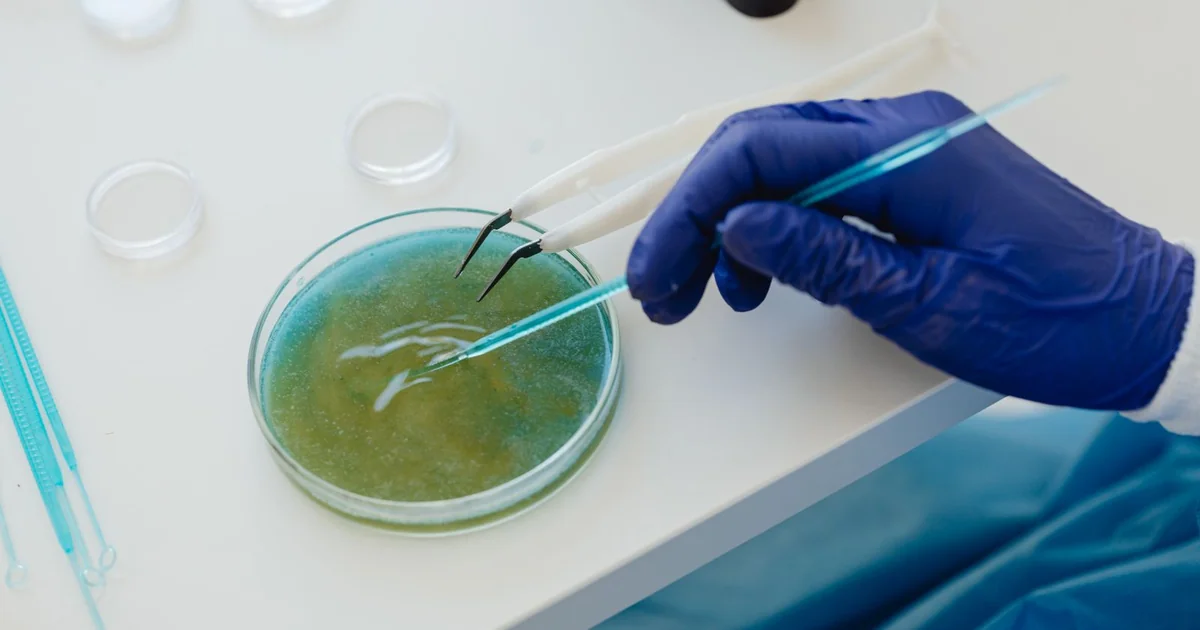
PGT-IVF biopsies 3–5 trophectoderm cells from a day 5–6 blastocyst and tests them before any embryo is transferred.
The umbrella term covers three tests: PGT-A counts chromosomes to detect aneuploidy (an abnormal chromosome number), PGT-M looks for one known monogenic variant, and PGT-SR looks for structural rearrangements. They have different targets, different eligible patients and different prices, and Chinese clinics bill them as separate items.
The “first, second, third generation” labels are not software versions. Standard IVF lets sperm and egg meet in a dish; ICSI injects one sperm into the egg; PGT adds a biopsy and a lab test on top of ICSI. Everyone doing PGT still goes through stimulation, retrieval, fertilisation and blastocyst culture first.
| Technique | Core step | Typical indication | Cost per cycle |
|---|---|---|---|
| IVF | Sperm and egg co-culture | Tubal factor, ovulation disorders, endometriosis | CNY 20,000–30,000 |
| ICSI | Single-sperm injection | Oligospermia, asthenospermia, prior fertilisation failure | CNY 30,000–50,000 |
| PGT | Blastocyst biopsy + genetic test | Monogenic disease, structural rearrangement, advanced age, recurrent loss or implantation failure | From CNY 50,000–80,000 |
Why are only 129 clinics licensed?
Because PGT is approved item by item and the permit is far scarcer than an IVF licence.
The national registry lists five separately approved technologies: husband’s-sperm insemination, donor-sperm insemination, standard IVF-ET, ICSI, and preimplantation genetic diagnosis. A clinic that can do ICSI is not automatically allowed to biopsy embryos. In 2019, 70 clinics held a PGD permit — 13.5% of the 517 licensed centres at the time. By June 2025 that figure had reached 129, roughly 20% (National Health Commission reply, 2021). In practice, most cities have one or two options.
Who qualifies for PGT-IVF in China?
Two conditions must both be met: a medical indication, and a clinic that holds the PGT permit.
The 2024 Chinese consensus on genetic counselling for PGT sets out the indications that clinics now follow when deciding whether to offer testing.
| Test | Who it is for | Threshold |
|---|---|---|
| PGT-A | Advanced maternal age, recurrent implantation failure, recurrent miscarriage | Advanced age means 38 or older; implantation failure means 3 or more transfer cycles, or 4–6 high-grade cleavage embryos / 3 or more high-grade blastocysts without implantation; recurrent miscarriage means 2 or more pregnancy losses before 28 weeks |
| PGT-M | Couples at high risk of a monogenic disease | The variant must be pathogenic or likely pathogenic with a clear family linkage; selected mitochondrial disorders, HLA matching and high-penetrance hereditary cancer syndromes also qualify |
| PGT-SR | Carriers of structural rearrangements | Reciprocal translocation, non-homologous Robertsonian translocation, inversion, complex translocation, pathogenic microdeletion or microduplication; common polymorphisms such as 1qh+ or inv(9) are not an indication |
Do two miscarriages mean you must do PGT?
No. Finding and treating the cause of the losses usually comes first.
The consensus lists two or more unexplained losses as a PGT-A indication. If antiphospholipid syndrome, thyroid disease, a uterine septum or intrauterine adhesions are already identified, treating those is generally worth more than screening embryos. The usual sequence is karyotype, hysteroscopy, and immune or clotting work-up before anyone books a biopsy.
Why is the age cut-off 38?
Because aneuploidy rates climb fastest after 38, which is where screening starts to earn its cost.
Thirty-eight is an evidence-based dividing line, not a legal rule. For a 35–37-year-old with good ovarian reserve and several blastocysts, the decision depends on embryo numbers, budget and tolerance for miscarriage. For a woman over 40 with few eggs, the more urgent question is how many embryos will still be available after biopsy.
When is PGT explicitly not allowed?
Non-medical trait selection, benign variants and anything prohibited by law are off limits.
The consensus lists these contraindications: variants classified as benign or likely benign, or families with no clear causal gene; selection for appearance, height, skin colour or sex rather than disease; any contraindication to assisted reproduction or pregnancy; and any situation Chinese law or the hospital ethics committee does not permit.
What does PGT-IVF cost in China?
Under Beijing’s published price list, biopsy costs CNY 1,560 per embryo, chromosome testing CNY 3,750 per embryo and monogenic testing CNY 5,050 per embryo. Each item is charged per embryo.
So the PGT premium is not a flat package fee — it scales with how many embryos you send. Patients who retrieve many eggs pay more; patients with only two or three blastocysts pay less but also have less room to discard abnormal embryos.
| Item (Beijing public price) | Price | Unit | Insurance note |
|---|---|---|---|
| Blastocyst / cleavage-stage / polar body biopsy | CNY 1,560 | Per embryo or oocyte | Category A, outpatient only, restricted to monogenic or structural indications |
| Preimplantation genetic testing for chromosomal disease (PGT-A/SR) | CNY 3,750 | Per embryo | Category A, outpatient only, restricted to couples where one partner carries a structural rearrangement |
| Embryo monogenic disease diagnosis (PGT-M) | CNY 5,050 | Per embryo | Category A, outpatient only, restricted to monogenic disease or carrier couples |
What is the total for one cycle?
With six blastocysts tested by PGT-A, biopsy plus testing comes to about CNY 31,900 (6 × 5,310). Add standard IVF costs of CNY 30,000–50,000 and a full cycle lands at CNY 60,000–80,000.
For PGT-M, the per-embryo cost rises to CNY 6,610 (1,560 biopsy + 5,050 testing), so three blastocysts cost about CNY 19,800. The wide published range for “third generation IVF” is driven mainly by how many embryos are tested, not by hospital prestige.
Does Chinese medical insurance cover PGT?
Partly — but the payment rules are narrow, and most women testing purely for age will pay out of pocket.
Beijing classifies all three items as Category A outpatient services, but the fine print matters. The CNY 3,750 chromosome test is limited to couples where one partner carries a structural rearrangement, and the CNY 5,050 monogenic test only to affected or carrier couples. Women testing for age or repeated implantation failure therefore usually self-pay for the test itself, while retrieval, culture and transfer remain insured. Provincial catalogues differ, so ask the hospital’s insurance office for a written estimate before you pay.
Does PGT actually improve success?
In a Chinese randomised trial of 1,212 women, cumulative live birth was 77.2% with PGT-A versus 81.8% with conventional IVF — 4.6 percentage points lower for PGT-A.
The trial, published in NEJM in 2021, enrolled women aged 20–37 with at least three good-quality blastocysts. Each group transferred one embryo at a time, up to three per woman. Conventional IVF was non-inferior. The one clear gain was clinical pregnancy loss: 8.7% with PGT-A versus 12.6% without, a 3.9-point difference.
Then why do clinics still recommend it?
Because what PGT buys is fewer miscarriages and fewer futile transfers — not a higher chance of one-shot success.
For couples who have already lost pregnancies, avoiding a second-trimester termination has value beyond money. A 2025 BJOG secondary analysis of 485 women under 38 with recurrent implantation failure found live birth per transfer of 39.1% with PGT-A versus 40.6% without — not significant (PubMed). A 2026 Anhui cohort of 589 women with unexplained recurrent pregnancy loss found cumulative live birth per retrieval of 48.5% versus 47.4%, also not significant (PubMed). The consistent message: abnormal embryo chromosomes do not explain every failure.
“PGT helps reduce the risk of miscarriage, but it cannot completely rule out miscarriage or ectopic pregnancy.” — Chinese Society of Genetic Counselling et al., Expert Consensus on Genetic Counselling for Preimplantation Genetic Testing, 2024
Who is most likely to benefit?
Women over 38 with several blastocysts, couples with a defined genetic risk, and couples with a history of recurrent loss.
The reasoning is concrete. Aneuploidy rises with age, so there is more for the test to find. Enough blastocysts means something is left to transfer after abnormal embryos are excluded. And with a known monogenic variant or structural rearrangement, PGT is often the only way to interrupt transmission. Conversely, a 36-year-old with two blastocysts may end up with nothing to transfer, having paid for a result she cannot use.
Who should probably skip PGT-IVF?
Four groups: no indication, too few embryos, a tight budget, and anyone hoping to choose a sex.
Fewer than three blastocysts means biopsy and testing may leave no transferable embryo. A first-cycle patient under 38 with a good prognosis is better served by starting with conventional IVF. Treating PGT as “success insurance” contradicts the NEJM trial. And using it to pick a boy or a girl is unlawful in mainland China.
How much longer does PGT take?
PGT adds 2–4 weeks of lab waiting, pushing a full cycle to roughly 3–4 months.
| Stage | Conventional IVF | PGT-IVF |
|---|---|---|
| Stimulation and monitoring | 10–12 days | 10–12 days |
| Retrieval and fertilisation | Retrieval day | Retrieval day |
| Blastocyst culture | Observed on day 5–6 | Biopsy on day 5–6 |
| Genetic testing | None | 2–4 weeks |
| Transfer | Fresh transfer on day 3 or 5 | Frozen transfer after results |
Why must PGT embryos be frozen?
The embryo has to wait for its result, so it cannot be transferred in the same fresh cycle.
Biopsied blastocysts are vitrified, then thawed once the report arrives. Meanwhile the recipient prepares her endometrium with medication, so that lining and embryo are synchronised. Failed testing, mosaic results and “no embryo to transfer” are real possibilities. The consensus therefore requires clinics to disclose the risks of biopsy damage, repeat biopsy and cycle cancellation up front.
Can PGT choose the baby’s sex?
No. Non-medical sex selection is explicitly prohibited in mainland China.
The 2001 management rules ban the sale of gametes, zygotes and embryos, and the technical standards ban non-medical embryo selection. The 2024 consensus lists sex among the prohibited traits. The only exception is sex-linked disease: for haemophilia or Duchenne muscular dystrophy, sex selection can be a medical indication, but it requires genetic counselling, ethics review and documentation. Any agency promising “a boy guaranteed” is either breaking the law or never intending to deliver.
What does this look like in practice?
The three cases below are composite accounts illustrating common situations; they contain no identifiable information.
Case 1: 38, Hangzhou, two miscarriages, PGT-A. After two losses around eight weeks with no clear cause, her doctor suggested PGT-A. Nine eggs yielded five blastocysts; all five were tested at a cost of CNY 26,600, and exactly one was euploid — a normal chromosome count. That embryo produced a live birth. Total medical cost was CNY 82,000, with CNY 4,600 reimbursed for standard items. “When only one embryo was left, I was glad I had tested,” she said. “Otherwise it might have been a third D&C.”
Case 2: 31, Zhengzhou, balanced translocation, PGT-SR. Her husband carried a balanced translocation and two natural pregnancies had ended early. Twelve eggs produced four blastocysts; testing cost CNY 21,200 and left two transferable embryos. The first transfer failed, the second produced a live birth, and the two transfers totalled CNY 110,000. Her advice: “Ask whether the clinic tests in-house. If samples go out, you wait an extra week and carry the transport risk yourself.”
Case 3: 34, Guangzhou, both carriers of beta-thalassaemia, PGT-M. Unwilling to accept a 25% risk of a severely affected child, the couple tested three blastocysts from ten eggs. Biopsy plus monogenic testing cost CNY 19,800 and identified one unaffected embryo, which produced a live birth. The total was CNY 76,000, with testing fully self-paid. “What I paid for,” she said, “was not having to make a choice after an amniocentesis at 20 weeks.”
FAQ
Q: Is PGT-IVF more successful than standard IVF?
Not necessarily. In the 1,212-patient trial, cumulative live birth was 77.2% with PGT-A versus 81.8% with conventional IVF; the main gain was lowering clinical pregnancy loss from 12.6% to 8.7%.
Q: How much does PGT-IVF cost in China?
Standard IVF runs CNY 30,000–50,000, plus per-embryo testing (Beijing’s public price: CNY 5,310 per embryo for PGT-A, CNY 6,610 for PGT-M). A six-blastocyst cycle typically totals CNY 60,000–80,000.
Q: Do I need PGT if I am over 38?
Not automatically. The consensus lists age 38+ as an indication, but the decision depends on egg and blastocyst numbers, prior losses and budget; with only two or three blastocysts, testing may leave nothing to transfer.
Q: Does PGT help with recurrent implantation failure?
The evidence is weak. Among 485 women under 38 with recurrent implantation failure, live birth per transfer was 39.1% with PGT-A and 40.6% without — suggesting endometrial, immune or laboratory factors may be responsible.
Q: Can PGT detect every genetic disease?
No. PGT targets only known variants or chromosome segments, at roughly 4 Mb resolution, so failed tests, mosaicism and false negatives can still occur.
Prenatal diagnosis by amniocentesis is still recommended after a PGT pregnancy.
Q: How long do PGT results take?
Usually 2–4 weeks. With work-up, stimulation, retrieval and a frozen transfer, the whole cycle runs about 3–4 months, roughly a month longer than conventional IVF.
Q: How do I verify a clinic’s PGT licence?
Check the provincial health commission’s list of approved assisted-reproduction institutions for “preimplantation genetic diagnosis”, and note whether the clinic is in full or trial operation. Nationally, only 129 of 635 clinics hold the permit.
Q: Is prenatal diagnosis still needed after PGT?
Yes, it is recommended. The consensus requires clinics to explain that PGT does not replace prenatal diagnosis; amniocentesis is more accurate than PGT-A, and mosaic embryos need follow-up at 1 year of age.
Next steps: verifying a clinic
Check the licence first, ask about the testing laboratory second, and compare prices last.
Start with the provincial health commission list and confirm the clinic is approved for preimplantation genetic diagnosis, noting whether it is in full or trial operation. Then ask whether testing is done in-house or outsourced, and have the turnaround, transport and re-test responsibility written into the consent form. Finally, book a genetic counselling appointment with your diagnosis, karyotype and prior cycle records, and request a written estimate of “embryos to be tested × unit price”. ProIVF lists Chinese reproductive centres by city, licence and price range. Start with the clinic directory, then check eligibility and process in the mainland China IVF guide. Compare costs in IVF costs in China and review age-specific outcomes in IVF success rates by age. For the basic concepts behind PGT-A, PGT-M and PGT-SR, read the PGT screening primer.
This article is general information and does not replace individual medical advice. Indications, prices and insurance rules change; confirm details with your clinic, the provincial health commission and your local insurance bureau before starting treatment.
The topic came from readers repeatedly asking whether “third generation IVF” is worth it. Sources are the National Health Commission registry and replies, Chinese medical society consensus statements, Beijing’s published procedure prices and peer-reviewed studies in NEJM and BJOG. Clinic marketing pages were not used as a primary source, and every figure carries a year and a citation. The text was cross-checked by the ProIVF medical editorial team and reviewed by the ProIVF Medical Advisory Board. Author and reviewer details are on About us.
Last updated: 27 November 2026