San Antonio is where Texas IVF prices come apart: UT Health publishes a $6,500 IVF package, the Fertility Center of San Antonio states an average cycle near $10,000, and the Aspire network reports a 58.4% live birth rate under 35 across 1,697 cycles. Those three numbers rarely appear in the same paragraph, which is why this guide puts them there.
This article was prepared by the ProIVF medical editorial team from the clinic-level SART reports, published clinic price pages and Texas statutes cited below, and reviewed by the ProIVF Medical Advisory Board. It covers which San Antonio clinics report data, how to read their success rates, what a cycle actually costs once medication is added, and what the state does and does not guarantee.
Is San Antonio a good city for IVF?
San Antonio is the best value play in Texas if you are paying cash, and a weaker choice if you need a large subspecialty team or Chinese-language coordination. Four clinics report to SART or publish prices in a metro where the driving is easy and the parking is free.
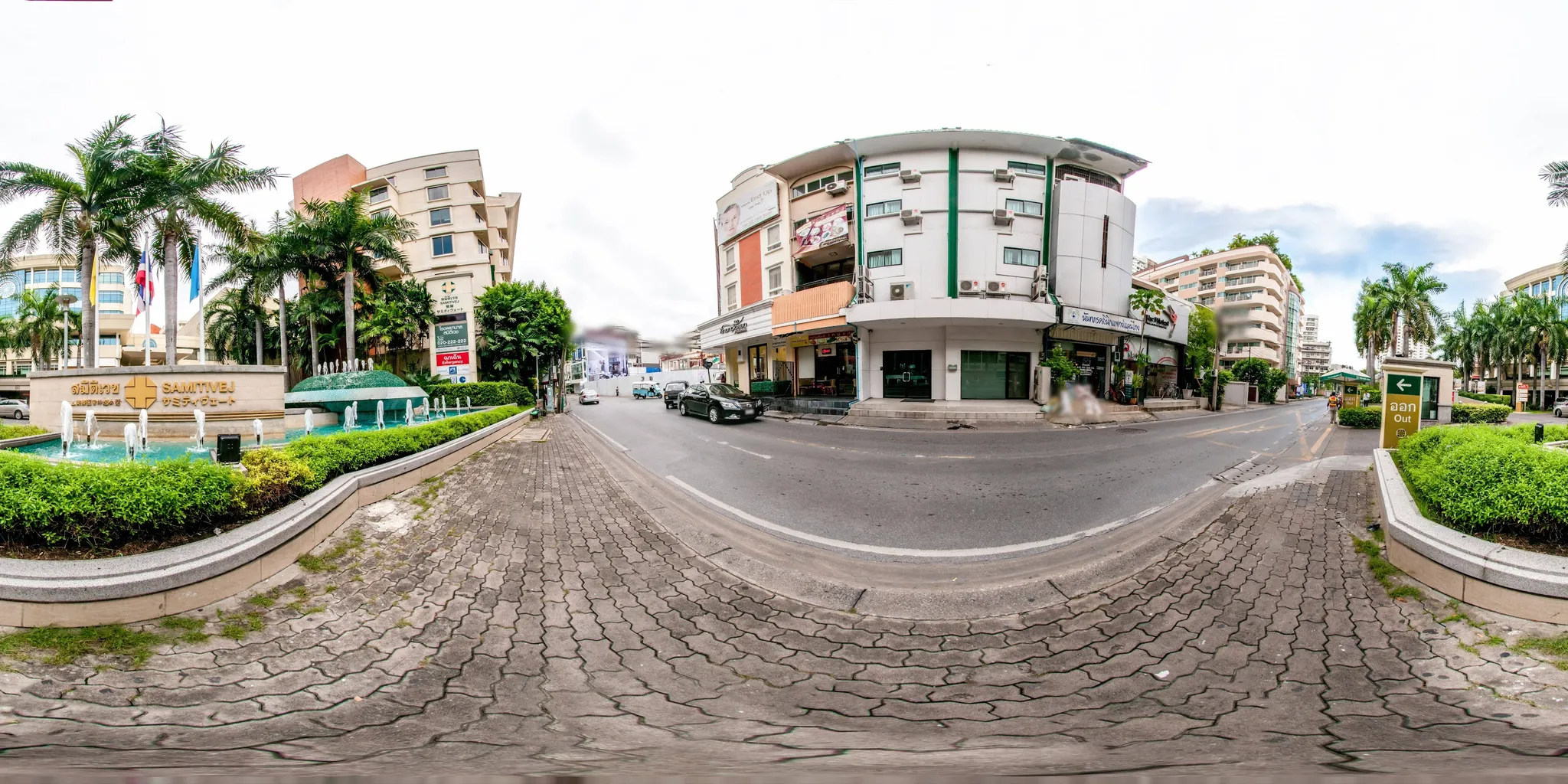
The city’s fertility care is concentrated in the South Texas Medical Center, a cluster of hospitals and clinics around Floyd Curl Drive and Medical Drive in the 78229 postcode. Three of the four clinics covered here sit inside a 10-minute drive of each other, which makes same-week second opinions realistic rather than theoretical.
Where San Antonio wins
- A published package price. UT Health San Antonio’s fertility centre sells an IVF package for $6,500, with the exclusions stated openly on its own page (UT Health).
- SART data at two independent groups. FCSA reported 675 cycles in 2023 and the Aspire San Antonio group 1,697, both with age-banded outcomes, so you can compare against the national summary rather than a testimonial (SART).
- An academic centre that bills insurance. UT Health is a university practice, which matters if you have any US coverage at all.
- Low friction between clinics. The Medical Center cluster means a second opinion is a 10-minute drive, not a flight.
Where San Antonio loses
- Thin Chinese-language support. The clinics list English-language services; Spanish is the common second language in the city, not Mandarin.
- No state IVF coverage requirement. Texas only requires insurers to offer IVF coverage, not to include it (§1366.003 of the Texas Insurance Code).
- Smaller units than Houston or Dallas. If your case involves complex genetics, reproductive surgery or a research protocol, the bigger metros have deeper benches.
Which San Antonio clinics report to SART?
Four clinics matter for a self-pay patient: the Fertility Center of San Antonio, three Aspire Fertility locations, and the UT Health Fertility Center. Only the first two groups report age-banded SART data.
| Clinic | Where | Cycles reported | Under 35 | 35–37 | 38–40 | Over 40 |
|---|---|---|---|---|---|---|
| Aspire Fertility – Stone Oak (group) | 150 E Sonterra Blvd | 1,697 | 58.4% | 33.8% | 27.4% | 13.2% |
| Fertility Center of San Antonio | 7707 Ewing Halsell Dr | 675 | 50.0% | 32.1% | 21.8% | 11.3% |
| Aspire – Alamo Heights | 430 W Sunset Rd | group figure | 58.4% | 33.8% | 27.4% | 13.2% |
| Aspire – Medical Center satellite | 4330 Medical Dr | group figure | 58.4% | 33.8% | 27.4% | 13.2% |
| UT Health Fertility Center | 8300 Floyd Curl Dr | not published here | — | — | — | — |
| US national (SART 2023) | — | — | 53.2% | 39.9% | 26.2% | 9.4% |
What separates the two reporting groups
Fertility Center of San Antonio is the older practice, founded in 1986 and described on its own site as the first office-based IVF programme in Texas, with an in-house andrology and embryology laboratory. Its 2023 final SART data puts live birth per retrieval at 50.0% under 35 — below the national average of 53.2%, and below Aspire’s 58.4%.
Aspire’s San Antonio group reports 1,697 cycles and higher rates in every band except the oldest, where the two are close (13.2% versus 11.3%). The Alamo Heights and Medical Center locations are monitoring and consult sites inside the same group, so they inherit the group’s laboratory data rather than generating their own.
The clinic that publishes a price instead of a rate
UT Health’s fertility centre does not appear in the comparison table because it publishes a package price rather than an age-banded SART summary on the page we reviewed. The package is $6,500, paid before treatment, and it excludes medication, anaesthesia, ICSI and PGT — a set of exclusions that is unusually explicit for a US clinic.
How do you read these success rates without being misled?
The number to compare is live birth per retrieval within your own age band, and the number to ignore is any single headline percentage. Three adjustments do most of the work.
Check the denominator and the reporting year
FCSA’s figures are 2023 final, Aspire’s are 2023 final, and the national column is the SART 2023 summary. A clinic quoting a 2024 preliminary number next to a 2023 national figure is comparing different years, which flatters or punishes it by accident.
Check whether the rate is per retrieval or per transfer
Per-retrieval rates fold in cancelled cycles and failed fertilisation; per-transfer rates quietly delete them. When a clinic says “70% success”, ask which denominator produced it, because the two can differ by 15 percentage points in the same practice.
Check what the clinic does with add-ons
The UK regulator’s add-on review remains the clearest public statement of which extras have randomised evidence and which do not (HFEA). San Antonio’s self-pay market makes this a budget question as much as a medical one.
“Transfer of a euploid embryo should be limited to one, regardless of patient age.” — ASRM, Guidance on the limits to the number of embryos to transfer, 2021
That sentence is the reason a clinic’s multiple-pregnancy rate belongs next to its live birth rate. A centre that transfers two untested blastocysts in a 33-year-old is buying a higher headline pregnancy rate with someone else’s neonatal intensive care bill (ASRM 2021).
What does IVF cost in San Antonio?
A self-pay cycle in San Antonio runs from roughly $6,500 for a stripped-back package to about $20,000 once medication, ICSI and PGT are added. The spread comes from what each price excludes, not from the surgery itself.
| Line item | What we could verify | Notes |
|---|---|---|
| UT Health IVF package | $6,500 | Excludes medication, anaesthesia, ICSI and PGT |
| FCSA average cycle | about $10,000 (clinic site, 2026) | ICSI adds a separate fee |
| Aspire published price list | IVF with PGT from $15,760; egg freezing from $9,975; IUI $1,750–2,250 | Clinic’s own price page, 2026 |
| Stimulation medication | $3,000–$6,000 | Protocol-dependent, priced by pharmacy |
| Frozen embryo transfer | quoted separately | Ask before the first cycle |
The $6,500 package is real, and it is not the whole bill
UT Health’s package covers ultrasounds, exams, standard lab fees, oestradiol monitoring, the transfer, a progesterone check and pregnancy testing. Medication, anaesthesia, ICSI and PGT are outside it, and payment is due before treatment starts.
Add medication at the usual $3,000 to $6,000 and the honest comparison is roughly $10,000 to $12,500 against FCSA’s $10,000 plus ICSI, or against Aspire’s $15,760 including PGT. If you need PGT-A, the Aspire figure stops looking expensive, because the biopsy and lab work are already inside it.
Insurance: what Texas actually requires
Texas law requires insurers to offer IVF coverage; it does not require an employer to buy it, and it does not make the state pay. Employers who self-fund sit outside state insurance law entirely under ERISA (RESOLVE).
The practical version: check whether your plan is fully insured in Texas or self-funded, then check for a fertility rider. If you have no US coverage, everything above is cash, and the medication line is the one that moves.
Multi-cycle and refund programmes
FCSA markets a refund programme that covers up to three IVF cycles with up to 80% back if there is no live birth, subject to qualifying through a prediction model. Read the eligibility rules before you fall in love with the refund: these programmes are priced to be profitable for the clinic, and the qualifying bar is the whole product.
What do Texas laws guarantee about embryos, donors and surrogacy?
Texas has a statutory route for gestational surrogacy, and it depends on a court validating the agreement before the embryo transfer. An agreement that is never validated is expressly unenforceable (§160.762 of the Texas Family Code).
The validation deadline is the whole point
The statute requires the gestational agreement to be validated by a court before the transfer, with the intended parents as parties and the carrier’s medical and psychological screening on file. Do the legal work first: a transfer that happens before validation cannot be rescued afterwards.
Donor gametes and FDA screening
Egg and sperm donation are lawful and routine, and donors must be screened under FDA tissue-donation rules, which cover infectious disease testing and a risk questionnaire. Ask whether the clinic uses an anonymous or identified donor, and what the donor’s documented outcome data look like.
Insurance and parentage are separate questions
A clinic can treat you and a court can still not recognise both parents. For same-sex couples, the second-parent step is a legal process with its own timeline and budget; ask the clinic which attorney relationships it can hand you on day one.
How long do you need to stay in San Antonio?
Plan on 14 to 18 days in the US for stimulation and retrieval, and 7 to 10 days for a frozen transfer a cycle or two later. A one-trip fresh transfer is possible but leaves no room for a delayed trigger.
| Stage | Days | Where it happens |
|---|---|---|
| Records review, protocol, medication order | 4–6 weeks before | Remote |
| Baseline scan, start stimulation | Day 1–3 | San Antonio |
| Monitoring every 2–3 days | Day 5–11 | San Antonio |
| Trigger, retrieval, one recovery day | Day 12–14 | San Antonio |
| Embryo report and flight home | Day 15–18 | — |
| Frozen transfer trip | 7–10 days | San Antonio |
How do you get to San Antonio and get around?
San Antonio International (SAT) has no nonstop service to mainland China; the usual routings connect through Dallas, Houston, Los Angeles or Chicago. From the airport to the Medical Center is about 15 minutes by car.
Transit is cheap and genuinely usable here
VIA Metropolitan Transit charges $1.30 for a regular bus ride and $2.75 for an unlimited day pass, with a 7-day pass at $12 and a 31-day pass at $38. Transfers are free for 2.5 hours, and the Medical Center Transit Center at 5330 Medical Drive sits inside the clinic cluster (VIA fares).
For a 14-day monitoring schedule, the arithmetic is simple: 7-day passes cost $24 in total, against roughly $200 to $300 in rideshares. The catch is frequency — suburban routes run every 30 to 60 minutes, so a 7:30 AM blood draw can mean a 6:50 bus.
Driving, parking and the neighbours
Clinic parking is free and plentiful, which is not true in most US metros, and a rental car for two weeks typically costs less than the rideshare total. San Antonio is also the only Texas metro where you can reach three other IVF markets by car: Austin in about 80 minutes, Houston in about three hours, and the Hill Country in between.
When should you come?
July and August average highs around 35°C and are the months to avoid if your dates are flexible; December to February is mild but cool, with January lows near 6°C. The two comfortable windows are March to May and October to November.
April brings Fiesta San Antonio, ten days of parades and events that push hotel rates up across the city and fill the River Walk. If your retrieval lands in mid-to-late April, book housing early or stay in the Medical Center rather than downtown.
What do patients actually experience?
The three cases below are composites of common paths through San Antonio clinics, written to show how the prices above land in real budgets. They do not describe identifiable individuals, and names and some details have been changed.
”The package price that held”
A 36-year-old from Shenzhen chose the university practice for its published package, stayed 17 days near the Medical Center and paid $6,500 for the package plus about $4,200 in medication. Her first transfer did not implant; the frozen transfer eight months later did.
“The number on the website was the number I paid for the package,” she said. “What I had not priced was the second trip, and that was another $5,000."
"Two clinics, one week, one decision”
A 41-year-old from Austin booked consults at two Medical Center clinics in the same week, chose the group with the higher over-40 rate, and did two cycles for about $34,000 all-in. She used her own car and stayed with family.
“What decided it was the over-40 column, not the under-35 column,” she said. “Nobody sells you on that number, which is exactly why I trusted it."
"The refund programme that did not qualify”
A 33-year-old with PCOS asked about the refund programme, was scored below the qualifying threshold by the prediction model, and paid per cycle instead. Two cycles came to about $26,000 including medication and one PGT-A batch.
“I was annoyed at first that I did not qualify,” she said. “Then I realised the programme would have cost more per cycle than what I paid.”
FAQ
Q: How much does IVF cost in San Antonio?
Between roughly $6,500 and $20,000 per cycle depending on what is included: UT Health’s package is $6,500 before medication, FCSA states an average near $10,000, and Aspire’s published list starts at $15,760 with PGT included.
Q: Which San Antonio clinic reports the highest success rate?
Aspire’s San Antonio group reports 58.4% live birth per retrieval under 35 against FCSA’s 50.0% and the national 53.2%, all from 2023 final SART data. Compare the age band that matches you, not the headline.
Q: Does Texas insurance cover IVF?
Texas law requires state-regulated insurers to offer IVF coverage, but it never requires an employer to buy it, and self-funded plans sit outside state law entirely. Most San Antonio patients therefore pay cash, and UT Health’s $6,500 package is the cheapest published route in the city.
Q: How long do I have to stay in San Antonio?
Budget 14 to 18 days for stimulation and retrieval, then 7 to 10 days for a frozen transfer on a later trip. Monitoring every 2 to 3 days is the part that fixes your minimum stay.
Q: Do I need a car in San Antonio?
Not strictly: VIA buses cost $1.30 a ride with a $2.75 day pass, and the Medical Center Transit Center is inside the clinic cluster. A rental car is easier if your monitoring appointments are before 7 AM.
Q: How do I get to San Antonio from China?
There is no nonstop flight; connect through Dallas, Houston, Los Angeles or Chicago, for a total journey of roughly 18 to 22 hours. From SAT to the Medical Center is about 15 minutes by car.
Q: Is surrogacy legal in Texas?
Yes, through a gestational agreement that a court validates before the embryo transfer. An agreement that is never validated is expressly unenforceable under §160.762 of the Texas Family Code.
Q: Can I do PGT-M in San Antonio?
Yes: FCSA has offered PGT-M since 2005 according to its own history, and the Aspire group offers PGT-A. Confirm which laboratory performs the biopsy and where the testing is sent before you commit.
How to plan your San Antonio cycle
Get two written quotes in the same week, from two different clinics in the Medical Center, and make sure both list medication, ICSI, PGT, anaesthesia and the frozen transfer separately. Then compare the age band that applies to you, not the top-line rate.
Our Houston, Dallas and Austin guides use the same SART-based method, and how much IVF costs in Texas covers the state-level picture. For the itemised structure of any US cycle, see the IVF cost guide, and for the questions that separate a good clinic from a good sales team, see how to choose an IVF clinic.
Medical disclaimer: This article summarises published clinic data, public price pages and state statutes; it is not medical advice. Prices change and quotes are individual, so confirm every figure directly with the clinic before you transfer money, and take legal questions to a Texas reproductive attorney.
How this article was made: The ProIVF medical editorial team pulled the SART reports behind each age band, compared the national column against the SART 2023 summary, read the $6,500 package exclusions on UT Health’s own treatment page, checked transit fares against the VIA fare schedule, and read the surrogacy validation requirement in the Texas Family Code. No clinic paid for placement.
Reviewed by the ProIVF Medical Advisory Board. Learn more about ProIVF.
Last updated: 12 November 2026.