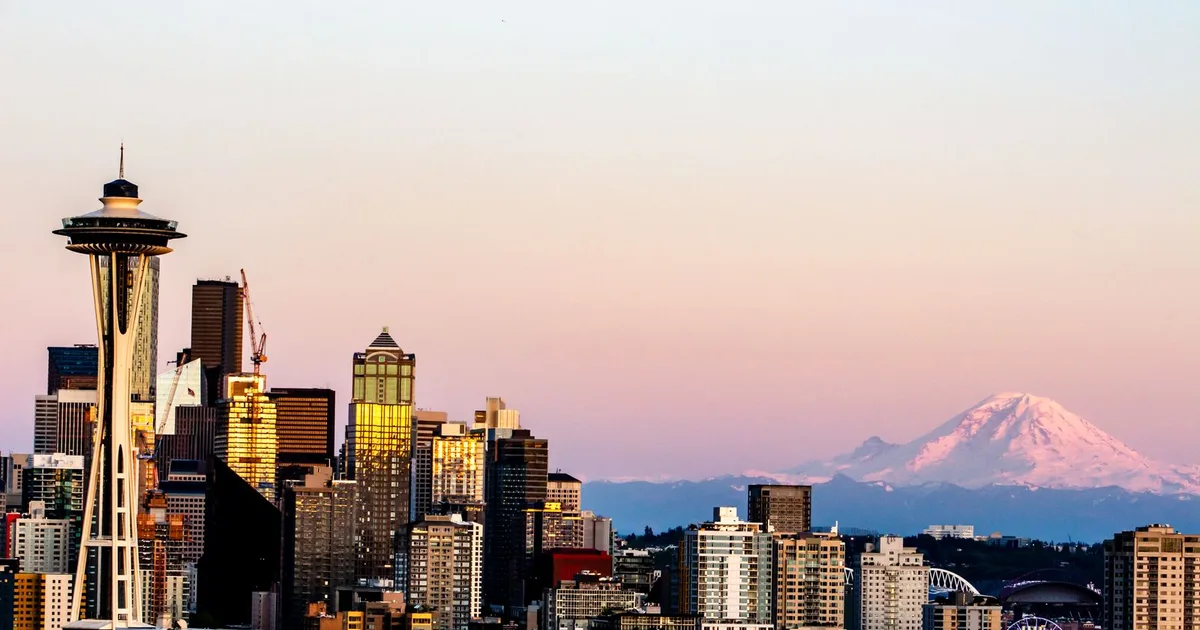
Is Seattle the Right Destination for You?
Seattle is the under-priced option in the US fertility market. Two of the city’s main clinics publish itemised price lists on their own websites — genuinely unusual in this industry — the total cost per cycle sits below California and New York, the city can be navigated without a car, and the state’s reproductive-law framework is as protective as any in the country. Two weaknesses are equally real: Washington has no IVF insurance mandate, and we could not verify a current nonstop flight between mainland China and Seattle as of October 2026.
What Seattle is genuinely good at
- Price transparency. POMA Fertility’s Kirkland campus publishes a standard IVF cycle at $15,300 ($14,900 by eCheck), a full-freeze cycle at $13,400, frozen-embryo transfer at $4,300, and embryo or egg storage at $720 per year per tissue type. Pacific Northwest Fertility publishes a per-cycle range of $14,500–$21,700, stimulation medication at roughly $5,000, and PGT-A at $3,625–$5,000. Source: clinic website price pages as recorded in our Washington IVF cost guide. If you can see the components, you can build the invoice before you buy a ticket.
- A lower and narrower total. Washington’s typical single-cycle band is $19,500–$26,700, against California’s $18,000–$30,000 and New York’s $20,000–$35,000. A tighter range means less price dispersion between clinics.
- You do not need a car. Link light rail runs from SeaTac airport into downtown, and on 28 March 2026 the 2 Line “Crosslake Connection” opened fully, adding Judkins Park and Mercer Island stations and linking Seattle directly to Bellevue and Redmond over Lake Washington without a bus transfer (Seattle Transit Blog, 14 March 2026). For a patient travelling without a partner, that is a material convenience.
- No blizzard risk. In the NCEI 1991–2020 normals for the Seattle-Tacoma airport station, days with at least one inch of snow on the ground are 0.9 in January, 1.1 in February, 1.3 in December and essentially zero otherwise. The Chicago-style scenario — one storm cancelling 930 flights in a day — is not a Seattle problem.
- A protective legal environment. Washington has the Reproductive Privacy Act (RCW 7.70), the 2024 ballot measure I-529 codified in RCW 9.02, and a shield-law statute effective 27 April 2023 (HB 1469) limiting cooperation with out-of-state legal process over protected health care. Practically: this state does not lend itself to extraterritorial enforcement against reproductive treatment — useful redundancy if you are moving gametes or embryos across borders.
Where Seattle falls short
- No IVF insurance mandate. KFF’s state-mandate indicator (data “as of November 2025”) lists Washington as Not Covered for infertility treatment mandates. For international patients this changes nothing — you will self-pay regardless — but it does mean clinics face no insurer price pressure, so fees are set purely by local competition.
- No verified nonstop flight from mainland China. A Port of Seattle news item dated 2 April 2024 announced Hainan Airlines resuming Seattle–Beijing, but that page and every flight-database source we tried returned 403 or failed to connect. Plan on one connection and check the carrier’s own timetable before ticketing.
- Fewer Mandarin-language clinical resources than San Francisco or Los Angeles. The Puget Sound Chinese community is much smaller; “we’ll find an interpreter on arrival” fails here more often.
- Wildfire smoke is the one risk that is uniquely Seattle. September 2020, June 2023 and the 2025 fire season all produced extreme air-quality events. During stimulation and pregnancy, PM2.5 exposure is a medical variable, not a comfort issue (see the climate section).
- Short, grey winters. November averages 12.9 precipitation days and January 12.7 (NCEI 1991–2020). It will not ground your flight, but it will keep you indoors during a treatment cycle.
How Seattle compares with the other cities we cover
| City | Typical single cycle (pre-insurance) | State IVF mandate | Nonstop from mainland China | Car-free viability | Main itinerary risk |
|---|---|---|---|---|---|
| Seattle | $19,500–$26,700 | None (KFF Nov 2025: Not Covered) | Not verified | High — airport rail plus the 2 Line | Wildfire smoke (late summer) |
| Los Angeles | $18,000–$30,000 (California) | SB 729, from 1 January 2026 | Available | Low — driving is effectively required | Commute time and parking |
| San Francisco | $20,000–$32,000 (Bay Area) | SB 729, from 1 January 2026 | Not verified | Medium — BART/Muni, but cross-basin trips bite | Smoke, cost of living |
| New York | $20,000–$35,000 | Yes, large-group plans only | Available | Highest | Rental compliance, accommodation cost |
| Chicago | $14,000–$24,000 | Yes, covers IVF itself | Not verified | High — the Blue Line runs 24 hours | November–February blizzards |
| Houston | $12,000–$22,000 (Texas) | Mandate to offer only | Not verified | Low — the city is built for cars | Summer heat and humidity |
Cycle totals and mandate columns follow our published Washington IVF cost guide and US IVF cost overview; mandate status cross-checked against the KFF state indicator (as of November 2025).
The short version: if you want a controlled budget, an itemisable invoice, a car-free cycle and no weather gamble, Seattle belongs on your shortlist. If you need a nonstop flight or the lowest possible sticker price, it does not — Texas is cheaper, but there you need a driver.
How Do You Get a US Visa for Fertility Treatment?
What it costs in 2026
| Item | Amount | Note |
|---|---|---|
| B1/B2 application fee (MRV) | $185 | Paid before the appointment, non-refundable |
| Visa integrity fee | $250 | Collected at first issuance |
| Total, first visa | about $435 | No fee at the window does not mean free |
| EVUS enrolment (ten-year visa holders) | about $30 | Confirm the live price at evus.gov |
| Translation and notarisation in China | ¥300–¥1,500 | Local cost |
Three things applicants still get wrong
- The interview-waiver window shrank from 48 months to 12. If your previous visa expired more than a year ago, you are a new applicant, not a renewal.
- Administrative processing still happens. Medical travel is not itself sensitive, but a biomedical or laboratory background can trigger 2–8 extra weeks. Do not ticket while a check is pending.
- EVUS dies when you renew your passport. Re-enrol and pay again; children need their own registration — it is not shared with a parent.
The document set for medical travel
Clinic invitation or appointment letter (with clinic name, address and expected treatment window), an itemised written cost estimate, translated Chinese test results, US accommodation address and proof of funds, and a summary of prior treatment history (number of stimulations, eggs retrieved, transfers performed).
Working backwards from your cycle
| Stage | When | Note |
|---|---|---|
| Baseline testing at home | 1–2 months before | Hormones, ultrasound, semen analysis, translated |
| Remote first consultation | T-3 to T-4 months | Video visit; get the plan, the estimate and the invitation letter |
| DS-160 and appointment booking | Start T-3 to T-4 months | Wait times vary widely by post |
| Interview | T-1 to T-2 months | If held in administrative processing, move the whole cycle |
| Trip 1: stimulation and retrieval | 12–16 days | 18–20 if waiting on PGT results |
| Home while embryos are tested | 7–14 days | Remote planning for the lining |
| Trip 2: frozen embryo transfer | 7–10 days | Lining check, transfer, luteal support, pregnancy test |
| Total time in the US | 19–26 days | 25–35 if you do a fresh transfer in one trip |
At the border, keep your answers consistent with your invitation letter, accommodation address and return ticket. Changing your treatment window verbally — and having it disagree with your return date — is the most common avoidable problem. Check live consular wait times on the State Department page rather than third-party estimates.
Which Airport, and How Do You Reach Downtown?
Nonstops: what we could and could not verify
We could not verify any current nonstop flight between mainland China and Seattle (SEA) as of October 2026. What we can state is history: the Port of Seattle published a release on 2 April 2024 about Hainan Airlines resuming Seattle–Beijing. That page, plus portseattle.org, flyteam.jp and simpleflying.com, all returned 403 or a connection error from our environment, so no live timetable could be read.
Default planning assumption: one connection, 18–24 hours each way. Incheon (ICN) and Narita (NRT) are the practical gateways, both with frequent services onward to SEA (ICN–SEA is roughly a 10-hour sector). Verify with the carrier before ticketing; if a nonstop exists on your dates, treat it as upside, not as the plan.
SeaTac to downtown: three ways
| Method | Time | Cost | What actually matters |
|---|---|---|---|
| Link 1 Line light rail | 38–40 min to Westlake | about $3.00 one-way, adult flat | First train roughly 4:50 AM, last about 12:05 AM (Mon–Sat pattern); the platform is not in the terminal — it is on the 4th floor of the parking garage, reached by a skybridge |
| Taxi | 25–45 min | about $50–$70 | The right call late at night or after a procedure |
| Rideshare | 25–45 min | about $40–$65 | Surges in rain and peak hours |
Figures come from the third-party summary at TravelOpsHQ (July 2026). Sound Transit’s own pages returned 403 from our environment — re-check fares and first/last train on Sound Transit’s 1 Line page before you travel.
That station detail matters clinically: late in stimulation you are bloated, and on retrieval day you will be recovering from sedation. A skybridge and a parking-garage stairwell are not a good idea when your body is in that state. Budget for a taxi home on the days that count.
Long-haul flying while stimulating
- Cross 15–16 time zones and do not schedule monitoring on arrival day; give yourself 1–2 days to adjust first.
- Mid-to-late stimulation enlarges the ovaries; prolonged sitting worsens bloating and venous return. Choose connections with short walking distances, not 3-hour minimum-connection fares.
- Compression socks, standing every two hours and steady water intake (no caffeine) are the three interventions that actually help.
- Avoid flying within 48 hours after retrieval; if you must, get the clinic to assess OHSS and ovarian-torsion risk first.
Where Should You Stay — City Side or East Side?
Neighbourhood comparison (October 2026 rents)
| Area | 1-bedroom monthly rent | Practical access to clinics | Who it suits |
|---|---|---|---|
| First Hill / Capitol Hill / Downtown | $1,899 (Seattle citywide median, Zumper 21 Oct 2026) | Walkable or one light-rail stop from Pacific Northwest Fertility and Pinnacle Fertility Seattle | First-time US patients, solo travellers, 7 AM monitoring |
| Bellevue / Redmond (Eastside) | $2,502 (Bellevue 1BR, Zumper 21 Oct 2026) | Now rail-linked by the 2 Line; closer to Eastside clinic sites | Travellers with a companion, or family on the Eastside |
| Kirkland | No authoritative figure obtained | Home campus of POMA Fertility | Patients whose cycle is confirmed at POMA |
| Tukwila / SeaTac corridor | No authoritative figure obtained | Close to the airport, 1 Line into the city | A night or two either side of flights, not the whole cycle |
Rent figures are the Zumper Seattle and Zumper Bellevue pages, both marked “Last updated October 21, 2026”; two-bedroom medians are $2,645 and $2,984. We do not publish a Seattle nightly hotel rate here: the GSA FY2026 per-diem lookup returned 404 from our environment, and booking-site averages are too weak an anchor for a budget you will spend money from.
Three rules for choosing
Rule 1: follow the monitoring site. During stimulation you are scanned and bled every 2–3 days, usually early morning. The weekday-peak travel time from your bed to your clinic outranks the rent. Seattle’s twist is that clinics sit on both sides of Lake Washington: Pacific Northwest Fertility and Pinnacle on the city side, POMA’s main campus in Kirkland on the east. Confirm where monitoring happens before you decide which shore to sleep on.
Rule 2: sign 30 nights or more. Washington taxes lodging that is “transient” — under 30 consecutive nights; at 30 nights or more it is treated as a long-term tenancy and the transient accommodations tax does not apply (MRSC lodging-tax page, last modified 1 July 2026; WAC 458-20-166 is the governing rule). Your cumulative stay is 19–26 days, so writing the contract for 30 nights — even if you occupy 21, or splitting it across two bookings — takes you out of the tax base.
Rule 3: if you want city amenities but an Eastside clinic, live on the 2 Line. Since 28 March 2026, boarding at Judkins Park or in the International District takes you straight across the floating bridge to Bellevue and Redmond with no transfer.
⚠️ Seattle short-term rental rules — and why they are nothing like Chicago’s
Washington has no statewide STR framework; the city writes its own rules, and Seattle’s model is licence plus owner-occupancy plus unit count — not Chicago’s registration-number-plus-245-nights-plus-building-quota system. Do not import the Chicago guide’s clauses.
- Two licences are required: a Seattle business licence tax certificate and a short-term rental operator’s licence.
- Owner-occupancy: an operator may run up to two units, one of which must be their primary residence, defined as living there at least half the year. A secondary unit also needs RRIO (Rental Registration and Inspection Ordinance) registration.
- There is no “N nights per month” cap on unhosted rentals. The “four unhosted nights a month” figure circulating in rental-law blogs does not appear in the rules we could retrieve. The constraint works through owner-occupancy and unit count, not night counts.
- Penalties: $500 for an unlicensed first violation, $1,000 for subsequent violations, plus a $513 citation for operating without a tax certificate. The state requires a Unified Business Identifier and $1 million of liability insurance.
- Sources: Truvi’s Seattle STR guide (updated 19 May 2026) and TenbyApp’s state summary (content dated 3 July 2026). The City of Seattle’s own STR page returned 403 from our environment, so we cannot quote the municipal code directly — verify current requirements at seattle.gov/business-regulations/short-term-rentals and look up the listing’s licence number before signing.
What if the landlord ends your stay early?
Washington has no rent control, and no cap on increases — the state restricts municipalities from imposing it. One common misreading is worth correcting: Seattle’s relocation-assistance duty applies to condominium conversions (SMC 22.903 and RCW 64.34.440, roughly three months’ rent with 120 days’ written notice, per the Tenants Union) — it is not a general rule that a landlord pays you for not renewing a one-to-three-month stay. Your protection is the written contract: end date, deposit return conditions, and early-termination terms.
Six questions to ask before booking
- How many minutes, at 7 AM on a weekday, from this door to my monitoring clinic? Not the straight-line distance.
- Does the listing show a short-term rental operator licence number, and will the host produce it?
- Does the host actually live here? If they are an investor running a whole floor, the eviction risk lands on you.
- Heating and dehumidification — and is there a dryer? Three days of wet laundry in a Seattle winter is a real problem.
- Deposit amount, return deadline, and does the contract end date cover the leg of the trip you are booking?
- Lift access, a usable kitchen, and whether cold-chain medication deliveries can be received by someone at the address.
How Do You Get Around During Treatment?
Light rail and bus: ORCA caps your day automatically
| Fare product | Price | Notes |
|---|---|---|
| Link light rail, adult single | about $3.00 flat | Airport to downtown, see above |
| ORCA regional day pass | $6 adult / $2 ORCA LIFT | Effective 1 March 2025; unlimited rides across participating agencies that day |
| Automatic fare capping | Tap until $6 accumulates, then ride free | No pre-purchase decision needed |
| Rideshare, short in-city hops | $12–$25 | Longest waits at 6–7 AM |
Day-pass pricing and effective date: King County Metro’s official blog (4 March 2025) and a Sound Transit news release (27 February 2025, page 403 from our environment, snippet cited).
This mechanism is worth money during stimulation. A blood-draw centre, the clinic and a pharmacy in one day is three taps; you hit $6 and everything after that is free. San Francisco offers no equivalent cross-agency cap, and Chicago requires you to buy a 1/7/30-day pass in advance. Seattle settles it automatically.
What the 2 Line changed
Seattle Transit Blog (14 March 2026) records that the Link 2 Line “Crosslake Connection” opened fully on 28 March 2026, adding Judkins Park and Mercer Island and running Seattle–Bellevue–Redmond across the floating bridge with no bus transfer. For you:
- A same-day round trip between the city and the Eastside is now realistic without a car.
- If you live on the Eastside and monitor downtown, the rail is more reliable at rush hour than I-90.
The first-train limitation
Light rail starts around 4:50 AM (TravelOpsHQ, July 2026). Most monitoring windows open between 6:00 and 7:00, which sounds comfortable — until you add the walk to the platform, any transfer and the walk to the phlebotomy desk. Ask at your consultation what the earliest monitoring slot is, and choose your address against that number. For the first three days, a rideshare may simply be the correct answer.
Accessibility
Light rail stations and vehicles are accessible by design. We could not obtain an official figure for the share of King County bus stops that are accessible (kingcounty.gov failed to connect; Sound Transit’s accessibility page returned 403), so no percentage is quoted here. Plan door-to-door rides on retrieval day and after transfer rather than assuming a rail-only route.
Do not rent a car
Downtown parking costs and I-5/I-90 congestion peak exactly when you need to be at the clinic. Rideshare by day beats a rental for this purpose. Note this is the opposite of Houston and Los Angeles, where a car is effectively required — Seattle is the walkable member of the cheap-price group.
Apps to install
Google Maps (live transit), Uber/Lyft, the ORCA app or card, your clinic’s patient portal, and a translation app. If you provision ORCA in your phone wallet, carry a physical card too: some validators only read the card.
When Is the Best Season for IVF in Seattle?
Month-by-month climate (NCEI 1991–2020 normals)
From the GHCN-Daily station USW00024233 (SEATTLE-TACOMA AIRPORT, WBAN 72793 / ICAO KSEA):
| Month | Mean high | Mean low | Precipitation | Days ≥0.10 in | Days with snow ≥1 in |
|---|---|---|---|---|---|
| January | 8.9°C (48.0°F) | 3.2°C | 147 mm | 12.7 | 0.9 |
| February | 10.2°C | 3.2°C | 96 mm | 9.3 | 1.1 |
| March | 12.3°C | 4.4°C | 106 mm | 10.9 | 0.2 |
| April | 15.2°C | 6.3°C | 81 mm | 8.7 | 0 |
| May | 19.1°C | 9.3°C | 48 mm | 5.8 | 0 |
| June | 21.7°C | 11.7°C | 37 mm | 4.3 | 0 |
| July | 25.2°C | 13.8°C | 15 mm | 1.8 | 0 |
| August | 25.3°C | 14.0°C | 25 mm | 2.3 | 0 |
| September | 22.0°C | 12.0°C | 41 mm | 4.2 | 0 |
| October | 15.8°C | 8.3°C | 99 mm | 8.4 | 0 |
| November | 11.2°C | 4.9°C | 160 mm | 12.9 | 0.3 |
| December | 8.3°C | 2.8°C | 145 mm | 12.1 | 1.3 |
| Year | — | — | 999 mm (39.34 in) | 93.4 | minimal |
Retrieved directly from the NCEI public data service (dataset normals-monthly-1991-2020; fields MLY-TMAX-NORMAL, MLY-TMIN-NORMAL, MLY-PRCP-NORMAL, MLY-PRCP-AVGNDS-GE010HI, MLY-SNWD-AVGNDS-GE001WI) on 22 October 2026. Cross-check: from the same station’s daily record we computed 1995–2024 monthly mean high/low values of 8.4/2.9, 9.4/2.8, 11.6/4.1, 14.5/5.9, 18.4/8.9, 21.3/11.5, 25.1/13.7, 25.0/13.9, 21.5/11.9, 15.4/8.1, 10.7/4.7 and 7.8/2.6 °C — within 0.1–0.6°C of the published normals, and slightly lower, consistent with the normals period being warmer. Both sources agree: July–August is warmest and driest; November and January are the wettest.
What each season feels like during a cycle
Mid-July to early September — around 25°C, 1.8–4.2 precipitation days, the most pleasant stretch of the year. The single variable is wildfire smoke. Book free-cancellation accommodation and plan indoor air.
May–June and mid-September–October — the balanced window we recommend for most patients: 19–22°C, 4–8 rain days, lower smoke exposure than midsummer, and long daylight (sunset near 21:30 in June) for a schedule of early clinic visits and late medication injections.
November to February — least suitable. Nine to thirteen rain days per month, minimal daylight, and a damp cold that stays with you. It will not cancel your flight, but three consecutive weeks without sun during stimulation has a real psychological cost.
March–April — a reasonable fallback when your calendar is constrained.
⚠️ Wildfire smoke: the risk Seattle has that Chicago and New York do not
This is a medical variable, not a weather complaint. Documented events:
- September 2020 — smoke from California and Oregon fires put Seattle and Portland briefly among the worst air quality in the world (IQAir newsroom, 10 September 2020; Washington Department of Ecology blog “A Smoky Siege”, 22 September 2020; NPR, 23 September 2020). Peak AQI figures could not be retrieved (IQAir returned 429).
- June 2023 — Canadian wildfire smoke drove extreme readings for days (BBC live coverage, 7 June 2023; KING 5 reporting the same week). Again, no official peak figure could be pulled.
- 2025 fire season — Ecology published a season-in-review air-quality post (page dated 17 October 2025; 403 from our environment), and the Puget Sound Clean Air Agency recorded “many moderate days”. Day counts and PM2.5 peaks unverified.
Three things to do before you book:
- Confirm the accommodation has central air or a compatible ventilation setup, and whether you can add your own purifier. During an air-quality alert the clinic may tell you to stay indoors — your lodging becomes your respiratory protection.
- Ask whether trigger-shot, retrieval and transfer dates can move under a severe-air alert, and get the answer in writing before you commit.
- Note that cooking produces indoor PM2.5: frying and stir-frying spike readings in a closed apartment. During smoke episodes, favour steaming and boiling.
Packing, by season
Any month: waterproof shoes with grip, layerable outerwear (8–11°C daily swings), a portable air purifier or filter plan for July–September, compression socks, a reusable water bottle, and all medication in original packaging with an English prescription.
May–October: sun protection (July has under two rain days) and a light long sleeve.
November–March: waterproof jacket and umbrella, indoor slippers, and a light-therapy lamp — the winter daylight deficit is a genuine sleep-and-mood issue worth raising with your doctor.
Where Do You Buy Groceries, and What Can You Not Bring In?
The headline: Seattle’s Chinese grocery infrastructure sits on the East Side (Bellevue/Redmond) and in the Tukwila/SeaTac corridor — not in the neighbourhoods where you will probably be living. This reshapes your shopping strategy, so we have marked each item by verification status rather than presenting a tidy list.
| Store | Location | Verification status |
|---|---|---|
| T&T Supermarket (大统华) | Bellevue | Operating. Among T&T’s first US stores, opened around late 2024; the Yelp listing is marked “Updated October 2026” with about 256 reviews. Exact street address unverified — the official store-locator page failed to load |
| Lucky Supermarket | Seattle International District, plus 5629 119th Ave SE, Bellevue, WA 98006, plus Tacoma (3820 Yakima Ave) | Present; the Bellevue address is corroborated across store-listing sources, not confirmed directly from the company’s locator page |
| 99 Ranch Market (大华) | SeaTac/Tukwila area | Present (third-party listing, October 2026). Whether there is a Bellevue store, and its address, could not be verified |
| Ucany Seafood Market | Chinatown-International District | Appears in search context; address and current operating status not verified |
| Chain supermarkets for staples | Citywide | The reliable tier for stimulation-phase protein and produce; does not depend on any Chinese grocer |
Why this table is worth publishing incomplete: what you need during stimulation is steady daily protein and vegetables, not condiments. Building a meal plan around “the Chinatown shop” is a San Francisco or Los Angeles habit and it fails here. The workable pattern is: weekdays at the supermarket nearest your door, one Saturday run to the Eastside for Chinese staples — a trip the 2 Line made much easier in 2026.
Eating through stimulation and transfer
- Protein: target roughly 1.0–1.2 g per kg of body weight. If your doctor flags OHSS risk, expect advice to raise protein and electrolytes first.
- Low carbohydrate is not no carbohydrate — over-restricting hurts sleep and exercise tolerance during stimulation.
- Avoid raw and undercooked food: sashimi, soft-cooked eggs, unpasteurised dairy. In the US the food-safety risk sits in the raw, not the hygiene.
- Caffeine and alcohol: no alcohol around transfer, caffeine under about 200 mg/day, and follow your own clinician’s instruction over any general guideline.
- Supplements: do not travel with large quantities of unidentified patent medicines — see below.
⚠️ Bringing herbal medicine and prescription drugs into the US
Correct one misconception first: there is no “Seattle list” or “West Coast list”. Entry inspection runs on federal rules — USDA APHIS for animal and plant material, CBP for declaration and enforcement, FDA for drugs — and it does not matter which airport you arrive through.
- Animal-derived products are prohibited. The restricted items Chinese consular notices typically name include bird’s nest, donkey-hide gelatin (ejiao), deer antler, musk, ox gallstone, tiger bone, pangolin scales, scorpion, centipede, toad venom, snake gall and turtle shell. Fresh fruit and vegetables, meat, eggs, untreated plant or animal material and soil are also prohibited. Note that this particular itemised list comes from the Chinese Consulate General in New York; we could not verify whether the consulate covering Washington State (San Francisco) publishes the identical text — but the enforcement basis is federal, so prepare to the strictest reading.
- Medicines: carry an English prescription or medical certificate, keep original labelled packaging, and stay within roughly a 90-day supply. Analgesics containing codeine or tramadol are controlled substances and carry real risk. Medical cannabis is a controlled substance under federal law — leave it at home, whatever its legal status in Washington.
- Cash over $10,000 must be declared, and false declarations can result in fines, seizure and refusal of entry.
Transparency note: CBP’s prohibited-and-restricted-items page (dated 14 March 2025) is confirmed, but CBP’s medication-carriage detail page timed out from our environment, as did several USDA APHIS pages. The items above are compiled from search summaries and long-standing published guidance — verify the exact wording at CBP, USDA APHIS and FDA before you pack. Checking your actual pill box against the rules beats memorising any list.
Phones, Payments and Insurance
Staying reachable
- Buy a US-travel eSIM plan (10–20 GB over 30 days, $10–$40) before you fly; confirm your handset supports eSIM and is unlocked.
- Turn on WiFi Calling. During monitoring the clinic calls you with blood results and dose changes. A dropped call in a dead zone is a disrupted cycle, not an inconvenience.
- Get a local number for pharmacy deliveries and rideshare. Prepaid plans such as T-Mobile or Visible do not require a US credit history.
- Confirm the accommodation has WiFi, and install and log in to the clinic portal before you travel.
Paying
- One no-foreign-transaction-fee credit card; Visa and Mastercard are near-universal. Notify your issuer of travel to prevent a fraud block.
- $100–$200 in cash is plenty; Seattle is highly carded, but small shops in the International District and some herbalists still take cash only.
- Deposits and rent: monthly leases often expect online payment or a personal check, and a visitor cannot open a US checking account quickly. Negotiate card or wire in advance and price the processing fee into your budget.
Insurance — the trap that catches most patients
Most travel medical plans explicitly exclude fertility-related complications: OHSS admission, post-retrieval bleeding or infection, ectopic pregnancy, multiple-gestation complications. These are precisely the events you might need covered.
Three actions, all before you fly:
- Ask the clinic for the self-pay price of an OHSS admission and which hospital handles emergencies.
- Make the insurer confirm the exclusions line by line — read the words “assisted reproduction”, do not just note the sum insured.
- Hold a risk reserve in the budget. This is the most skipped, most consequential item in the whole itinerary.
How Long Do You Stay, and What Does a Cycle Actually Look Like?
Preparation at home (2–3 months before)
Full panel — reproductive hormones, AMH, antral follicle count, hysterosalpingography if indicated, semen analysis, infectious disease screen, thyroid, glucose and insulin — translated into English and sent to the clinic. Doing this properly is worth 3–5 fewer days in the US.
Remote consultation (4–8 weeks before)
A video visit produces the treatment plan and an itemised written estimate. Seattle is unusually strong here: POMA and Pacific Northwest Fertility already publish price sheets (see our Washington cost guide), so a remote quote can be reconciled to the line level. Ask these five questions in the same meeting:
- Which campus handles monitoring, retrieval and the laboratory — city side or East Side?
- What is the earliest morning monitoring slot?
- Can medication be mailed to your address, how is cold chain handled, and who signs?
- What does an OHSS admission cost self-pay, and at which hospital?
- Is Mandarin interpretation available, and does it need advance booking?
Choosing the protocol
| Protocol | Days in the US | Who it fits |
|---|---|---|
| Antagonist or long protocol, freeze all, return for FET | 12–16 plus 7–10 | The default; splits across two holidays |
| Full freeze with PGT-A results awaited | First trip may extend to 18–20 | Age 38+, repeated implantation failure, genetic testing |
| Fresh transfer in one trip | 25–35 | Ideal lining and hormones, and you accept foregoing freeze-all |
| Natural or modified mini-FET | Second trip starts monitoring earlier | Low responders, or lower medication load |
Seattle’s cross-lake problem
Clinics sit on both shores of Puget Sound: First Hill and downtown for Pacific Northwest Fertility and Pinnacle; Kirkland, on the east, for POMA’s main campus. Three consequences:
- Sleeping on the wrong shore costs you 40–60 minutes a day, and the I-90 and I-520 bridge congestion coincides exactly with monitoring hours.
- Since 28 March 2026, rail crossing the lake is a real option — but Kirkland is not on the light-rail network, so a POMA-based cycle still needs East Side road transport solved.
- Where the embryology lab sits determines whether you wait on site after retrieval; if gametes or embryos move between campuses, ask who moves them and when.
A typical monitoring day
Mid-to-late antagonist protocol: up at 5:45, blood and scan between 6:30 and 7:00 (45–75 minutes door to desk), back home for the daily injection, light activity and shopping in the afternoon. Retrieval day: fasted arrival, sedation, one to two hours of observation, and an adult to accompany you home — this is not optional.
Does your partner need to be there the whole time?
No. Must-be-present moments are: signing at the first consultation, the sperm-collection day (retrieval day), and the transfer. If leave is limited, three days either side of retrieval and three days either side of transfer covers it. But remember Seattle flights usually require a connection and run 18–24 hours each way, so a last-minute second trip is more expensive here than in a city with nonstops. Decide who attends which milestone once, in writing, at the start.
Contingency planning
| Situation | Response |
|---|---|
| OHSS worsening — bloating, breathlessness, low urine output, fast weight gain | Call the clinic’s 24-hour line; know the emergency hospital and self-pay price in advance |
| Wildfire smoke alert | Confirm the clinic’s rescheduling policy for trigger, retrieval and transfer; stay indoors, windows closed, purifier running |
| Flight cancelled | Book refundable fares; clinics can usually slip 1–2 days within a cycle, but establish that flexibility before you start stimulating |
| Medication delayed or lost | US pharmacies can refill same-day with a prescription; keep the electronic prescription and the generic drug names |
| Visa stuck in administrative processing | Do not ticket. Move the whole cycle |
| Host terminates your stay (an STR compliance problem) | Checking the licence number beforehand is the only real prevention; keep a shortlist of extended-stay fallbacks |
What Does Washington Law Guarantee — and What Does It Not?
Insurance: Seattle is the opposite of Chicago
Washington has no IVF insurance mandate. KFF’s state indicator (data as of November 2025) records Washington as Not Covered for infertility-treatment mandates; our own state comparison table likewise records “none”. Two consequences:
- For you personally: none. You will have no usable US insurance and will self-pay whether or not a mandate exists.
- For pricing: real. Without a mandate there is no insurer exerting downward pressure, so prices are set by local competition. Seattle’s band ($19,500–$26,700) sits below California and New York and above Texas — and two major clinics publish their rates, which recovers part of the gap in practice, because you can shop the line items rather than the brochure.
What we could not verify: some third-party articles describe a Washington mandate that covers infertility diagnosis and treatment but excludes assisted reproductive technology. We could not retrieve the statute text — app.leg.wa.gov and apps.leg.wa.gov failed to connect, while law.justia.com, codes.findlaw.com, resolve.org and doh.wa.gov (including its February 2025 “Mandated benefit review of infertility treatment” PDF) all returned 403. This guide therefore relies on KFF’s classification and our own published figures and deliberately prints no section numbers. If you need the statutory basis, read the RCW yourself and confirm with a licensed adviser. See the IVF insurance guide and Is IVF covered by insurance?.
We also cannot confirm the bill number or effective date of a Washington fertility-preservation coverage law that secondary sources allude to, so no citation is given. If you need fertility preservation before cancer treatment, ask the clinic and the insurer directly.
Reproductive and embryo law — where Washington actually differs
- Reproductive Privacy Act, RCW 7.70 — establishes the state’s privacy and autonomy framework for reproductive decisions.
- I-529, approved by voters on 8 November 2024 and codified in the RCW 9.02 series — anti-discrimination protections for reproductive health care.
- HB 1469, effective 27 April 2023 — limits Washington’s cooperation with out-of-state legal process concerning protected health-care services. Whether it reaches IVF, gamete and embryo transport specifically is not something we could confirm from primary text, so we make no claim about that scope.
- We found no Washington statute conferring legal personhood on embryos. The relevance: in February 2024 the Alabama Supreme Court ruling on frozen embryos briefly created nationwide uncertainty about whether frozen embryos could be treated as legal persons (State Court Report, 29 February 2024; Johns Hopkins Bloomberg School coverage, 27 February 2024; Washington Post, 20 February 2024). Washington’s environment differs from that — but rely on the written statement your clinic gives you at signing, not on this paragraph.
Donor eggs, PGT and sex selection
- Egg donation is legal with reasonable compensation; all donated gametes must pass FDA-mandated infectious-disease screening (21 CFR 1271).
- PGT-A and PGT-M are legal and widely available; we found no Washington statute restricting PGT.
- Non-medical sex selection is not offered by mainstream clinics. ASRM ethics guidance advises against it and most SART-member clinics decline. See Can you choose the sex of a baby with IVF?.
Surrogacy
- Gestational surrogacy is generally treated as enforceable in Washington, via a gestational agreement under the Uniform Parentage Act, RCW Title 26.26A, with a court order establishing parentage. There is no dedicated surrogacy code. Our US surrogacy process guide states that roughly 20 states plus DC permit compensated surrogacy but does not list Washington in that column, so verify against the statute.
- Two internet errors to avoid: the Washington parentage statute is Title 26.26A — Title 87A is Oregon’s. And the claim that traditional surrogacy is criminalised under “RCW 9A.44” is false; 9A.44 is the sex-offences chapter and has nothing to do with surrogacy. Case citations could not be verified from our environment, so none are printed here.
- If third-party reproduction is involved, each party needs independent legal representation, and you should take advice from practising lawyers in both the US and your home country.
- Commercial egg donation and surrogacy are prohibited in mainland China. This section describes US law objectively and is not advice or encouragement.
Reporting: do not invent a state registry
- US ART cycle and outcome data are reported federally under the Fertility Clinic Success Rate and Certification Act of 1992 and published by the CDC National ART Surveillance System (CDC ART success rates, CDC NASS, page dated 10 December 2024); clinic-level search is via SART.
- We found no evidence of a Washington state-level ART outcome registry comparable to New York’s — note this is “not found”, not “confirmed absent”.
- So when comparing clinics, use the CDC/SART basis and always read the denominator: per retrieval, per transfer and per thaw are three different numbers. See IVF success rates by age and How to read IVF success-rate data.
Single patients, LGBT families and the baby’s citizenship
- Single women and same-sex couples can access fertility services in Washington; providers may not refuse service on marital status or sexual orientation, and Seattle clinics routinely position LGBTQ+ family building as core practice.
- Under the Fourteenth Amendment, a child born in the United States automatically acquires US citizenship regardless of the parents’ status. Chinese families typically need a Chinese Travel Document for the infant’s return flight (versus a visa), which depends on the consulate’s determination about the child’s nationality and whether the parents are deemed “settled abroad”. Hukou and documentation practice varies by city — ask your local police station for the exact list before you travel.
How Much Does IVF in Seattle Really Cost?
The medical side (single cycle, pre-insurance)
Component ranges follow our published Washington IVF cost guide, whose $19,500–$26,700 state band underpins this table. Items marked “published” come directly from clinic price pages.
| Item | Amount | Source |
|---|---|---|
| New-patient consultation | $350 (45 minutes) | POMA published |
| Diagnostic testing | $300–$3,000 | PNWF published |
| Standard IVF cycle | $14,500–$21,700 | PNWF itemised range; POMA standard cycle $15,300 ($14,900 eCheck) |
| Stimulation medication | about $5,000 | PNWF published (US industry range $3,000–$7,000) |
| Transfer-phase medication | about $2,000 | PNWF published |
| ICSI | $1,500–$2,500 | Our national component figures |
| PGT-A | $3,625–$5,000 | PNWF published |
| Full-freeze cycle | $13,400 ($13,100 eCheck) | POMA published |
| Full freeze with biopsy | $15,650 ($15,300 eCheck) | POMA published |
| Frozen embryo transfer | $4,300 (POMA); $4,200–$6,092 (PNWF) | Both published |
| Embryo / egg storage | $720 per year per tissue type | POMA published |
| Egg freezing | $8,420 upward (POMA); $11,000 upward (PNWF) | Both published |
| Donor-egg cycle (6-egg library cohort) | $22,650 with frozen eggs / $25,650 with fresh | POMA published |
| Single cycle total, Washington | $19,500–$26,700 | Our state band |
| Cost to a live birth (often 2–3 cycles) | $45,000–$75,000 | Derived from the state band |
Understand the gap between two numbers that look contradictory: the $15,300 or $14,500 on a clinic’s website is the procedure-and-lab base price. Medication, monitoring, anaesthesia, ICSI/PGT and storage come on top. “Listed at $15,300” and “total $19,500–$26,700” are both true — treating them as the same figure is the most common arithmetic error we see in patient budgets.
Package anchors that are actually published (POMA): a two-cycle IVF programme at $26,800 ($26,100 eCheck) — up to two retrievals, unlimited transfers of embryos created in the programme, a 36-month window, no refund component; and a partial-refund programme at $26,000 ($25,320 eCheck) covering one retrieval, fertilisation, biopsy, cryopreservation and up to one year of storage, with refunds tiered 30%–90%. If you expect to need two retrievals, the package is materially cheaper than buying twice — an option Seattle gives you that many cities do not.
The non-medical side (two US trips)
| Item | Amount | Basis |
|---|---|---|
| Visa, first time, including integrity fee | $435 plus EVUS about $30 | See the visa section |
| International flights (1–2 people, two trips, one connection) | ¥10,000–¥28,000 (priced in CNY, excluded from the dollar subtotal below) | Connecting-fare band; actual carrier pricing governs |
| Accommodation (1BR monthly rent pro-rated over 3 weeks) | $1,330–$2,600 | Zumper Seattle $1,899 pro-rated 21 nights ≈ $1,329; ceiling uses Bellevue $2,502 |
| Food (3–4 weeks, cooking in) | $700–$1,400 | Regular supermarket plus one weekly Eastside run |
| Local transport (ORCA cap plus occasional rideshare) | $200–$500 | $6/day cap basis; includes airport returns and door-to-door days |
| Phone / eSIM | $10–$40 | See above |
| Travel medical insurance | $200–$500 | Mostly excludes IVF complications |
| Non-medical subtotal (excluding international flights) | about $2,875–$5,570 | Sum of the rows above |
Accommodation note: no Seattle nightly hotel rate is published in this guide, because the authoritative source was unreachable (GSA FY2026 lookup, 404) and booking-site averages are too weak. If you choose a hotel, replace the accommodation line with live quotes and add the roughly 15.2% combined lodging tax (MRSC, page modified 1 July 2026).
Three realistic budgets (USD; about 7.2 CNY per USD for the yuan column)
| Scenario | Medical | Non-medical (excl. flights) | International flights | Total |
|---|---|---|---|---|
| Standard own-egg IVF, one retrieval plus one FET, 1BR rental in the city, cooking in, one person flying twice | $20,000 (¥144k) | $3,000 (¥22k) | ¥11k | about ¥177k |
| With PGT-A, three weeks on the Eastside, partner accompanying (two people, two trips) | $26,000 (¥187k) | $4,700 (¥34k) | ¥20k | about ¥241k |
| Advanced age or two retrievals (POMA two-cycle package at $26,800) plus PGT-A, two people | $38,000 (¥274k) | $5,570 (¥40k) | ¥30k | about ¥344k |
The three non-medical columns are built from “city 1BR pro-rated $1,330 plus food $700 plus transport $200 plus eSIM $10 plus insurance $200 plus visa $435”, the Eastside ceiling with two people, and the maximum combination. Flight figures are midpoints of the connecting-fare band; use live carrier pricing. The third row is the only multi-cycle estimate in this article that rests on a published clinic price.
Where you can save and where you must not
Can save: signing 30 nights or more (out of the lodging-tax base), cooking in, travelling in May–June or September–October, using the ORCA day cap instead of single tickets, asking for a two-cycle package rather than buying twice, and paying by eCheck where the clinic discounts it (POMA’s published eCheck prices are roughly $400–$700 lower).
Must not save: refundability of your flights, distance to the monitoring site and which shore you sleep on, indoor air filtration during smoke season, a risk reserve for complications, and legal documents — independent counsel in third-party reproduction is a requirement, not an option.
Your Seattle IVF Roadmap
T-3 to T-4 months
- Shortlist 2–3 clinics and learn to read their data (how to read success-rate data)
- Complete baseline testing at home and have it translated
- Remote consultation; obtain the plan and an itemised written quote
- Confirm which campus handles monitoring, retrieval and the lab — city side or East Side
- Request the clinic invitation / appointment letter
- Start DS-160, pay fees, book the interview
T-1 to T-2 months
- Interview
- After approval: complete EVUS if you hold a ten-year visa, at least 72 hours before departure, and print it
- Book refundable flights, assuming one connection, and verify whether a nonstop exists before ticketing
- Book accommodation: confirm the STR operator licence number, that the host genuinely lives there, which side of the lake, peak-hour travel time to monitoring, central air and whether a purifier is allowed, a dryer, lift access, cancellation policy, and whether you can sign 30 nights
- Buy an eSIM or US prepaid plan; enable WiFi Calling
- Buy travel medical insurance and confirm the IVF exclusion wording line by line
- Ask the clinic: OHSS admission self-pay cost, medication delivery to your address, the earliest monitoring slot, Mandarin interpretation, and the rescheduling policy for a wildfire-smoke alert
T-2 weeks
- Repeat scan and hormones at home
- Audit your pill box: no animal-derived herbal products, no codeine or tramadol preparations, no cannabis products; keep original packaging and an English prescription; stay under 90 days’ supply
- Photocopy passport, visa, invitation letter and insurance policy; keep digital copies
- Install apps: Google Maps, Uber/Lyft, ORCA, translation, clinic portal
- Carry $100–$200 cash
- Notify your card issuer of travel
- Travelling July–September: check the air-quality history for your lodging dates and the clinic’s rescheduling policy; bring a filtration plan
- Travelling November–March: waterproof jacket, indoor slippers, light-therapy lamp, and a budget for one change of flight
Carry-on, never checked
- Passport, visa, both passports if the visa is in an old one, printed EVUS confirmation
- Clinic invitation / appointment letter printed, with the campus address
- All medication plus English prescription (including the cold pack for stimulation drugs)
- Return flight itinerary with connection and terminal details
- Insurance policy
- Compression socks, slippers, water bottle, and a light layer — 8–11°C daily swings, any month
Seattle fertility clinics we profile
Three Seattle-area clinics with complete profiles in our directory. Tap any card for full details — age-specific success rates, physician team, costs, address and how to book:
Pacific Northwest Fertility
★ 4.1A long-established regional centre that publishes its per-cycle itemised range ($14,500–$21,700), medication costs, PGT-A and FET prices on its own site — **the most transparent option in the state for patients who want the invoice before they commit**.
Pinnacle Fertility – Seattle
★ 3.5Serving the community since 2004 with a team of eight reproductive endocrinologists, covering IVF, ICSI, egg freezing, genetic testing and LGBTQ+ family building. The downtown location means **the shortest monitoring commute** — well suited to solo patients.
POMA Fertility – Kirkland
★ 4.3The only multi-physician, multi-campus private fertility practice in the Pacific Northwest, a SART member and Joint Commission accredited. **The most complete published price list in the region**: standard cycle $15,300, two-cycle package $26,800, refund programme $26,000, storage $720/year. **Note Kirkland is not on the light-rail network** — solve East Side transport before booking here.
Frequently Asked Questions
Q: How far ahead should a Chinese applicant start the visa process for IVF in Seattle?
At least 3–4 months. Interview wait times in 2026 vary widely, and administrative processing can add 2–8 weeks. The interview-waiver window has been cut from 48 months to 12, so do not assume a renewal. Select Medical Treatment as the purpose and carry the clinic invitation letter including the campus address. Use the State Department wait-time lookup rather than third-party estimates.
Q: I already hold a ten-year US visa — what else is required?
EVUS enrolment (about $30; confirm at evus.gov), completed at least 72 hours before departure, printed on paper. Renewing your passport invalidates the previous enrolment and requires paying again, and children must be registered individually.
Q: How long do I need to stay in Seattle for IVF?
The usual pattern is two separate trips: 12–16 days for stimulation and retrieval (18–20 if you wait on PGT results), then home while embryos are tested, then 7–10 days for the frozen embryo transfer. Cumulative time in the US is 19–26 days. A single-trip fresh transfer needs 25–35 days.
Q: Can I fly nonstop from mainland China to Seattle?
We could not verify a current nonstop as of October 2026. The one dated fact available is a Port of Seattle release of 2 April 2024 announcing Hainan Airlines resuming Seattle–Beijing; that page and every flight-database source we tried (portseattle.org, flyteam.jp, simpleflying.com) returned 403 or a connection error, so no live timetable could be read. Plan on one connection via Incheon or Narita, 18–24 hours each way, and check the carrier’s own site before ticketing. If a nonstop exists on your dates, treat it as a bonus, not the plan.
Q: Which neighbourhood is best for IVF patients in Seattle?
Follow the monitoring site, then choose which shore of Lake Washington to sleep on. First Hill, Capitol Hill and downtown are closest to Pacific Northwest Fertility and Pinnacle, with a citywide 1BR median of $1,899 (Zumper, 21 October 2026). If your cycle is at POMA’s Kirkland campus, you need the East Side instead — and Kirkland is not on the light rail. Since 28 March 2026 the 2 Line lets you live downtown and travel to Bellevue or Redmond by rail, but Bellevue 1BR median is $2,502, above the city side.
Q: Are Seattle short-term rentals risky? Can I just use Airbnb?
Different risk from Chicago’s, but real. Seattle requires two licences — a business licence tax certificate and a short-term rental operator’s licence — plus owner-occupancy: up to two units, one of which must be the host’s primary residence, lived in at least half the year, with RRIO registration for a secondary unit. The “four unhosted nights a month” cap quoted by some rental blogs does not appear in the rules we could retrieve; the constraint is occupancy and unit count, not night counts. Penalties are $500 for a first unlicensed violation, $1,000 thereafter, plus a $513 citation for no tax certificate. Look up the listing’s licence number before signing, and verify requirements on the city’s own page (which returned 403 from our environment).
Q: What are the traps in signing a monthly lease?
Three. First, Washington taxes stays of fewer than 30 consecutive nights as transient accommodation; at 30 nights or more it is a long-term tenancy and the tax does not apply (MRSC, modified 1 July 2026; WAC 458-20-166) — writing the contract for 30 nights removes roughly 15.2% of combined lodging tax. Second, Washington has no rent control and no increase cap, so a landlord can simply decline to renew your one-to-three-month stay; put the end date, deposit terms and early-termination clauses in writing. Third, do not mistake the condominium-conversion relocation rule (SMC 22.903, RCW 64.34.440, about three months’ rent with 120 days’ notice) for a general tenant protection — it does not apply to your short lease.
Q: What is the cheapest way from SeaTac airport to downtown?
Link 1 Line light rail: about 38–40 minutes to Westlake, roughly $3.00 adult one-way flat, first train around 4:50 AM and last about 12:05 AM (TravelOpsHQ, July 2026; Sound Transit’s own pages returned 403, so re-check before travel). The important detail is that the station is not inside the terminal — it is on the fourth floor of the parking garage via a skybridge. Late in stimulation or on the way home from retrieval, take a taxi instead (about $50–$70; rideshare $40–$65).
Q: Can you complete a full IVF cycle in Seattle without a car?
Yes, and this is Seattle’s biggest structural advantage over Los Angeles and Houston. Light rail connects the airport to the city, the ORCA regional day pass caps at $6 with automatic capping (from 1 March 2025), and the 2 Line links Seattle to Bellevue and Redmond by rail. Two conditions: your monitoring site must be on the rail network (Kirkland is not), and your accommodation must be walkable to a station. On retrieval day and after transfer, use door-to-door rides — do not economise there.
Q: What is the best time of year for IVF in Seattle?
May–June and mid-September to October. The NCEI 1991–2020 normals give May at 19.1°C with 5.8 precipitation days, June 21.7°C with 4.3, September 22.0°C with 4.2 and October 15.8°C with 8.4 — mild, comparatively dry, long daylight, and lower smoke exposure than midsummer. July–August is warmest (25.2/25.3°C) and driest (1.8/2.3 rain days) but falls inside wildfire-smoke season. November–February is least suitable: 12.9 rain days in November, 12.7 in January, and minimal daylight. Snow is not an itinerary risk here (0.9/1.1/1.3 days with an inch on the ground in January/February/December).
Q: Does wildfire smoke in Seattle actually affect treatment?
Treat it as a clinical variable. In September 2020 (California and Oregon fires; IQAir, 10 September 2020), June 2023 (Canadian fires; BBC live coverage, 7 June 2023) and again in the 2025 season (Washington Ecology posted a season review dated 17 October 2025), Seattle experienced extreme air-quality events. We could not retrieve official peak AQI or PM2.5 figures. Do three things: confirm your accommodation has central air or room for a purifier; ask in writing whether trigger-shot, retrieval and transfer dates can move under an air-quality alert; and remember that frying raises indoor PM2.5, so favour steaming during smoke episodes.
Q: Are there Chinese supermarkets in Seattle, and should I live near Chinatown?
Do not copy the Bay Area playbook. Seattle’s Chinese grocery strength is on the East Side (Bellevue/Redmond) and in the Tukwila/SeaTac corridor, not downtown: T&T Supermarket opened in Bellevue around late 2024 and its Yelp listing was marked updated October 2026; Lucky Supermarket has an International District store plus 5629 119th Ave SE, Bellevue; 99 Ranch is listed in the SeaTac/Tukwila area. Ucany’s address and trading status could not be verified, nor could a Bellevue 99 Ranch. The workable pattern: daily protein and vegetables from the chain supermarket nearest your door, one weekend run to the East Side for Chinese staples.
Q: Can I bring traditional Chinese medicine, ejiao or bird’s nest into the US?
No — this is a high-risk item. Under federal rules, products containing animal or animal-derived ingredients are prohibited. The commonly named restricted items — bird’s nest, ejiao, deer antler, musk, ox gallstone, tiger bone, pangolin scales, scorpion, centipede, toad venom, snake gall, turtle shell — appear in Chinese consular entry notices (that particular list is the Consulate General in New York’s version; we could not confirm identical text from the consulate covering Washington State, but the enforcement basis is federal, so the port of arrival does not matter). Fresh produce, meat, eggs, untreated plant or animal material and soil are also prohibited. Prescriptions need an English prescription or medical certificate, original labelled packaging and generally no more than a 90-day supply; codeine and tramadol preparations are controlled substances; medical cannabis is federally controlled — do not carry it. Cash above $10,000 must be declared, and false declarations can bring fines, seizure or refusal of entry.
Q: Does Washington have an IVF insurance mandate? Does it matter to me?
No. KFF’s state indicator (data as of November 2025) lists Washington as Not Covered for infertility treatment mandates. For you personally it changes nothing — you will self-pay either way. For pricing it matters: with no mandate, there is no insurer pressure, so the market sets fees. Some blogs describe a mandate covering diagnosis and treatment but excluding ART; we could not obtain the statutory text (app.leg.wa.gov unreachable; justia, findlaw, resolve.org and doh.wa.gov all 403), so no section numbers are cited. See our IVF insurance guide.
Q: Do Seattle fertility clinics offer Mandarin-language services?
Do not assume they do. The Puget Sound Chinese community is much smaller than in San Francisco, Los Angeles or New York, so “find an interpreter on arrival” fails here more often. Confirm in writing at booking whether Mandarin consultations or medical interpretation are provided, and whether the interpreter must be reserved in advance.
Q: Can you choose the sex of the baby with IVF in Washington?
Mainstream clinics will not do it. PGT-A is legal and routinely used to screen for chromosomal abnormalities, and no Washington statute prohibits it — but non-medical sex selection is contrary to ASRM ethics guidance, and most SART-member clinics decline. If sex selection is a core requirement, you should evaluate other destinations; see Can you choose gender with IVF.
Q: Is surrogacy legal in Washington?
Gestational surrogacy is generally treated as enforceable, through a gestational agreement under the Uniform Parentage Act, RCW Title 26.26A, with a court order establishing parentage; Washington has no dedicated surrogacy code. Two corrections to common claims online: Title 87A is Oregon’s parentage act, not Washington’s; and the suggestion that traditional surrogacy is criminalised under “RCW 9A.44” is wrong — 9A.44 is the sex-offences chapter. We could not verify case citations from our environment, so none are printed. Every party should retain independent counsel. Commercial egg donation and surrogacy are prohibited in mainland China; this section describes Washington law objectively and is not advice. See our US surrogacy process guide.
Q: Will travel medical insurance cover IVF complications?
Almost never. Travel medical plans typically exclude assisted-reproduction complications — OHSS admission, post-retrieval bleeding, ectopic pregnancy. Ask the clinic for the self-pay price of an OHSS admission before you fly, make the insurer confirm the exclusion wording line by line, and keep a risk reserve in the budget. It is the most commonly skipped and most consequential line item.
Q: Does my partner have to stay for the whole cycle?
No. He must be present for: signing at the first consultation, the sperm-collection day (retrieval day) and the transfer. Most monitoring days are flexible. With limited leave, three days either side of retrieval and three days either side of transfer is sufficient. But Seattle flights usually need a connection and run 18–24 hours each way, so a surprise make-up trip costs more than in a nonstop city — settle the milestone schedule once, at the beginning.
Closing thoughts
Seattle’s decision comes down to three city-specific variables: which shore your monitoring site is on, how you schedule around smoke season, and whether you accept that Washington has no IVF mandate. Everything else is execution — the first train, a 30-night contract, a licence number, one ingredient in your herbal medicine box. Get those three right and you get a cycle that costs less than California or New York, comes with an itemisable invoice, needs no car, and carries no blizzard gamble.
Work the sequence in this order: confirm the campus and monitoring hours → build the bill from the published price sheet → remote consultation and treatment plan → start the visa in parallel → book flights and housing only after approval. Transparency is the advantage in your hand here: not every city lets you nail down every number before you fly. Seattle does.
Read next:
- IVF cost in Washington State — the full published price tables for Seattle clinics
- IVF cost in the USA — state-by-state totals and mandates
- 2026 IVF cost guide — line items and hidden charges
- How IVF is done step by step — from stimulation to pregnancy test
- IVF preparation checklist — pre-travel testing and physical preparation
- PGT genetic screening guide — indications and limits of embryo testing
- How to read IVF success-rate data — per retrieval, per transfer, per thaw
For an assessment against your own medical situation and clinic matching, contact a ProIVF adviser. You can also compare clinics yourself in the US fertility clinic directory.
Last updated: 23 October 2026. Visa and entry information follows the US Department of State, CBP, USDA APHIS, FDA and published Chinese consular notices; transit and fares follow Sound Transit and King County Metro official blog and news releases, Seattle Transit Blog and third-party summary pages (each attributed in text); lodging regulation follows Seattle’s short-term rental rules (cross-checked against two industry compilations, the city page returned 403 to us), the MRSC Washington lodging-tax page (modified 1 July 2026), WAC 458-20-166, SMC 22.903 and RCW 64.34.440; climate data are NCEI 1991–2020 monthly normals for station USW00024233, cross-checked against 1995–2024 monthly means we computed from the same station’s daily record; legal references are the KFF state indicator (as of November 2025), RCW 7.70, RCW 9.02, HB 1469, RCW Title 26.26A and 21 CFR 1271; price and market data are the clinic price pages recorded in our Washington cost guide and Zumper (21 October 2026). Policies and fares change often — confirm through official channels before deciding. Items we could not verify are labelled in the body: the current mainland-China–Seattle nonstop situation, Washington statutory text and surrogacy case citations, a fertility-preservation bill number, any authoritative Seattle hotel nightly rate, the accessible bus-stop share, several Chinese grocer addresses and trading status, peak AQI figures for smoke events, and all clinic prices beyond what they publish themselves.
Medical disclaimer: this guide is reference information only. It is not medical advice, a diagnosis or a treatment recommendation. Stimulation, retrieval and transfer medications and timing must follow your reproductive specialist’s assessment; raise wildfire-smoke exposure and winter daylight during your consultation; and take advice from practising lawyers in both China and the United States before any third-party reproduction arrangement.