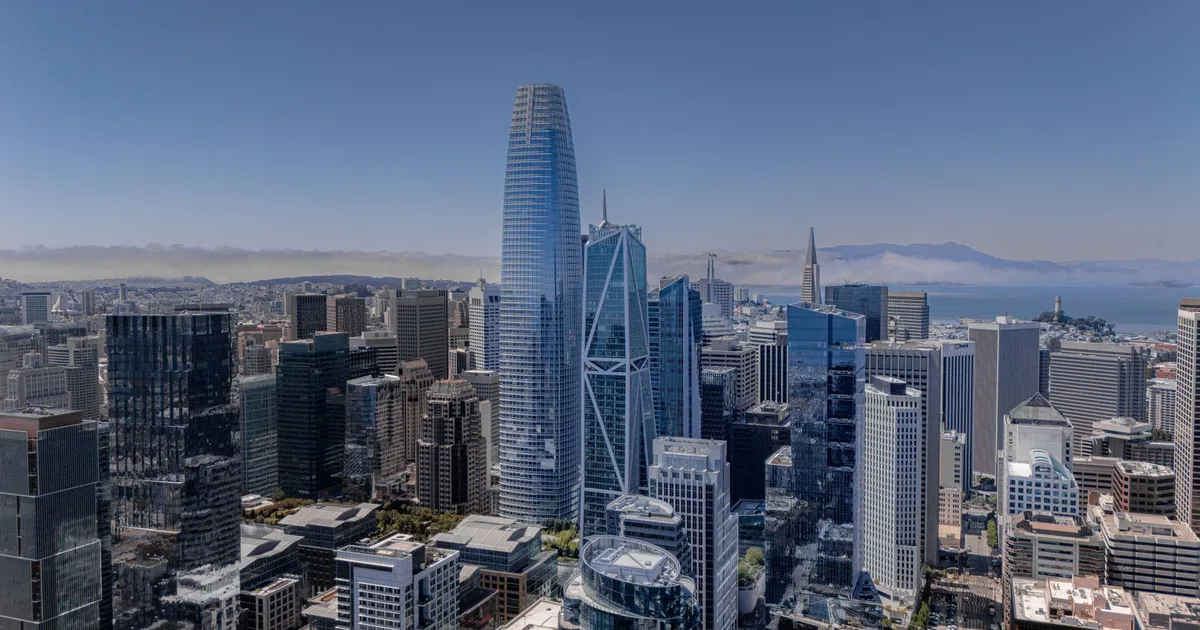
A single IVF cycle in San Francisco and the wider Bay Area runs $20,000 to $32,000 before insurance — among the highest prices in California and in the United States — and most international patients spend 19 to 26 days in the country across two trips. San Francisco is the American city that asks you to trade money for liveability: the Pacific air bridge, the densest Chinese-language infrastructure in the country, and a climate that will never bury your monitoring appointment in snow, set against the highest medical and housing costs on this guide.
This guide covers what happens after you choose a clinic: the B1/B2 medical visa, the flight and EVUS reality, the SFO terminal works running through 2027, the San Francisco short-term rental rules that quietly remove most “whole apartment” listings, what BART and Muni actually cost without fare capping, the July heat that arrives as fog, wildfire-smoke and king-tide windows, California’s SB 729 insurance mandate and surrogacy statute, and the cross-Bay problem no other city on this list has. For pricing see the California IVF cost guide and the US IVF cost overview; for the medical steps how IVF is done step by step, and for an introduction what is IVF.
Is San Francisco the Right IVF Destination for You?
San Francisco is not the cheapest answer to “IVF in America,” and it is not even the cheapest answer to “IVF in California.” It is the answer for a specific question: which city lets me handle eleven mornings of 7 am monitoring, a retrieval, a three-week stay and a language barrier without a car and without a support network already living here? For many families the Bay Area wins that question — and pays for it in price.
Where San Francisco genuinely wins
- The Pacific air bridge. San Francisco is one of the closest large US airports to Asia. United restored daily San Francisco–Shanghai from October 1, 2023 and daily San Francisco–Beijing from November 2023 (United Media Room, 2023-08-11), and Air China returned CA985/986 Beijing–San Francisco on November 1, 2023 (China Daily, 2023-10-22). Westbound flying time is roughly 11-12 hours from Shanghai and 12-13 from Beijing — versus 20+ hours with a connection to Chicago, and no reliable mainland nonstop to Boston at all.
- Snow will not cancel your monitoring. The coldest month’s average high is still 14°C (57°F) and measurable snowfall is zero. San Francisco’s weather risks are fog, wildfire smoke and January king tides — all of which disturb a treatment schedule far less than a Boston or Chicago blizzard.
- Academic depth and laboratory capacity. UCSF Center for Reproductive Health sits inside the UCSF Health academic system at 499 Illinois Street in Mission Bay; Pacific Fertility Center (55 Francisco Street, Marina) and Spring Fertility are in the city; Stanford-adjacent Bay IVF covers the Peninsula.
- A clear statutory framework. Egg donation, PGT-A and PGT-M, and compensated gestational surrogacy are all legal in California with named statutes (Family Code §7962, §7613), and SB 729 requires state-regulated health plans to cover fertility treatment from January 1, 2026.
- Daily life in your own language. San Francisco’s Chinatown along Stockton Street is a full grocery ecosystem inside the city limits, and the South Bay (Cupertino, Sunnyvale, Milpitas, Foster City) and East Bay (Fremont, Union City) are denser still. When you are injecting at 9 pm and cooking for one because you are bloated from stimulation, “there is a grocery store downstairs” is a clinical variable, not a comfort.
Where San Francisco loses
- Price. $20,000-$32,000 per cycle sits above Los Angeles ($18,000-$28,000) and roughly 20-30% above the US median — see the California cost breakdown for the caliber used here.
- Housing price. The Zumper-tracked median one-bedroom in San Francisco reached $4,180/month by July 2026, up more than 20% year on year (reported by CBS San Francisco, 2026-07-29) — about double a comparable one-bedroom in Chicago, and close to double the Los Angeles Chinese-district stock.
- Short-term rental rules are tighter than New York’s. San Francisco requires the host to live in the unit at least 275 nights a year, caps unhosted whole-unit rentals at 90 nights a year, requires the STR certificate number to appear in the listing, and fines breaches up to $484 per day per unit (SF Planning STR FAQs).
- No fare capping anywhere in the Bay Area. The open-payment system that launched region-wide on December 10, 2025 does not include daily or weekly capping; the only inter-agency relief is up to $2.85 off a Clipper transfer within two hours (TransformCA, 2025-12-05). Los Angeles Metro caps at $5 a day and $18 a week. That logic does not exist here.
- SFO is mid-construction. The Terminal 3 west check-in hall and its AirTrain station have been closed since November 4, 2025 through 2027 (SecretSF, 2025-11-04). Walking fifteen minutes further after an eleven-hour flight is a real cost when you have bloods at 7 am the next morning.
- Summer is not summer. June through August is the coolest, foggiest part of the year here (see the month-by-month table below). Pack for “California sunshine” and you will pack wrong.
How San Francisco compares with the other US cities on this list
| Your situation | Better city | Why |
|---|---|---|
| Age 38+, repeated implantation failure, PGT-M needed | San Francisco / Boston / New York | Academic centres and laboratory depth come first |
| You need Mandarin care, not an interpreter you booked | San Francisco / Los Angeles | Bay Area Chinese-language infrastructure is the densest in the US |
| Budget-sensitive; you want more cycles per dollar | Sacramento / Ohio / Texas | California prices are the highest in the country — see the US cost overview |
| You cannot afford a weather-related schedule break | San Francisco / San Diego | No snow; the risks here are fog and smoke, not blizzards |
| You will not drive | New York / Boston / San Francisco | BART plus Muni works, but with no capping a three-week commute adds up |
| Family or friends already in the South Bay | San Francisco | Clinics split between the city and the Peninsula; relatives on the Peninsula make the commute viable |
| Third-party reproduction with parentage certainty required | California / New York / Massachusetts | Different frameworks per state — see the surrogacy legality map |
The one-line test: if what you want is to live in the United States as though you were at home, San Francisco is the closest answer; if what you want is the most cycles per dollar, it is not.
How Do You Get a US Visa for IVF Treatment?
There is no medical visa. You apply for the ordinary B1/B2 visitor visa and tick Medical Treatment (or Medical Treatment & Tourism) as the purpose on the DS-160. Tick it honestly: being asked and denying it is far worse than declaring it.
Visa fees as they stand in 2026
| Item | Amount | Note |
|---|---|---|
| DS-160 application fee (MRV) | $185 | Non-refundable, including if the interview is cancelled |
| Visa Integrity Fee | $250 | Created by the 2025 budget-reconciliation act, levied from FY2025; collection timing and method per embassy/consulate notice |
| First-time total | about $435 per person | Children are charged per person, not waived |
| EVUS enrolment | about $30 per enrolment | The new enrolment fee created by H.R.1, effective September 30, 2025 (Fragomen, 2025-08-28; CBP FAQ, 2025-11-04). It has been subject to litigation and adjustment since — confirm the live amount and exemptions on evus.gov |
Five changes since late 2025 that most guides still get wrong
- The interview-waiver window for renewals was cut from 48 months to 12. A visa expired more than twelve months ago no longer qualifies for drop-box by default.
- EVUS is a precondition, not a formality. For Chinese passport holders with a ten-year B1/B2, the enrolment dies when it expires or when a new passport is issued; children must enrol individually — a parent’s enrolment does not cover them.
- Administrative processing (“checked”) is open-ended. Typically two to eight extra weeks, and an IVF schedule cannot absorb that — build the buffer before you buy tickets.
- The Integrity Fee is separate from the MRV fee. Paying $185 does not mean you have paid.
- Interview wait times move weekly. Re-check the official page before you decide anything: US State Department visa wait times.
The medical-visa document pack
- A clinic letter naming the address, the treatment plan, the estimated cost and the expected length of stay. Ask the clinic’s international patient office at booking; they issue these routinely.
- Proof of funds covering treatment plus three to four weeks of living costs — budget about 1.2× the totals in the cost section below.
- Proof of ties to home: employment letter, property, family, a return booking.
- Translated prior test results. You do not need to carry everything, but you must be able to answer “why not treat at home.”
- At the window: purpose clear, dates clear, funding clear. Never say you are “touristing and might look at a clinic.”
Counting backwards from retrieval day (T)
T-4 months    Remote consult, request the clinic letter, start DS-160
T-3.5 months  Pay MRV $185 (plus the $250 Integrity Fee)
T-3 months    Interview (leave 2-8 weeks for administrative processing)
T-1.5 months  Visa issued; book flights and housing
T-1 month     Complete EVUS if you hold a 10-year visa, at least 72 hours before departure, and print it
T-2 weeks     Repeat labs at home; assemble the medication bag with English prescriptions
T-0           Enter the US
At the border
CBP asks three things: what are you doing here, how long, and who is paying. Answer “medical treatment,” show the clinic letter and the return ticket. The medication declaration is covered in the section below on bringing medicine in — that is the step that can end a cycle before it starts.
Which Airport, and How Do You Get Into the City?
The China–San Francisco flight reality
- What is verifiable: United’s announcement that San Francisco–Shanghai returned to daily service from October 1, 2023 and San Francisco–Beijing to daily from November 2023 (United Media Room, 2023-08-11); Air China’s CA985/986 Beijing–San Francisco relaunch on November 1, 2023, twice weekly (China Daily, 2023-10-22).
- What we could not verify: current 2026 schedules, frequencies and equipment. Airline timetable pages and airport statistics pages did not return usable primary sources for this guide, so this article promises no specific nonstop flight.
- Shenzhen or Guangzhou–San Francisco nonstop: no 2026 primary source found, and San Francisco does not appear in the 2026 municipal route-restoration lists we could reach. Do not plan around a Pearl River Delta nonstop to SFO.
Treat “nonstop” as an option, not a premise. The realistic routings are: Shanghai or Beijing–San Francisco nonstop if it is operating; one connection via Seoul (ICN), Tokyo Haneda (HND) or Taipei (TPE), which most itineraries keep inside 16-22 hours; or a US inland connection from Los Angeles or Seattle, which adds a second security screening and a bag re-check — a poor trade during stimulation.
Time difference: San Francisco is 15 hours behind Beijing in daylight saving, 16 hours behind in winter.
SFO terminal works: the one thing you must know for 2026
| Item | Status | Source |
|---|---|---|
| Terminal 3 west check-in | Closed from 2025-11-04 through 2027 | SecretSF, 2025-11-04 |
| Terminal 3 AirTrain station | Closed in the same period; T2 and T3 now share one “Terminals 2 & 3” station | Same |
| Some United check-in | Passengers who formerly used D/E counters check in at the Terminal 2 west hall | Same |
| Closed area | T3 west, Doors 6-13 | Same |
| Programme size | Roughly $2.5-2.6B expansion; expanded hall opens autumn 2027, east hall early 2029 | Same |
Three practical conclusions: check your carrier’s actual check-in terminal immediately after booking rather than assuming “I’m a T3 passenger”; the merged T2/T3 station means a longer walk with luggage, so prefer a kerbside pickup booking; and put that extra fifteen minutes into your arrival-day energy budget — especially if you have bloods and an ultrasound at 7 am the next morning.
Four ways from SFO into the city
| Method | Cost | Time | Who it suits |
|---|---|---|---|
| BART (underground station at the airport, direct to Embarcadero / Powell St) | About $10-$11 one way including the airport station’s cost recovery; BART lifted its average single ride 6.2% to about $5.18 from January 1, 2026 (ABC7, 2025-12-17) | About 30 minutes | Light luggage, daylight arrival, budget conscious |
| AirTrain + Muni T Line | AirTrain within the free-transfer envelope plus Muni $2.85 | 45-60 minutes | Destination in Mission Bay or along the T corridor |
| Uber / Lyft | SFO to Union Square or downtown about $35-$55 for a standard UberX, plus the SFO rideshare pickup fee of $5.50 (RideWise schedule updated 2026-06-24) | 25-50 minutes depending on traffic | After a long-haul, with luggage, at night |
| Taxi | Metered; typically $40-$70 into the city | 25-50 minutes | If you do not want an app. San Francisco has no fixed JFK-style flat rate |
Fare caliber warning: BART fares are distance-based and include airport station cost recovery. Use the live BART fare calculator for your actual trip — the figures here are public ranges at time of writing, not a quote.
The Bay Area transit difference that matters: there is no capping
- The open-payment rollout of December 10, 2025 lets you tap a bank card or phone across agencies, but ships without daily or weekly fare capping; the only relief is up to $2.85 off a Clipper transfer within two hours (TransformCA, 2025-12-05).
- Compare Los Angeles Metro, capped at $5 per day and $18 per seven days since July 1, 2023. That logic does not exist in San Francisco, so “two metro rides a day” is a genuine $5.70-$10 a day.
- Which means: for a three-week stay with daily clinic travel, a Muni 31-day pass at $86-$104, or a “monthly rental plus taxis” combination, usually beats single tickets. Do the arithmetic before you decide, not after.
Where Should You Stay — City or Peninsula?
The core tension in San Francisco lodging is not expensive versus cheap. It is city versus Peninsula: clinics sit in Mission Bay and the Marina in the city, and in Palo Alto and Menlo Park on the Peninsula, and a cross-Bay bridge trip is 45-90 minutes each way at any hour, worse at rush hour.
Neighbourhood comparison
| Area | Reach to clinics | Daily life | Rental reality | Who it suits |
|---|---|---|---|---|
| Mission Bay / Potrero | Walk or T Line to UCSF Center for Reproductive Health (499 Illinois St) | New district; moderate grocery density | Mostly hotels and apartment blocks; few STR listings | Treatment at UCSF, no car |
| Marina / North Beach / Downtown | Easy to Pacific Fertility Center (55 Francisco St) | Close to Chinatown; best groceries | Many residential buildings; monthly leases negotiable | Self-catering, daily early monitoring |
| Chinatown (Stockton corridor) | Steep streets; older buildings often have no elevator | Densest Chinese groceries and cooking in the US | Small, old units | If a Chinese-language daily life is the priority |
| Peninsula: Palo Alto / Menlo Park | Near Bay IVF and other Peninsula clinics | High South Bay Chinese grocery density | Expensive but plentiful houses and apartments | Treatment on the Peninsula, or relatives there |
| East Bay: Fremont / Union City | 45-90 minutes across the bridge | High Chinese population, lower cost | Cheapest monthly rents in the region | You have a car and budget is the constraint |
The regulatory line: why San Francisco short lets are hard to book
San Francisco’s short-term rental registration (STR) programme is administered by the city’s Planning Department. The governing rules (SF Planning STR FAQs):
| Rule | Content |
|---|---|
| Primary residence | The host must live in the unit at least 275 nights per year |
| Unhosted rental cap | Maximum 90 nights per year where the host is not present |
| Public disclosure | The listing must display the STR certificate number |
| Penalties | Up to $484 per day per unit for violations |
| Stays of 30+ consecutive days | Outside the STR rules — treated as an ordinary tenancy |
| Other prerequisites | STR certificate, business registration, and $500,000 liability cover (waived where the platform insures hosts collectively) |
What that means for you:
- A listing promising a “whole independent apartment, three-week minimum” in San Francisco without a visible certificate number is high risk — the delisting typically lands just before you fly.
- A written lease of 30 days or more is lawful and outside STR limits, and is the safest route for a patient on a long monitoring stay.
- But monthly leases have their own trap. San Francisco’s local Rent Ordinance covers only buildings with a certificate of occupancy before June 13, 1979; the state’s AB 1482 rent-cap (5% plus CPI, maximum 10%) exempts housing built within the last fifteen years; and AB 1482’s just-cause protection requires twelve months of continuous occupancy (SF Tenants Union; Hemlane California tenancy summary, 2026). On a one-to-three-month contract the landlord can simply refuse to continue — so the end date, deposit-return terms and early-termination clause must be in writing.
Three lodging strategies
- Hotel or extended-stay property (least friction): outside STR rules, with cleaning and a front desk. The GSA FY2026 lodging ceiling for San Francisco is $259/night (January-August) and $272/night (September-December), before tax (GSA Per Diem) — a useful upper anchor for what a hotel “should” cost.
- A lease of 30 days or more (cheapest): outside the STR regime, usually with a kitchen. On Zumper’s figures (reported 2026-07-29), San Francisco medians are $4,180 for a one-bedroom and $6,020 for a two-bedroom, both up over 20% year on year — budget at that level.
- Staying with family or friends (most underestimated): Bay Area networks are dense, and many patients stay with relatives through the early phase and move next to the clinic three days before retrieval. Note that monitoring requires early rising and the post-transfer period needs a quiet private space — a long guest stay is a burden on both sides.
Six things to verify before you sign
Elevator (San Francisco is hilly; no lift plus late-stage bloating is a real hazard); actual weekday 7:30 am commute time from the address, read from Google Maps’ historical traffic, not distance; a kitchen (can you cook congee and soup?); a washing machine; a private bathroom and sound insulation (you need rest after retrieval); and the cancellation policy and minimum term, plus whether the quoted rent includes utilities, internet, parking. Street parking in the city is time-limited and subject to sweep days — verify “free parking” claims separately.
Lodging taxes: San Francisco’s transient occupancy tax is 14%, with tourism-zone additions (about 2.25% in Zone 1, 2.00% in Zone 2), so a hotel bill lands around 16-17% on top of the room rate (SF Treasurer fee pages). A 30-day-plus lease pays no TOT — one reason the monthly route is cheaper.
Do You Need a Car?
What the transit network actually gives you
| System | Coverage | Current fare | Note |
|---|---|---|---|
| BART | Airport — downtown — East Bay — Peninsula | Distance-based; airport to city about $10-$11 | Average single fare rose 6.2% from 2026-01-01 (ABC7, 2025-12-17) |
| Muni (metro, light rail, bus) | Citywide, including the T Third Street line to Mission Bay | $2.85 electronic / $3.00 cash; free transfer within 120 minutes; day pass $5.70; 7-day $47; 31-day $86-$104 | Free under 18; contactless bank cards accepted since December 2025; single-ride MuniMobile tickets withdrawn from sale 2026-09-01 (SFMTA fare pages) |
| Uber / Lyft | Citywide | SFO-downtown about $35-$55 plus $5.50 airport pickup fee | Use these on late-stimulation days and transfer day |
| Private car | — | Time-limited street parking, sweep closures, residential permits | Usually not worth renting inside the city; reconsider only if your care spans both the city and the Peninsula |
Accessibility: San Francisco’s ignored weak point
- SFMTA’s Accessibility Strategy needs assessment records roughly 187,000 residents over 60 and about 38,000 people with disabilities aged 18-64 — together about a quarter of the population — with 99,500 people relying on free paratransit programmes and over 500,000 van and taxi trips a year delivered (SFMTA, report dated 2024-03-13, updated 2025-08-26).
- The same report notes that elevator and vertical-transportation outages materially disrupt fixed routes — meaning “the building has a lift” is not the same as “the lift works on the day you need it.”
- For you: if you are commuting daily in late stimulation, prefer Mission Bay (flat, T Line direct) or a hotel, and do not take a walk-up on a Chinatown slope.
Walking reality around the clinics
- Mission Bay (UCSF): flat, new-built, walkable, hotel-rich.
- Marina / Francisco Street (Pacific Fertility Center): gentle grades, served by the 30 and 45 buses toward downtown.
- Peninsula (Palo Alto / Menlo Park): clinics spread out, transit density far below the city — this area effectively requires a car or taxis.
When Is the Best Season for IVF in San Francisco?
The table below is a 30-year mean computed from NOAA RCC-ACIS GHCN-Daily station data for SAN FRANCISCO INTERNATIONAL AP (GHCN ID USW00023234). It is measured means rather than the official NCEI Normals table, but the structure it shows is not in doubt.
| Month | Avg high | Avg low | Monthly precip | Wet days |
|---|---|---|---|---|
| January | 14.2°C | 7.6°C | 100 mm (3.95 in) | 11.0 |
| February | 15.6°C | 8.0°C | 91 mm (3.59 in) | 10.1 |
| March | 16.9°C | 8.9°C | 69 mm (2.70 in) | 10.5 |
| April | 18.2°C | 9.7°C | 34 mm (1.34 in) | 6.0 |
| May | 19.6°C | 11.2°C | 12 mm (0.46 in) | 2.9 |
| June | 21.5°C | 12.4°C | 3 mm (0.12 in) | 1.0 |
| July | 22.0°C | 13.2°C | ≈0 mm | 0.0 |
| August | 22.6°C | 13.8°C | 1 mm (0.03 in) | 0.4 |
| September | 23.4°C | 13.7°C | 2 mm (0.08 in) | 1.0 |
| October | 21.9°C | 12.3°C | 22 mm (0.87 in) | 3.0 |
| November | 17.6°C | 9.6°C | 52 mm (2.04 in) | 7.5 |
| December | 14.3°C | 7.6°C | 117 mm (4.62 in) | 11.4 |
Three things to read out of this table:
- No snow, ever (mean snowfall days zero), so there is no Boston-style “one storm closes monitoring for four days” risk.
- September is the warmest month, not July. Summer highs sit at 21-23°C with nights at 12-14°C, and sea fog sits over the city through the mornings — the famous June Marine Layer. You need a fleece or light down, not shorts.
- The wet season is November through March, with December and January near 100-120 mm and eleven wet days each. Rain does not affect treatment; it affects commuting and morale.
The two events that genuinely break an itinerary
| Risk | Window | Evidence | Response |
|---|---|---|---|
| Wildfire smoke degrading air quality | Mainly August-October | The Bay Area Air Quality Management District extended a wildfire-smoke air quality advisory on 2026-08-06 (smoke from Pacific Northwest fires) through August 7 (BAAQMD advisories) | Watch AirNow and BAAQMD; avoid outdoor activity after retrieval and after transfer; run a HEPA purifier |
| Storm plus king-tide flooding | Classic window early January | On 2026-01-02/03 a storm coincided with the highest tides since 1998: San Francisco tide levels 2.56 ft above normal plus a 1.28 ft storm surge; US-101 closed both directions at Corte Madera/Larkspur; CA-37 and CA-12 closed (ABC7 field reporting, January 2026) | Keep hard dates out of late December-mid January; book refundable fares; confirm the clinic’s remote-monitoring and reschedule policy |
Which month to schedule treatment
- Best: April-May and September-October. Spring has left the rain behind with 18-20°C temperatures; autumn is the warmest and least foggy part of the year, though you must watch smoke advisories.
- Second choice: June-August and November. Summer is stable but feels cold, and sits at the front of fire season.
- Be careful: December to mid-January (storm and flooding window) and August (where recent smoke events have clustered).
Where Do You Buy Groceries — and What Can You Not Bring In?
Chinatown and Chinese groceries
San Francisco’s Chinatown along Stockton Street is a complete Chinese grocery ecosystem inside the city. Verifiable stores include (source: Spotlight Chinatown business directory):
| Store | Address | What it sells |
|---|---|---|
| Chung Chou City 中国城超市 | 1230 Stockton St | Dried goods, fish maw, frozen dim sum |
| Vegiland Market | 1055 Stockton St | Produce |
| Dai Lee Food Products | 878 Washington St | Groceries, sauces |
| Chang Hong Meat | 1335 Powell St | Fresh meat, offal |
| New Ocean Seafood | 838 Jackson St | Live seafood |
| Ming Lee Trading | 759 Jackson St | Wholesale groceries |
Note: many older Chinatown businesses are cash-first — carry $100-$200 in small bills.
The South Bay (Cupertino, Sunnyvale, Milpitas, Foster City) and East Bay (Fremont, Union City) are denser still, with 99 Ranch and other chains present. Verify individual store addresses and trading status through each chain’s own store locator — this guide did not audit shops one by one.
Eating through stimulation and transfer
- Protein first: eggs, fish, shellfish, lean meat and soy products are easy to source in Chinatown or the South Bay, which matters more than any specific supplement.
- Low sodium, controlled fluids if you have OHSS risk — and do not treat slow-cooked soup as your fluid plan, because its sodium is usually the problem.
- Cooking is both the cheap option and the compliant one: a monthly rental with a kitchen beats eating out by $15-$25 a day and gives you control over ingredients.
- Protocol detail is in the IVF diet guide and the IVF preparation checklist.
⚠️ Bringing Chinese herbal medicine: the step that can end a cycle
Federal rules prohibit animal-origin medicines and products. The restricted list published by the Chinese Consulate-General in New York includes bird’s nest, ejiao (donkey-hide gelatin), deer antler, musk, ox gallstone, tiger bone, pangolin, scorpion, centipede, toad, snake gallbladder and tortoise shell; ephedrine-class, strychnine-class and morphine-class patent medicines are also restricted (sources: USDA APHIS guidance for international travellers, CBP travel).
- These are federal rules. Arriving in San Francisco is no different from arriving in New York.
- Travellers have been refused entry and barred for years over prohibited ingredients.
- The correct approach: carry only clearly composed Western medicines in original packaging with an English prescription, and declare them. Buy stimulation and luteal-support medication locally on prescription — the Bay Area’s specialty pharmacy delivery is well developed. Do not try to import your domestic drug supply.
Phones, Payments and Insurance
| Item | Option | Reference cost |
|---|---|---|
| Phone | eSIM (Airalo, Saily, etc.) or T-Mobile Visible Travel Pass | $10-$40 for 1-4 weeks |
| Payments | Visa/Mastercard and Apple Pay/Google Pay universal; older Chinatown shops are often cash only | Carry $100-$200 |
| Alipay / WeChat | Accepted at Chinese shops and restaurants, not at clinics, pharmacies or hotels | Do not rely on it |
| Banks | Notify your issuers before travel; some Chinese banks have Bay Area branches | — |
| Travel medical insurance | Most policies explicitly exclude assisted-reproduction complications (OHSS admission, post-retrieval bleeding, ectopic pregnancy) | $200-$500 for 3-4 weeks |
The most overlooked and most consequential item: before you fly, read the exclusions line by line with the insurer, and ask the clinic what an OHSS admission costs self-pay. Travel insurance not covering IVF complications is the industry norm, not an exception.
How Long Do You Stay, and What Does the Bay Area Add to It?
The standard cycle is described in how IVF is done step by step. What follows is only the San Francisco-specific logistics.
| Phase | Medical timing | What you do in the Bay Area |
|---|---|---|
| Home-country workup | 1-2 months before | Full hormonal panel, ultrasound, semen analysis, translated and sent to the clinic |
| Remote consult | T-3 to 4 months | Video consultation; receive the treatment plan, cost estimate and visa letter |
| Trip 1: stimulation + retrieval | 12-16 days | Start stimulation 1-2 days after arrival, monitoring every 2-3 days (commonly 7 am), trigger, retrieval |
| Wait for PGT at home | 7-14 days | Return home during embryo testing; agree the endometrial preparation protocol remotely |
| Trip 2: frozen embryo transfer | 7-10 days | Lining check, transfer, luteal support, pregnancy test |
| Total in the US | 19-26 days | 25-35 days if you do a fresh transfer in one trip |
The Bay Area’s own variable: your cycle may span two districts
The city and the Peninsula are 45-90 minutes apart by car, and one treatment plan can touch both — monitoring in the city, PGT at a Peninsula laboratory, for instance. At booking, confirm four things:
- Which site does monitoring, and is it in the same city as your lodging? Daily rush-hour crossings of the Bay Bridge are not sustainable.
- Can medication be delivered to your address? Bay Area pharmacy delivery is mature, but cold chain and injectables need confirming.
- What is the earliest monitoring slot? This decides how close you must live.
- Which campus houses the embryology laboratory? This decides whether your eggs travel after retrieval.
Language and interpretation
- Do not assume the clinic has Mandarin services. Confirm in writing at booking whether a Mandarin consultation or medical interpreter is offered and whether it must be reserved in advance.
- Large academic centres usually run an international patient office, but appointments are needed.
- The Bay Area has among the deepest Chinese-speaking medical talent pools in the United States — but availability is not automatic provision.
Contingency plan
| Situation | Response |
|---|---|
| Worsening OHSS (bloating, breathlessness, low urine output) | Call the clinic’s 24-hour line; know which emergency department and what it costs self-pay |
| Flight cancelled by storm or smoke | Book refundable fares; confirm the clinic can shift the trigger or change protocol |
| Medication delayed or lost | Bay Area pharmacies can refill same-day on prescription — keep an electronic copy |
| Visa still in administrative processing | Do not buy tickets; move the whole cycle later |
What Does California Law Guarantee?
Insurance
- SB 729, effective January 1, 2026, requires health plans regulated under California law to cover infertility diagnosis and treatment. Two boundaries matter: self-funded ERISA employer plans are outside state jurisdiction, and the mandate addresses infertility care generally, so third-party programmes such as donor eggs are still commonly treated as separately-priced elective services.
- Note the time lag with our own California IVF cost guide, written before SB 729 fully landed; its “no state mandate” framing predates the current law. Treat the 2026 statute as the operative position and confirm coverage line by line with the insurer before you buy a policy.
- Claims logic is in the IVF insurance guide and is IVF covered by insurance.
Donor eggs, PGT and sex selection
- Egg donation is legal with reasonable compensation; all donated gametes must clear FDA-mandated infectious-disease screening under 21 CFR 1271.
- PGT-A and PGT-M are legal and widely available.
- Non-medical sex selection is not offered by mainstream US clinics. ASRM ethics guidance opposes it and most SART member clinics will not perform it. Claims online that “you can choose sex in America” are misleading — see can you choose gender with IVF.
Single patients, LGBTQ+ families and the baby’s nationality
- Single women and same-sex couples are protected in California; providers may not refuse service on marital status or sexual orientation.
- Under the Fourteenth Amendment, a baby born on US soil acquires US citizenship regardless of the parents’ status. Chinese families typically obtain a Chinese Travel Document for the infant to return to China — whether a travel document or a visa is required depends on the consulate’s determination of the child’s nationality, which turns on whether the parents are “settled abroad.” Household-registration document requirements differ city by city in China; get the exact list from the local police station before you travel.
Surrogacy
- Gestational surrogacy (intended-parent or donor gametes, no genetic link to the carrier) is legal and compensable in California, principally under Family Code §7962 (gestational-carrier agreements and parentage) and §7613 (sperm and egg donors incur no parental rights or obligations); §7613.5 covers known donors where no written donation agreement was executed in advance.
- California has among the most mature surrogacy law in the country, and intended parents commonly obtain a pre-birth parentage order.
- Traditional surrogacy (using the carrier’s own egg) does not fall inside the §7962 framework and carries materially higher risk.
Important: mainland China prohibits commercial egg donation and surrogacy in any form, and assisted-birth technology may not be performed by licensed practitioners there. This section describes California law as it stands; it is not advice or encouragement. Chinese nationals should understand and comply with Chinese law before making any decision.
Outcome reporting: do not credit California with a state registry it does not have
- US ART cycle and outcome data are reported at federal level under the Fertility Clinic Success Rate and Certification Act of 1992 and published by the CDC’s National ART Surveillance System (NASS) (CDC ART success rates, CDC NASS); clinic-level lookup runs through SART.
- Unlike New York, California operates no equivalent annual state-level registry of cycle outcomes. The Health & Safety Code §1644 series governs licensed sperm and egg bank record-keeping and disclosure plus laboratory licensure — it is not a “California version of annual success-rate reporting.”
- So when you compare clinics, use the CDC/SART caliber consistently and always read the denominator: per retrieval, per transfer and per thaw are three different numbers. Interpretation guides: IVF success rates by age and how to read IVF success-rate data.
How Much Does IVF in San Francisco Really Cost?
Medical component (one cycle, pre-insurance)
Component ranges follow the site’s California IVF cost guide, whose California single-cycle median of $22,000 and Bay Area band of $20,000-$32,000 are the basis for this table:
| Component | Amount |
|---|---|
| Initial consultation and fertility testing | $300-$600 |
| Monitoring through stimulation (10-14 days) | $1,200-$2,500 |
| Retrieval including anaesthesia | $4,500-$9,000 |
| Embryo culture (3-6 days) | $1,800-$4,500 |
| Transfer | $1,500-$3,500 |
| Freezing plus first-year storage | $600-$1,500 |
| Stimulation medication | $3,500-$7,000 |
| ICSI add-on | $1,800-$3,000 |
| PGT-A add-on | $3,500-$5,500 |
| Single-cycle total (Bay Area) | $20,000-$32,000 |
| Cost to a live birth (often 2-3 cycles) | $45,000-$90,000 |
A checkable published anchor: Bay IVF in Palo Alto posts self-pay prices of $11,870 for a single IVF cycle, $23,740 for a double-cycle package, $14,470 for IVF with PGT, $5,400 for a frozen embryo transfer and $7,750 for egg freezing (excluding medication and some diagnostics; source: the clinic’s published price page, mirrored in our clinic profile). These are procedure-and-laboratory base prices — medication, monitoring, anaesthesia, ICSI and PGT sit on top, which is exactly why a “$11,870” quote and a $20,000-$32,000 total are not in conflict.
Non-medical costs (two trips, combined)
| Item | Amount |
|---|---|
| Visa (first application, including Integrity Fee) | $435, plus EVUS about $30 |
| International airfare (1-2 passengers, two trips) | ¥12,000-¥32,000 — quoted in CNY and deliberately excluded from the USD subtotal below |
| Lodging (19-26 days in the US) | $3,000-$7,000 |
| Food (3-4 weeks, mostly cooking in) | $700-$1,600 |
| Local transport (BART / Muni / taxis) | $250-$600 |
| Phone / eSIM | $10-$40 |
| Travel medical insurance | $200-$500 |
| Non-medical subtotal (excluding international airfare) | about $4,600-$10,200 |
Lodging range explained: the top anchor is the GSA FY2026 ceiling of $259-$272/night before 16-17% taxes; the floor uses Zumper’s $4,180/month one-bedroom. Committing to a 30-day-plus lease and cooking in pulls this line down sharply.
Three typical budget scenarios (in CNY at about 1 USD = 7.2 CNY)
| Scenario | Medical | Non-medical (excl. airfare) | Airfare | Total |
|---|---|---|---|---|
| Standard own-egg IVF, one retrieval plus one frozen transfer, Peninsula monthly lease, cooking in, one traveller flying both trips | $20,000 (¥144k) | $5,800 (¥42k) | ¥12k | about ¥198k |
| With PGT-A, three weeks in a city hotel, partner accompanying (two travellers, two trips) | $28,000 (¥202k) | $9,500 (¥68k) | ¥22k | about ¥292k |
| Advanced maternal age, two retrievals plus PGT-A, two travellers | $48,000 (¥346k) | $10,200 (¥73k) | ¥32k | about ¥451k |
The non-medical columns are built as “monthly lease $4,180 + food $700 + transport $250 + eSIM $10 + insurance $200 + visa $465”, “21 hotel nights at about $265 before 16-17% tax, plus food/transport/insurance/visa for two”, and “the same combination at its upper limits” respectively; the airfare column is the mid-point of the CNY range for one or two travellers across two round trips, subject to live carrier pricing. Divide the total by 7.2 for a USD budget.
What to save on, and what never to
Safe to economise: a 30-day-plus lease (no 14% TOT), cooking in, travelling outside the storm and smoke seasons, cheaper South Bay stock, and asking whether the clinic sells a double-cycle package (the $23,740 posted above is one).
Never economise on: refundability of your airfare (smoke and storms genuinely move schedules), distance from your bed to the monitoring room (a 7 am Bay Bridge crossing is not sustainable), your reserve for a medical complication, or legal documents — where third-party reproduction is involved, counsel in both jurisdictions and a proper escrow arrangement are the floor, not the luxury.
Your San Francisco IVF Roadmap
Take the decisions in this order, because one of them is not compressible: compare clinics on age-banded data (not marketing) → remote consult and treatment plan, confirming where monitoring and the laboratory actually sit → start the visa the same week → book flights and housing only after the visa clears → then test the 7:30 am route to the clinic.
T-3 to 4 months
Shortlist 2-3 clinics against CDC / SART data; complete the home workup with English translations; remote consult and written cost estimate; confirm whether monitoring and the embryology laboratory are in the same city as your intended lodging; request the clinic letter; file DS-160, pay fees, book the interview.
T-1 to 2 months
Attend the interview. After issuance: complete EVUS if you hold a ten-year visa, at least 72 hours before departure, and print the confirmation. Book refundable flights and verify your carrier’s actual check-in terminal given the T2/T3 works. Book lodging, checking elevator, kitchen, real weekday 7:30 am commute time, cancellation policy and whether the term reaches 30 days. Buy an eSIM or US number. Buy travel medical insurance after reading the IVF-complication exclusions line by line. Ask the clinic, in writing: self-pay OHSS admission price, whether medication can be delivered to your address, the earliest monitoring slot, and whether Mandarin consultation or medical interpretation is available.
T-2 weeks
Repeat ultrasound and hormones at home. Audit the medicine bag — check for prohibited ingredients (animal-origin medicines, ephedrine, morphine-class compounds) — and keep original packaging plus English prescriptions. Photocopy passport, visa, clinic letter and insurance policy, and keep a digital set. Install Google Maps, Uber, Lyft, Clipper/BART, a translation app and the clinic’s patient portal. Withdraw $100-$200 in cash for Chinatown shops. Notify your card issuers of the itinerary.
Carry-on, never checked
Passport with visa plus both old and new passports if the visa is in the old one, printed EVUS confirmation, printed clinic letter and address, all medication with English prescriptions including the cold-chain pouch, flight itinerary showing the check-in terminal, insurance policy, compression socks, slippers, a reusable bottle, and a light jacket or fleece — you will want one in a San Francisco summer.
Bay Area fertility centres to shortlist
Each card opens the full profile with age-banded data, doctors, pricing and booking routes:
Pacific Fertility Center
★ 4.0A long-established independent Bay Area centre at 55 Francisco Street, known for individualised stimulation protocols and embryology quality, close to Chinatown and North Beach.
Spring Fertility
★ 4.1Founded by senior reproductive endocrinologists around transparent pricing and high communication frequency — built for families who want to see every cost before it is incurred.
UCSF Center for Reproductive Health
★ 4.0Part of the UCSF Health academic system at 499 Illinois Street, strong on complex cases and multidisciplinary consultation, on flat ground with the T Line reaching it.
Bay IVF
★ 4.6A boutique centre with a Stanford-adjacent background that publishes its self-pay price list (single IVF cycle from $11,870), suited to patients who want a small team and frequent contact.
Ratings come from the review aggregate stored in each clinic profile and move with new reviews; use age-banded data and your own booking conversation as the deciding input. Browse the full US clinic directory.
Frequently Asked Questions
Q: How early should we start the US visa for IVF in San Francisco?
Three to four months minimum. 2026 interview wait times swing widely from weeks to months, administrative processing can add 2-8 weeks, and the drop-box renewal window has been cut from 48 months to 12, so a renewal is not automatic. Tick Medical Treatment on the DS-160 and carry the clinic letter.
Q: We already hold a ten-year visa. Is anything else required?
Yes: EVUS enrolment, about $30, filed at least 72 hours before departure and printed on paper. A new passport invalidates the existing enrolment and requires a fresh paid registration, and children must enrol individually — they are not covered by a parent’s registration. Confirm the live fee and exemptions on evus.gov.
Q: How many days in total do we need to be in the US for one cycle?
The usual pattern is two trips: 12-16 days for stimulation and retrieval (18-20 if you wait for PGT results), home for the embryo testing, then 7-10 days for the frozen transfer — about 19-26 days in total. A single trip with a fresh transfer takes 25-35 days.
Q: Which neighbourhood should we stay in?
It depends on where you are treated. At UCSF in Mission Bay, stay in Mission Bay or Potrero — flat ground, T Line direct. At Pacific Fertility Center in the Marina, or if you want Chinatown for groceries, stay in the north of the city. If your clinic is on the Peninsula (Palo Alto or Menlo Park), do not cross the Bay Bridge every morning — live in the South Bay. A common combination is staying close to the clinic through monitoring and moving somewhere cheaper between retrieval and transfer.
Q: Why are short-term lets so hard to book here? Can we use Airbnb?
Because San Francisco’s STR regime requires the host to occupy the unit at least 275 nights a year, caps rentals where the host is absent at 90 nights a year, and requires every listing to show its certificate number, with fines up to $484 per day per unit for breaches (SF Planning STR FAQs). A “whole independent apartment” listing with no certificate number can be delisted at any time — and it usually happens just before you fly. Stays of 30 days or more are outside the STR rules entirely, which makes a monthly lease the safe option.
Q: What are the traps in signing a monthly lease?
Two. First, San Francisco’s local rent ordinance only covers buildings with occupancy permits from before June 13, 1979, the state AB 1482 rent cap exempts housing built in the last fifteen years, and its just-cause protection requires twelve months of continuous occupancy — so on a one-to-three-month stay the landlord can simply refuse to continue, and the end date, deposit terms and early-termination clause must be in the written contract. Second, a monthly lease pays no 14% hotel tax, which is part of why it is cheaper — but it also means conventional long-tenancy stock that often expects a US credit history, so use an agent or a serviced apartment if you cannot qualify.
Q: What is the cheapest way from SFO into the city?
BART: about $10-$11 each way including the airport station’s cost recovery, roughly 30 minutes to Embarcadero or Powell Street. For speed, Uber and Lyft run $35-$55 plus the $5.50 rideshare pickup fee. Note that the Bay Area has no daily or weekly fare capping — the December 10, 2025 open-payment rollout shipped without it — so a long-stay commute has to be costed separately; do not apply Los Angeles Metro logic to San Francisco.
Q: What should we know about SFO in 2026?
The Terminal 3 west check-in area and its AirTrain station are closed from November 4, 2025 through 2027, with some United passengers checking in at the Terminal 2 west hall and T2 and T3 sharing one AirTrain station (SecretSF, 2025-11-04). Confirm your carrier’s actual check-in terminal as soon as you book, and put the extra fifteen minutes into your arrival-day energy budget.
Q: Which month is best for IVF in San Francisco?
April-May and September-October. San Francisco’s warmest month is September (mean high 23.4°C) while June-August sits at 21-22°C with foggy mornings (computed from NOAA RCC-ACIS GHCN-Daily station 1995-2024 means). Avoid the August wildfire-smoke window — BAAQMD extended a smoke air-quality advisory as recently as 2026-08-06 — and the late-December-to-mid-January storm and king-tide window, when January 2-3, 2026 brought the highest tides since 1998 and closed sections of US-101.
Q: Can we bring ejiao, bird’s nest or Chinese herbal medicine?
No — the risk is high. Under federal rules, traditional medicines containing animal or animal-organ ingredients are prohibited, including bird’s nest, ejiao, deer antler, musk, ox gallstone, tiger bone, pangolin, scorpion, centipede, toad, snake gallbladder and tortoise shell; ephedrine-, strychnine- and morphine-class patent medicines are also restricted (USDA APHIS / CBP). Travellers have been deported and barred for years over prohibited ingredients. Entering via San Francisco is no different from entering via New York. Carry only clearly composed Western medicines in original packaging with an English prescription, declare them, and buy stimulation and luteal-support drugs locally on prescription.
Q: Can we choose the baby’s sex with IVF in California?
Mainstream clinics will not do it. PGT-A is legal and routine in California for chromosome screening, but non-medical sex selection contravenes ASRM ethics guidance and most SART member clinics refuse. If sex selection is your primary goal, you should be evaluating other destinations — see can you choose gender with IVF.
Q: Is surrogacy legal in California?
Gestational surrogacy is legal and compensable, principally under Family Code §7962 (gestational agreements and parentage) and §7613 (donors incur no parental rights); intended parents commonly secure a pre-birth parentage order. Traditional surrogacy, using the carrier’s own egg, sits outside the §7962 framework and carries materially higher risk. Mainland China prohibits commercial surrogacy in any form; this is a description of California law, not advice.
Q: Does California have an IVF insurance mandate?
Yes, with boundaries to read. SB 729 requires state-regulated plans to cover infertility treatment from January 1, 2026, but self-funded ERISA employer plans are outside state jurisdiction, and donor-egg and other third-party programmes are still commonly treated as separately-priced. Our California IVF cost guide was written before the law fully landed, so its “no state mandate” framing is out of date — confirm coverage with the insurer line by line. See the IVF insurance guide.
Q: Does travel medical insurance cover IVF complications?
Almost never. Standard policies explicitly exclude assisted-reproduction complications such as OHSS admission, post-retrieval bleeding and ectopic pregnancy. Ask the clinic what self-pay OHSS admission costs, read the exclusions line by line with the insurer, and hold a separate contingency fund. This is the most overlooked item on the itinerary and the one with the worst downside.
Q: Does my partner have to stay the whole time?
No. He must attend the initial consult and sign-off, the retrieval (sperm collection) day, and the transfer if the clinic requires it; most monitoring days are flexible. With limited leave, be present three days either side of retrieval and three days either side of transfer.
Q: Do San Francisco clinics offer Chinese-language services?
Do not assume they do. The Bay Area’s Chinese medical infrastructure is among the richest in the country, but high availability is not automatic provision. Confirm in writing at booking whether a Mandarin consultation or medical interpreter is offered and whether the interpreter must be reserved in advance.
Q: Our clinics are split across the Bay Area. Is that a real problem?
It is the Bay Area’s defining problem. The city and the Peninsula are 45-90 minutes apart and one plan can involve both — city monitoring, Peninsula laboratory. Confirm four things at booking: whether the monitoring site is in the same city as your lodging, whether medication can be delivered there, the earliest morning monitoring slot, and which campus houses the embryology laboratory. Daily rush-hour crossings of the Bay Bridge are not sustainable.
San Francisco sells a specific proposition: the densest Chinese-language daily life in the United States, a Pacific air bridge, and a climate that will never cancel your appointment with snow — priced at the highest IVF and housing costs on this list. The medicine is only half the bill; the other half is execution: when you start the visa, whether you sleep on the city side or the Peninsula side, where your carrier actually lets you check in while Terminal 3 is rebuilt, whether you packed a fleece for an August holiday, and whether you read the exclusions in your travel policy.
Take the decisions in order: clinic data first → remote consult, and in the same conversation confirm where monitoring and the laboratory sit → start the visa → book flights and housing only once the visa clears. The visa is the one variable you cannot compress. For individualised assessment and clinic matching, contact a ProIVF advisor, or compare clinics yourself in the US clinic directory.
Read next:
- IVF cost in California — how the $20,000-$32,000 Bay Area band is built
- IVF cost in the USA — national ranges and saving strategies
- How is IVF done step by step — from stimulation to pregnancy test
- IVF preparation checklist — pre-treatment workup and physical preparation
- PGT genetic screening guide — indications and limits of embryo testing
- US surrogacy process guide — law and workflow for third-party reproduction
Last updated: October 23, 2026. Visa and entry content is drawn from US Department of State, CBP, USDA APHIS and FDA publications; flights and fares from carrier announcements, BART, SFMTA, TransformCA and RideWise schedules; lodging rules from the SF Planning short-term rental FAQs, the SF Treasurer fee pages and California tenancy-law summaries; climate figures are 1995-2024 means computed from NOAA RCC-ACIS GHCN-Daily station data (GHCN ID USW00023234); legal content from California Family Code and SB 729; pricing from our own cost guides and clinic price lists. Policies and prices change often — verify on official channels before deciding. Lookup points: State Department visa wait times, EVUS, USDA APHIS international traveller guidance, CBP travel, SF Planning STR FAQs, SFMTA fares, CDC ART success rates, SART data.
Medical disclaimer: This guide is informational only — it is not medical advice, a diagnosis, or a treatment recommendation. Medication, monitoring and transfer decisions must follow your own reproductive endocrinologist; for donation or surrogacy arrangements, consult licensed counsel in both jurisdictions.