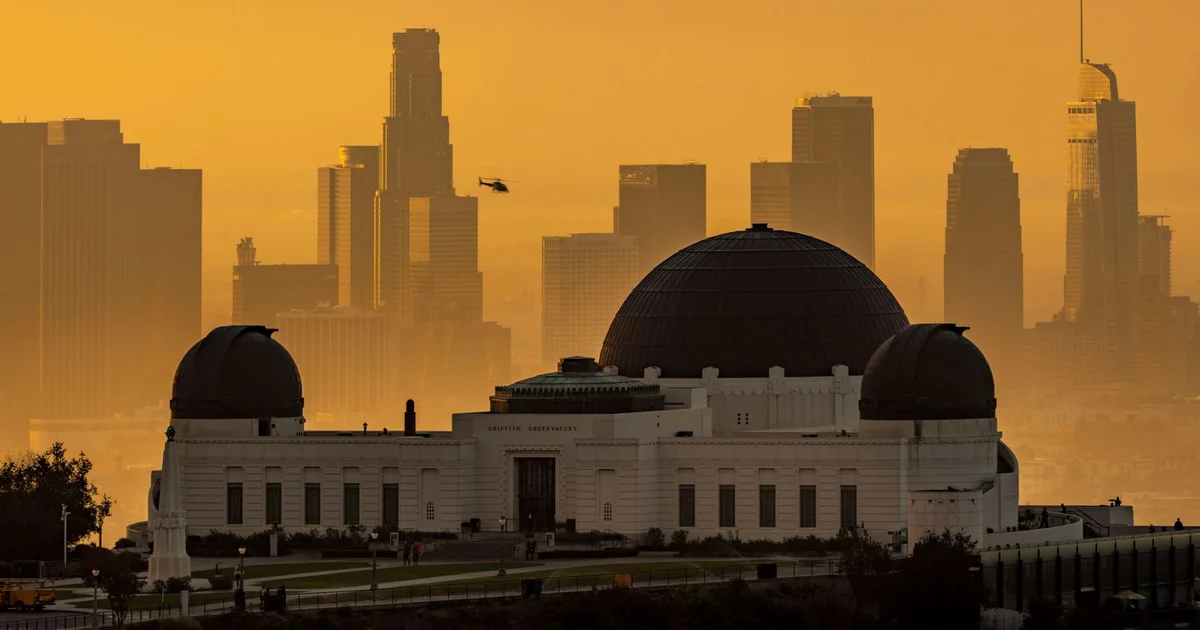
A single IVF cycle in Los Angeles runs $17,000 to $30,000 before insurance, and most international patients spend 19 to 26 days in the United States across two trips. Los Angeles is the West Coast’s answer to complex fertility care — and, unlike New York, it is also the American city where daily life is easiest for a Chinese-speaking family: shorter flights, no winter weather that can break a treatment schedule, and clinics where Mandarin is on the language list rather than a favour.
This guide covers what happens after you choose a clinic: the B1/B2 medical visa, flights into LAX, the city-by-city short-term rental rules that trip people up, getting around a city with no metro to speak of, diet, border restrictions on herbal medicine, California law, and the full timeline. For pricing see the California IVF cost guide and the US IVF cost overview; for the medical steps how IVF is done step by step, and for an introduction what is IVF.
Is Los Angeles the Right IVF Destination for You?
Los Angeles is not the default answer to “IVF in America,” but it wins on grounds New York cannot: language, flight time and weather.
Where Los Angeles genuinely wins
- Mandarin services are routine, not exceptional. HRC Fertility runs Chinese-speaking medical consultants and a Chinese booking channel; Pacific Fertility Center Los Angeles and INCINTA Fertility Center both list Chinese among their patient languages. You are not betting your stimulation protocol on a translation app.
- Shorter flight, gentler jet lag. Westbound nonstops from China land in roughly 12 hours, three to four hours less than the East Coast. The time difference is 15 hours (summer) or 16 (winter). During monitoring you must be at the clinic at 7:00-8:30 am, so this is a treatment variable, not comfort.
- Weather cannot break your schedule. Los Angeles is Mediterranean: no snow all year, rain confined to November-March, essentially zero in July and August. New York patients lose cycles to blizzards; LA patients do not.
- Complex cases and third-party reproduction. Academic depth through UCLA Health, plus the most usable legal framework in the US for gestational surrogacy (Family Code §7962) and donor gametes.
- Daily life is cheap if you cook. The San Gabriel Valley is one of the largest Chinese-speaking districts outside Asia; groceries and self-catering costs are the lowest of any major US IVF city.
The downsides, stated plainly
- No car, no city. Most LA-area clinics sit outside any walkable metro catchment. Rush hour on the 405, 101, 110 or Wilshire can double a commute you estimated from the map.
- LAX still has no people mover. The $3.3B Automated People Mover has slipped to January 2027 at the earliest (ABC7, 25 Sep 2026), so terminal changes remain a shuttle-bus exercise — with a cold-chain medication bag in hand.
- Rental rules are legislated city by city. Los Angeles City, Beverly Hills and Santa Monica each run a different regime, and Beverly Hills mandates a 12-month minimum lease in a city full of fertility clinics. This is the single biggest planning trap; see below.
- Cost is New York’s cost. $17,000-$30,000 per cycle puts LA in the same premium band.
If you are under 35 and budget-sensitive, home-country or Southeast Asian care costs a third to a fifth of Los Angeles, and for non-medical sex selection Thailand is the pragmatic choice because mainstream US clinics refuse it. Choose Los Angeles when you want US clinical depth with Mandarin communication, when a surrogate or donor programme needs California law, or when you simply cannot absorb another 16-hour flight. Compare with the US vs Thailand IVF guide.
Quick comparison
| Your situation | Better choice | Why |
|---|---|---|
| Budget-sensitive, under 35, standard IVF | Home country / Southeast Asia | A third to a fifth of LA’s price |
| Non-medical sex selection | Thailand | US clinics refuse; see can you choose embryo gender |
| Age 40+, repeated implantation failure, PGT-M | Los Angeles / New York | Academic depth and lab capability |
| Surrogacy or donation with legal certainty | Los Angeles (California) | Family Code §7962, routine pre-birth orders |
| You need Mandarin at every step | Los Angeles | Consultant-level Chinese services exist |
| You will not drive | New York / Boston | LA clinics assume a car or a taxi |
How Do You Get a US Visa for IVF Treatment?
There is no dedicated “medical visa”: IVF patients travel on the standard B1/B2 visitor visa and select Medical Treatment as the DS-160 purpose. Declare it honestly — being caught not saying so is far worse than saying it.
2026 fee breakdown
| Item | Amount | Notes |
|---|---|---|
| MRV application fee | $185 | Non-refundable |
| Visa Integrity Fee | $250 | PL 119-21, effective October 1, 2025 (FY2026); charged after issuance with no working refund path as of mid-2026 — treat as non-refundable |
| EVUS enrolment | ~$30 | New fee under H.R.1, effective September 30, 2025 (Fragomen, 28 Aug 2025). Litigation and adjustments have followed; confirm the live figure on evus.gov before you pay |
| Expedited interview | ~$750 | Select posts, limited slots |
So first-time application costs about $435 up front ($185 + $250). An existing 10-year visa normally needs only EVUS enrolment.
Five 2026 changes that break older itineraries
Interview-waiver (“dropbox”) eligibility was cut back sharply from September 2025: children under 14 and applicants over 79 generally need an in-person interview now, and several renewal categories lost the waiver (EY, 30 Jul 2025). Expect an interview if this is your first visa. From September 6, 2025, applicants are expected to file in their country of residence or nationality, which makes “visa run to a third country” riskier. DS-160 must be submitted before booking and cannot be edited afterwards. You must disclose five years of social-media history and keep accounts public during review. And appointment release at US posts in China has been rationed since early 2025 (Boundless consulate tracker), with waits ranging from weeks to months plus 2-8 weeks of administrative processing. Plan three to four months and check the live page, not a forum.
The medical-purpose document pack
Beyond passport, DS-160 confirmation, 51×51mm photo, employment letter, bank statements and property deed, add a clinic invitation / treatment plan letter (usually issued after a $3,000-$5,000 deposit), English translations of home labs (AMH, hormone panel, ultrasound, semen analysis), evidence you completed part of the workup at home, and a round-trip itinerary with lodging near the clinic.
Timing: remote consult and invitation letter at T-4 months; DS-160 and fees at T-3.5; interview at T-3 with an administrative buffer; flights and housing at T-1 with EVUS filed 72+ hours before departure; repeat labs at T-2 weeks.
At the border, say plainly: medical treatment, short stay. The admitted length sits on your I-94, and a cycle needs 3-5 weeks, so explain your plan if you are handed less. Never mention work, and declare cash above $10,000. Declare every food item and every herbal product — see the section below on what you cannot bring.
Which Airport, and How Do You Get Into the City?
LAX is the only airport with nonstops from China. Ontario (ONT) serves the inland Chinese communities and is far easier to walk through; Burbank (BUR) is closest to the Valley and Glendale; Long Beach (LGB) sits near the South Bay clinics but has no international arrivals.
Getting there and getting in
Nonstops to LAX include Air China Beijing flights (CA983/984, plus CA987/988 on the 2026 summer-autumn schedule) and China Eastern from Shanghai, upgraded to three weekly in August 2023 and expanded since. Capacity on China-US routes is still below 2019 levels and contested — US carriers formally objected to further Air China frequencies (Reuters, 24 Sep 2026; Aviation Week, 21 Sep 2026) — so schedules change and fares swing hard: peak-season round trips commonly run RMB 8,000-15,000, with much lower off-peak fares. Verify the live timetable before you build a cycle around a flight.
| LAX to the city | Cost | Time |
|---|---|---|
| FlyAway bus | $12.75 (up from $9.75 on April 2, 2025) | 45-90 min |
| Metro rail (C or K Line) | $1.75 | 60-90 min |
| Yellow taxi to downtown | flat $51.15 + $4 airport surcharge | 40-75 min |
| Uber / Lyft | $50-$65, more at peak | 40-75 min |
Two catches people miss in 2026. FlyAway now runs only two routes — Union Station and Van Nuys; the Westwood, Hollywood and Long Beach services were discontinued, so a bus ticket will not drop you near a Westside clinic. And the Metro station (LAX/Metro Transit Center, opened June 6, 2025) is not inside the terminals: you still need a shuttle to reach it.
Body logistics on a 12-hour flight
Economy long-haul plus a stimulated, high-oestrogen state is a venous thromboembolism stack: medical compression stockings, stand every 1-2 hours, ankle pumps at your seat, aggressive hydration, no alcohol or sedatives. Most stimulation medications need a 2-8°C cold chain — carry them with ice packs in hand luggage and declare them as prescription medication. On arrival, get daylight exposure for the first three days and stop fighting the 15-hour gap; monitoring appointments start at 7:00 am whether or not your body clock agrees.
Where Should You Stay Near an LA Fertility Clinic?
Los Angeles has a different housing problem from New York. It is not rich-versus-cheap; it is east-versus-west. The Chinese districts with the lowest living costs sit in the San Gabriel Valley, on the east side, while most clinics sit west (Westwood, Beverly Hills, West Hollywood) or southwest (Torrance). The same 30 km can take 45 minutes or 100.
| Area | Living | Commute to Westside / South Bay clinics | Chinese groceries |
|---|---|---|---|
| Westwood / Sawtelle | Quiet, close to UCLA and Pacific Fertility | Walkable, 5-15 min | Fair |
| Beverly Hills / West Hollywood | Best location for several clinics, priciest | 5-20 min | Fair |
| Mid-Wilshire / Koreatown | High-rise apartments, walkable to Wilshire clinics | 15-30 min | Fair (Korean groceries strong) |
| Downtown LA / South Park | Most transit options, dense high-rises | 20-35 min | Fair |
| San Gabriel Valley (Monterey Park, Alhambra, San Gabriel, Arcadia) | Lowest living cost, best food | Car 45-80 min in peak hour | Excellent |
| Rowland Heights / Diamond Bar | Large Chinese community, cheap | 50-80 min | Excellent |
| Torrance / South Bay | Near INCINTA and Pacific Reproductive Center | Walkable, 5-15 min | Good |
| Pasadena / Glendale | Near HRC and Pacific Fertility’s Glendale campus | 15-35 min | Very good |
| Irvine / Orange County | Complete Chinese district, south of the city | 45-90 min to LA clinics | Excellent |
Strategy A — clinic walk zone (Westwood, Beverly Hills, Torrance, Pasadena): monitoring becomes a short walk and you can lie down immediately after retrieval. Costly, limited stock, and unavailable in Beverly Hills if you need fewer than 12 months. Strategy B — San Gabriel Valley if you are staying 3+ weeks, cooking, and accompanied: cheapest living and the best food, at the price of a 45-80 minute peak-hour commute. Leave before 6:40 am or budget a taxi in late stimulation. Strategy C — split stay: near the clinic through monitoring, then move to cheaper neighbourhoods between retrieval and transfer.
The only hard lodging price anchor worth planning on: average LA hotel rates run about $169 a night (Engine, 18 Aug 2026), so 24 nights of hotel is roughly $4,000 — and a monthly rental removes both that rate and the hotel tax.
⚠️ The short-term rental trap: three rules, three jurisdictions
- City of Los Angeles (Home Sharing Program): short stays are limited to the host’s primary residence; unhosted whole-unit rentals are capped at 120 nights a year unless you hold Extended Home Sharing eligibility; rent-stabilised (RSO) units are ineligible, as are ADUs built after January 1, 2017; tenants need a notarised owner affidavit; the registration number must appear in the listing; records must be kept for three years.
- Beverly Hills (Ordinance 25-O-2918): a 12-month minimum lease, which effectively removes Beverly Hills from short-term rental options — in a city that hosts SCRC and several other fertility practices.
- Santa Monica resumed enforcement against unlicensed short lets on March 5, 2025, and statewide SB 346 (Chapter 751, Statutes of 2025), effective January 1, 2026, tightens platform reporting — meaning more delistings, closer to your travel date.
- Rules in Pasadena, Long Beach, West Hollywood and the San Gabriel Valley cities differ and are not covered here. Search ”
+ short term rental registration” before you book.
What to do instead: if you are staying 30 days or more, sign a monthly lease — it falls outside the short-term-rental definition, escapes the ~14% Los Angeles transient occupancy tax, and is the only genuinely stable option. Under 30 days, book a hotel, extended-stay property or serviced apartment that operates as lodging. If you insist on a platform listing, use only one displaying a valid registration number — because fines land on hosts and platforms, but the cancelled booking and the empty arrival night are yours.
Six things to verify before signing
Parking (in Los Angeles this matters more than anything: time-limited street spaces, ticketing, towing — a listing with free parking is worth real money); the actual 7:30 am drive time on Google Maps historical traffic; a kitchen; a washer; independent bathroom and soundproofing for post-retrieval rest; and the cancellation policy plus minimum-lease term. Los Angeles landlords commonly require income of 40× monthly rent, and unlike New York, broker fees are usually paid by the landlord — but tenant-paid listings exist, so confirm what the quote includes (water, electricity, gas, internet, parking).
Do You Need a Car? Transit in Los Angeles
For most IVF patients, the honest answer is: you need taxis, and a rental only if you are staying far out with an accompanying family member.
Metro is cheap and, since July 1, 2023, uses fare capping: $1.75 per ride, free after $5 in a day or $18 in a rolling seven-day window on the same TAP card or device. Contactless international Visa/Mastercard works at the reader, so you do not need a paper ticket. The catch is geography — the clinics in Westwood, Beverly Hills and Torrance are not within walking distance of rail, so Metro solves airport and downtown trips, not daily monitoring.
So plan around cars:
- Peak hours (7:00-10:00) on the 405, 101, 110 and the Wilshire/Olympic corridor routinely double travel time.
- Uber and Lyft are the working solution ($15-$40 per trip off-peak, more at surge).
- Do not drive yourself long distances for 48 hours after retrieval — anaesthesia recovery, enlarged ovaries and ascites risk all argue against it. Arrange a driver for that day.
- Renting a car becomes reasonable if you are staying in the Valley, South Bay or the SGV with a partner — but only after confirming the accommodation has parking and checking the clinic lot’s fees and time limits.
- Do not assume walkability. “Two kilometres” in Los Angeles can mean no continuous pavement, unlit crossings and a hill.
Useful apps: Google Maps (historical traffic is what you actually need), Waze (LA drivers use it for accidents and police), Uber, Lyft, LA Metro (TAP), Uber Eats / DoorDash / Fantuan / HungryPanda, Google Translate, and your clinic’s patient portal (usually Epic MyChart or FollowMyHealth).
When Is the Best Season for IVF in Los Angeles?
Los Angeles gives you a wide window and only one real weather risk: wildfire smoke.
Monthly temperatures (average high / low, °C)
| Month | Jan | Feb | Mar | Apr | May | Jun | Jul | Aug | Sep | Oct | Nov | Dec |
|---|---|---|---|---|---|---|---|---|---|---|---|---|
| High | 20 | 20 | 21 | 22 | 23 | 26 | 29 | 29 | 28 | 25 | 22 | 19 |
| Low | 9 | 10 | 12 | 13 | 16 | 18 | 20 | 21 | 19 | 16 | 12 | 9 |
Rainfall concentrates in November-March, peaking in February at roughly 3.3 inches (84 mm), and is essentially zero in July and August. Coastal Los Angeles runs several degrees cooler than the inland valleys, which can reach 33-38°C in summer.
- Spring (March-May) — recommended. 21-23°C, comfortable, though coastal “May Gray / June Gloom” marine layers cut morning sunshine. Tree pollen runs March-May.
- Summer (June-August) — the most schedule-proof window. Dry, no storm risk, 26-29°C at the coast. Humidity is far below New York’s July, which matters during stimulation bloating. Downside: peak tourism, so hotels and flights cost more and clinics are busiest.
- September-October — the most pleasant, with one caveat. 25-28°C. But this is wildfire season: Santa Ana winds from September to November can put smoke and hazardous AQI readings over the basin, and you do not want to be breathing that during late stimulation. Check California AQI and Cal Fire before you fly.
- Winter (November-February) — mild, the only rainy season. Daytime 19-21°C, nights 9-12°C, no snow all year. Far lower schedule risk than any East Coast city.
Packing: medications in original packaging with English prescriptions, a cold-chain pouch and ice packs, 110V type A/B adapters, slippers (rarely provided), loose clothing for post-retrieval bloating, compression socks for the flight, and N95/KN95 masks if you travel in wildfire season. Summer adds SPF30+ and a light layer for over-air-conditioned interiors.
What Can You Not Bring Into the US?
Groceries are the easy part: 99 Ranch Market (San Gabriel, plus Tustin and Buena Park) and GW Supermarket (San Gabriel) make self-catering realistic — food costs fall to roughly $300-$600 a month versus $900-$1,500 if you eat out. Eating out in the City of Los Angeles carries 9.5% sales tax and 18-22% tipping, so a $45 menu meal lands near $55-$60.
Eating through stimulation and transfer
- High protein in late stimulation reduces OHSS risk; with bloating, cut sodium and take electrolytes rather than plain water.
- Caffeine under 200 mg per day, and no alcohol — for the male partner too before retrieval.
- Zero raw food: sashimi, raw oysters, runny eggs, unpasteurised cheese carry Listeria risk, highest after transfer.
- No self-prescribed tonics or high-dose vitamins. Clear every supplement with your endocrinologist; some ingredients interfere with hormone levels or clotting.
- Los Angeles tap water meets federal safety standards and is drinkable, though hard and chlorinated from long aqueduct runs — most residents filter it. That is a taste choice, not a safety one.
⚠️ Herbal medicine and animal-derived products: the real border risk
These are federal rules, enforced identically at LAX as anywhere else.
- Declare every food, meat, fruit, vegetable and herbal product. Admissibility is decided by CBP and USDA APHIS officers at the port — and failing to declare is itself the violation, regardless of whether the item would have been allowed.
- APHIS prohibits or restricts certain animal-origin products from China, including deer antler, musk and deer bone, and swine products under ongoing disease bans (APHIS update, 23 May 2024). Endangered-species ingredients (pangolin, tiger bone, bear bile, rhinoceros horn) are controlled under CITES/ESA.
- FDA’s personal-importation policy for unapproved medicines generally requires a home-country prescription and up to a three-month supply; marketed prescription drugs are usually limited to five retailed packages. Ephedrine-class, strychnine-class and morphine-class patent medicines are controlled or restricted categories that Chinese consular advisories have listed for years.
- The two most commonly packed fertility-prep items are exactly the risky ones: donkey-hide gelatin (ejiao, an equine product) and bird’s nest (an avian product). Travellers have been denied entry and barred for years over prohibited ingredients.
What to do: carry only clearly-labelled Western medicines in original packaging with an English prescription, within personal-use quantity, and declare them. Buy stimulation and progesterone medication locally in Los Angeles — specialty pharmacies are mature, most clinics will prescribe and arrange delivery to your address, and there is no reason to move a cold chain across an ocean.
Phones, Payments and Insurance
Travel medical insurance is the item most often botched: most policies explicitly exclude assisted-reproduction complications — OHSS admission, post-retrieval bleeding, ectopic pregnancy. Before you fly, ask the clinic what a self-pay OHSS admission costs, read every exclusion in the policy, and hold a separate contingency fund.
An eSIM works on landing: 1 GB / 7 days ~$4, 3 GB / 30 days ~$9, 10 GB / 30 days $14-$23, unlimited / 15 days ~$39 (Airalo, Saily, Holafly, Ubigi). A real US number is strongly advised for clinic codes and pharmacy calls — Verizon’s Visible Travel Pass runs $15 for 7 days / $25 for 14 / $35 for 30 / $45 for 45 days; note its coverage weakens in LA suburbs and parking structures.
Visa / Mastercard are the hard currency — carry two networks. UnionPay and Alipay / WeChat Pay are usable inside Chinatown-district merchants but nowhere near reliable. Carry $200-$400 cash, tip as a fixed cost (18-22% restaurants, 15-20% drivers, 15% delivery, $2-$5 per night housekeeping), and remember mains run at 110V, type A/B.
How Long Do You Need to Stay for One IVF Cycle?
The standard two-trip plan keeps total US time at 19-26 days: 12-16 days for stimulation and retrieval, then 7-10 days for the frozen embryo transfer. Los Angeles is friendlier to this plan than the East Coast because each trip is three to four flying hours shorter.
Preparing at home
Most clinics accept home labs with English translations: AMH, cycle day 2-3 hormones, ultrasound (AFC), semen analysis plus DNA fragmentation, mandatory infectious screening (hepatitis B and C, HIV, syphilis), HSG if indicated, thyroid and HbA1c. Finish dental work, start folic acid — IVF preparation checklist — and hold a video consult 4-8 weeks before departure for a preliminary protocol on landing.
Which trip structure?
| Phase | Content | Stay |
|---|---|---|
| Trip 1 (Plan A) | Arrive cycle day 2 → 8-12 days monitoring → retrieval → home 1-2 days later | 12-16 days (18-20 with rapid PGT) |
| Interval | Culture + PGT, results in 7-14 days, at home | — |
| Trip 2 | Oestrogen at home → US monitoring → transfer → leave 2 days after pregnancy test | 7-10 days |
| Total US time | ~19-26 days |
Plan B — one trip with a fresh transfer — takes 25-35 days, now under 20% of cycles (strict lining requirements, and no fresh transfer if OHSS risk is high). Low-AMH patients banking embryos add 10-12 days per extra retrieval.
Monitoring days and the male partner
Clinic at 7:00-8:30 am for bloodwork and a scan, 1-2 hours for results, dose adjustment, out — two or three morning hours daily. He must attend the first consult, the retrieval day and the transfer if required; the practical minimum is 3 days around retrieval plus 3 days around transfer.
What Does California Law Guarantee?
California offers protections most destinations cannot — compensated gestational surrogacy with routine pre-birth orders, protected access for single women and same-sex couples — inside clear limits.
SB 729: IVF coverage from January 1, 2026
California’s SB 729 requires state-regulated, fully insured health plans to cover IVF from January 1, 2026 (implementation was delayed from 2025) and covers fertility preservation. It does not reach self-funded ERISA plans, and it does not require donor-egg coverage (RESOLVE state-law summary; bill text at leginfo.legislature.ca.gov). You almost certainly cannot use it as a visiting patient — but it matters indirectly: broader local coverage tightens clinic backlogs and self-pay pricing, which is why California IVF cost guide quotes the ranges it does.
Surrogacy and parentage: Family Code §7962
- Gestational surrogacy is legal and compensated, with §7962 providing the statutory framework for enforceable written agreements. Pre-birth parentage orders are routinely issued, so intended parents appear on the birth certificate.
- Family Code §7613 assigns parentage for donor-conceived children to the intended parents; §7613.5 (2025) adds donor notice and registration arrangements.
- Traditional surrogacy (the carrier’s own egg) carries materially higher legal uncertainty because of the genetic link, and mainstream practices rarely take these cases.
- Where third-party reproduction is involved, two independent lawyers, third-party escrow, and a pre-birth order are the floor, not the luxury. See the US surrogacy process guide and countries where surrogacy is legal in 2026.
Donation, genetics and sex selection
Egg donation is legal with reasonable compensation under FDA-mandated infectious screening — donor egg IVF guide. PGT-A (preimplantation genetic testing for aneuploidy) and PGT-M (single-gene disease) are widely available — PGT genetic screening guide. Non-medical sex selection is refused: ASRM ethics guidance opposes it and most SART member clinics decline — can you choose gender with IVF.
How to read success rates
US clinics report cycle and outcome data federally, published through the CDC ART success rates portal, with clinic-level search at SART. Always check the denominator — per egg retrieval, per transfer and cumulative per retrieval are three different numbers, and marketing pages mix them. Our own age-banded reading of the official data is in IVF success rates by age and how to read IVF success rate data.
Single women and same-sex couples face no marital-status barrier to treatment in California. Under the 14th Amendment a US-born baby acquires US citizenship regardless of the parents’ status; Chinese families then obtain a Chinese Travel Document for the child, and hukou registration requirements vary by city — ask the local police station before you fly.
Important: mainland China bans commercial egg donation and surrogacy in all forms. This section describes California law objectively only, not advice or encouragement; Chinese citizens must understand and comply with Chinese law before deciding.
How Much Does IVF in Los Angeles Really Cost?
A single cycle runs $17,000-$30,000 before insurance, and reaching a live birth — often 2-3 cycles — typically costs $45,000-$85,000, plus roughly $4,000-$9,500 of non-medical costs for two trips.
Medical costs — one cycle, pre-insurance
| Item | Amount |
|---|---|
| IVF base cycle | $12,000-$20,000 |
| Stimulation medications | $3,500-$7,000 |
| ICSI | $1,000-$2,500 |
| PGT-A (Los Angeles quoted range) | $3,000-$7,000 |
| Anesthesia + surgery center | $500-$1,500 |
| Frozen embryo transfer (FET) | $3,000-$5,500 |
| Embryo freezing (annual storage) | $400-$1,200 |
| Single-cycle total | $17,000-$30,000 |
| Donor-egg cycle (if needed) | $25,000-$40,000 |
| Live-birth path (2-3 cycles) | $45,000-$85,000 |
Source: ranges cross-checked against the site’s California IVF cost guide (California all-in $18,000-$30,000; medications $3,500-$7,000; FET $3,000-$5,500; storage $400-$1,200), national self-pay medians of $12,450 with $3,000-$7,000 in medications (CareRoute, 11 Jul 2026), and publicly quoted Los Angeles PGT-A and donor-egg pricing (CCRH clinic blog, 8 Sep 2026). These are advertised self-pay bands, not individual quotes.
Non-medical costs — two trips combined
| Item | Amount |
|---|---|
| Visa, first application | $435 + EVUS (~$30, confirm live) |
| Round-trip flights (1-2 people) | RMB 10,000-30,000 |
| Housing (19-26 days) | $2,500-$6,000 |
| Food (3-4 weeks) | $600-$1,500 |
| Local transport (ride-hailing based) | $300-$900 |
| Phone / eSIM | $20-$40 |
| Travel medical insurance | $200-$500 |
| Non-medical total | ~$4,000-$9,500 |
Source: housing is anchored to average Los Angeles hotel rates of $169 per night (Engine, 18 Aug 2026) — 24 nights is about $4,000 — while a 30-day-plus lease or shared rental comes in materially lower; stays under 30 days add the city’s ~14% transient occupancy tax. Flight figures use 1 USD ≈ 7.2 CNY.
Three typical budgets at 1 USD ≈ 7.2 CNY
| Scenario | Medical | Non-medical | Total |
|---|---|---|---|
| Standard own-egg IVF, one retrieval + one FET, San Gabriel Valley stay | $19,000 (¥137k) | $4,500 (¥32k) | ~¥169k |
| With PGT-A, Westside stay, partner travelling | $27,000 (¥194k) | $7,500 (¥54k) | ~¥248k |
| Advanced maternal age, two retrievals + PGT-A | $48,000 (¥346k) | $9,500 (¥68k) | ~¥414k |
Safe to save on: a 30-day-plus monthly lease, self-catering, off-peak flights, TAP fare capping, multi-cycle packages. Never on: commute time to the clinic, parking, complication contingency, or the legal setup where third-party reproduction is involved.
Your Los Angeles IVF Roadmap
Work the variables in this order, because two of them are not compressible: compare clinics on age-banded data (not marketing) → remote consult and treatment plan → start the visa the same week → book flights and housing only after the visa clears → then test the 7:30 am commute to the clinic.
Visa wait times are the first constraint; commute is the second, and in Los Angeles it is the one nobody plans for until week two.
T-3 to 4 months: shortlist 2-3 clinics against CDC / SART data; complete home labs with English translations; remote consult, treatment plan and cost estimate; request the invitation letter; file DS-160, pay fees, book the interview.
T-1 to 2 months: attend the interview; complete EVUS and print the confirmation after approval; book refundable flights; book housing that is either a 30-day-plus lease or a licensed hotel/serviced property, with parking and a kitchen confirmed; buy an eSIM or US number; buy travel medical insurance after checking the IVF-complication exclusion; ask the clinic for the self-pay OHSS admission price, whether pharmacy delivery to your address works, the earliest monitoring slot, and whether Chinese interpretation is available — in writing.
T-2 weeks: repeat labs; audit your medicine bag for animal-origin and controlled ingredients, keep original packaging and English prescriptions; photocopy passport, visa, invitation and insurance; install Google Maps, Waze, Uber, Lyft, a translator and the clinic portal; withdraw $200-$400 cash; notify your card issuers.
Carry-on (never checked): passport with visa plus both old and new passports, printed EVUS confirmation, printed clinic invitation and address, all medication with English prescriptions and the cold-chain pouch, flight itinerary, insurance policy, compression socks, slippers.
Los Angeles fertility centers to shortlist
Each card opens the full profile with age-banded data, doctors, pricing and booking routes:
Pacific Fertility Center Los Angeles
★ 4.1Founded 1991; more than 13,500 babies and 20,000+ IVF cycles, serving international patients from 75 countries across IVF, egg freezing, donation, surrogacy and LGBTQ+ family building.
Mandarin servicesHRC Fertility Group
★ 3.7Founded 1988, affiliated with USC, with 15 clinics and three embryo laboratories. Long-standing Chinese-language medical consultants and booking channel.
Mandarin servicesUCLA Fertility and Reproductive Health Center
★ 3.5Academic centre inside the UCLA Health and David Geffen School of Medicine system, with the multidisciplinary depth complex and repeated-failure cases need.
INCINTA Fertility Center
★ 4.4CAP/CLIA-accredited open-design embryology laboratory, strong on frozen embryo transfer and PGT, with a bilingual English-Mandarin team and international patient workflow.
Bilingual teamSouthern California Reproductive Center (SCRC)
★ 3.9Founded 2000 by two reproductive endocrinologists; five campuses across Beverly Hills, Santa Barbara, Pasadena, Ventura and Westlake Village.
Pinnacle Fertility Los Angeles
★ 4.6Formerly California Fertility Partners, serving patients since 1982: IVF, IUI, egg freezing, genetic testing and LGBTQ+ family building.
Ratings come from the review aggregate stored in each clinic profile and move with new reviews; use the age-banded data and your own booking conversation as the deciding input. Browse the full US clinic directory.
Frequently Asked Questions
Q: How early should we start the US visa for IVF in Los Angeles?
Three to four months minimum. Interview-waiver eligibility was cut back from September 2025, so a first-time applicant should plan on an in-person interview; US posts in China have released appointments on a rationed basis since early 2025, and administrative processing can add 2-8 weeks. DS-160 must be filed before booking and cannot be edited. Select Medical Treatment as the purpose and carry the clinic invitation. Use the official wait-times page, not forum rumours.
Q: We already hold a 10-year visa. Is anything else required?
Yes: EVUS enrolment, filed at least 72 hours before departure and printed. A new $30 enrolment fee took effect September 30, 2025 under H.R.1, and the fee and its exemptions have been subject to change and litigation since — confirm the live requirement on evus.gov. A new passport invalidates the existing enrolment, and children need their own registration; a parent’s does not cover them.
Q: How many days in total do we need to be in the US for one cycle?
Most patients use two trips: 12-16 days for stimulation and retrieval (18-20 if you wait for rapid PGT results), then 7-10 days for the frozen embryo transfer — about 19-26 days in total. A single trip with a fresh transfer takes 25-35 days. Los Angeles is easier on the two-trip plan than New York because each round trip is three to four flying hours shorter.
Q: Where should we stay for an LA IVF cycle?
If budget allows, stay inside the clinic walk zone — Westwood or Beverly Hills for the Westside clinics, Torrance for the South Bay, Pasadena or Glendale for HRC and Pacific Fertility’s second campus. If you are staying 3+ weeks, cooking, and accompanied, the San Gabriel Valley (Monterey Park, Alhambra, San Gabriel, Arcadia) or Rowland Heights gives you the lowest cost of living and the best food for a 45-80 minute peak-hour commute. A third option is staying near the clinic through monitoring and moving cheaper between retrieval and transfer.
Q: Is it hard to book an Airbnb in Los Angeles?
It is harder than it looks, because the rules are written city by city. Los Angeles City caps unhosted whole-unit short lets at 120 nights a year, restricts them to the host’s primary residence, excludes rent-stabilised units and ADUs built after 2017, and requires the registration number in the listing. Beverly Hills imposes a 12-month minimum lease, which removes short-term rentals there entirely. Santa Monica resumed enforcement in March 2025, and statewide SB 346 tightened platform reporting from January 1, 2026. The safe play is a 30-day-plus lease — outside the short-term definition and the ~14% hotel tax — or a hotel / serviced apartment if your stay is shorter. Non-compliant listings can be delisted right before you fly.
Q: Do we need to drive in Los Angeles?
You need taxis even if you never drive. Metro is cheap ($1.75 per ride, free after $5 a day or $18 over seven days on one TAP card or device) but the clinics are not near rail, so it solves airport and downtown trips, not 7 am monitoring. Ride-hailing at $15-$40 per trip is the practical answer. Rent a car only if you are staying far out with a partner, and confirm parking at your accommodation. Do not drive long distances for 48 hours after retrieval.
Q: How do we get from LAX into the city?
Cheapest: FlyAway at $12.75 — but only the Union Station and Van Nuys routes survive, so check that your destination is actually served. Rail: shuttle to the LAX/Metro Transit Center (opened June 6, 2025, not inside the terminals) for the C or K Line at $1.75. After a 12-hour flight with a medication cold chain, a taxi is often the right call: flat $51.15 to central Los Angeles plus a $4 airport surcharge, Uber and Lyft $50-$65. Remember terminal changes still rely on shuttle buses until the people mover opens — January 2027 at the earliest.
Q: What is the best time of year to do IVF in Los Angeles?
June-August is the most schedule-proof — dry, no storm risk — though it is peak season for flights and hotels. September-October has the nicest temperatures but is wildfire season, so check AQI and Cal Fire before travelling. November-February is the only rainy season and still carries no snow risk. March-May is comfortable with pollen and shifting coastal cloud.
Q: Can we bring ejiao, bird’s nest or Chinese herbal medicine?
No — these are exactly the high-risk items. Everything edible must be declared at the port, and CBP/USDA APHIS officers decide admissibility; failing to declare is itself the violation. APHIS restricts animal-origin products including deer antler, musk and deer bone, endangered-species ingredients are CITES/ESA controlled, and ephedrine-, strychnine- and morphine-class patent medicines are restricted categories. Ejiao (donkey-hide gelatin) and bird’s nest (an avian product) sit squarely in the animal-origin band, and travellers have been refused entry and barred for years over prohibited ingredients. Bring only clearly labelled Western medicines with an English prescription, and buy stimulation drugs in Los Angeles — clinics arrange specialty-pharmacy delivery.
Q: Can we choose the baby’s sex with IVF in California?
Mainstream clinics will not do it. PGT-A is legal and routine for chromosome screening, but non-medical sex selection contravenes ASRM ethics guidance and most SART member clinics refuse. If sex selection is your primary goal, you should be evaluating other destinations — see can you choose gender with IVF.
Q: Is surrogacy legal in California, and does insurance cover IVF?
Gestational surrogacy is legal and compensated, with Family Code §7962 providing the statutory framework and pre-birth parentage orders routinely issued; traditional surrogacy (carrier’s own egg) is a different risk profile and rarely offered. On insurance, SB 729 requires state-regulated fully insured plans to cover IVF from January 1, 2026, but it excludes self-funded ERISA plans and does not mandate donor-egg coverage. Neither provision is usable by a visiting patient, but both change clinic backlog and self-pay pricing. See the IVF insurance guide.
Q: Do Los Angeles clinics offer Chinese-language services?
Los Angeles is the best-equipped US city for this. HRC Fertility maintains Chinese medical consultants, Pacific Fertility Center Los Angeles and INCINTA Fertility Center list Chinese among patient languages, and academic centres such as UCLA route interpretation through international patient offices. Ask at booking and get it in writing — the coverage you need is not the front desk but the consent conversation, the embryo report and the billing reconciliation.
Q: Will travel medical insurance cover IVF complications?
Almost never. Standard travel policies explicitly exclude assisted-reproduction complications such as OHSS admission, post-retrieval bleeding and ectopic pregnancy. Ask the clinic what self-pay OHSS admission costs, read the exclusions line by line, and reserve separate contingency money. This is the most overlooked item on the itinerary and the one with the worst downside.
Q: Does my partner have to stay the whole time?
No. He must attend the first consult and sign-off, the retrieval (sperm collection) day, and the transfer if the clinic requires it. Most monitoring days are flexible. With limited leave, be present 3 days either side of retrieval and 3 days either side of transfer.
Los Angeles sells two things New York does not: a three-to-four-hour shorter flight into a city where the weather will never cancel your monitoring appointment, and clinics where Mandarin is a service line rather than a favour. It charges for it in commute time and in a short-rental regime written separately by each city — including a Beverly Hills 12-month minimum lease that quietly removes the neighbourhood around several clinics.
Take the decisions in order: where the retrieval and transfer will happen, then where you sleep, then the visa, then the flights. And before you commit to a lease, drive the route on a weekday at 7:30. For individualised assessment, contact a ProIVF advisor, or compare clinics yourself in the US clinic directory.
Last updated: October 22, 2026. Visa and border content is drawn from US Department of State, CBP, USDA APHIS and FDA publications; transport and fares from LA Metro, FlyAway/LAX and City of Los Angeles announcements; lodging rules from the LA Home Sharing Program, Beverly Hills Ordinance 25-O-2918 and California SB 346; legal content from California Family Code and SB 729; pricing from published industry data. Policies and prices change often — verify on official channels before deciding. Lookup points: State Department visa wait times, EVUS, USDA APHIS international traveller guidance, CBP travel, LA Metro fares, LAX, CDC ART success rates, SART.
Medical disclaimer: This guide is informational only — it is not medical advice, a diagnosis, or a treatment recommendation. Medication, monitoring and transfer decisions must follow your own reproductive endocrinologist; for donation or surrogacy arrangements, consult licensed counsel in both jurisdictions.